I’m not sure I want to write another piece about grief for Trans Day of Remembrance. To tell the truth, I’m sick to death of writing about dead and forgotten trans people, particularly dead and forgotten trans women and trans girls: all the ones who came before me, transitioned before me, fought for their lives and our future before me. All the ones who died before me. All the ones who are still alive, but deeply traumatized, living in isolation and poverty, betrayed by a society and a “community” who saw them more as symbols or scapegoats than people.
The ones I can’t heal, the ones I can never bring back, the ones whom I can never repay.
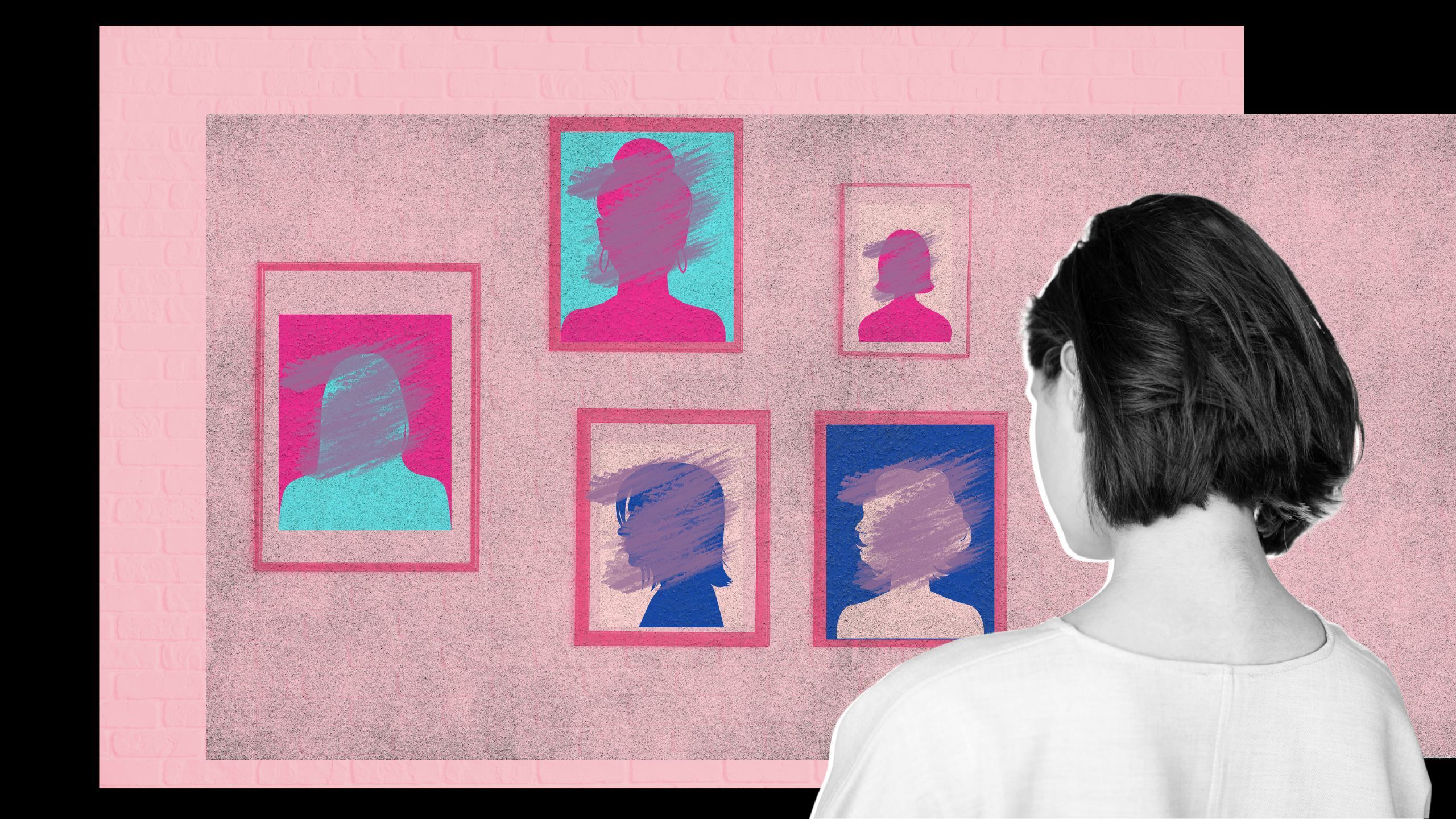
I don’t want to write their names here, the way I’ve done for so many articles and essays and speeches over the past 15 years. It makes me feel physically ill to think about going online to look up the latest annual murder count, pulling up this year’s list of murdered trans fems and adding them to my collection of lists of the dead. A museum of tragedy. A gallery of trauma.
I’ve done it before, like fistfuls of other queer and trans writers, and where did that get us? A world where anti-trans moral panic and anti-trans legislation are more virulent than when I first started. A world where all the public grieving, all the essays and speeches, all the candlelit vigils, all the advocacy, didn’t bring us the future we wanted, where we have no reason to collect lists of trans women and trans fems slain by violence because we expect that trans women and fems will live full and fulfilling lives.
It used to feel like honouring them, to write their names down along with the most sincere and beautiful words I could think of: love letters to slain and fallen sisters. It used to feel like invoking a lineage of fierce and fabulous ghosts. Like calling on the divinity of heretical saints. Sylvia. Marsha. Cassandra. Sumaya. January. Islan. Alloura. Brianna. It used to feel like I was doing something important, something sacred—casting a spell, even, for a better world—and maybe someday it will again, but right now it doesn’t. Right now, it feels hollow. Like a performance. I don’t want to play my part.
Anger and righteous resentment of Trans Day of Remembrance has been around for a long time, of course. Artist, sex worker and trans activist trailblazer Mirha Soleil-Ross once asserted in an interview with scholar-activist Viviane Namaste that “The Transgender Day of Remembrance … sure makes for a powerful street performance: candles, tears, hugs and snuggles over cardboard pictures of a marginalized minority produces emotionally charged images. But it functions, both theatrically and politically, to benefit a privileged subsection of the trans community.”
In the interview, which was published in Namaste’s seminal 2005 book, Sex Change, Social Change: Reflections on Identity, Institutions, and Imperialism, Soleil-Ross points out that the murders of poor, sex-working and racialized trans women are often appropriated for the political goals of others.
Nearly a decade later, writer Morgan Robyn Collado echoed Namaste in her own 2014 piece for Trans Day of Remembrance in Autostraddle: “It’s important to honor those women who came before us, those women murdered by colonial patriarchy. But it seems like more often than not, the queer community at large is content with just remembering,” she wrote. “We only hear about trans women after their deaths. And even our deaths are not our own. A week doesn’t go by without a white queer citing the deaths of trans women of color as the evidence of how oppressed they are.”
It’s 2025 now, and what time are we living in? One where trans people are so reviled and politically scapegoated that for some lesbians, gays and bisexuals, it’s no longer even politically advantageous to trot out the names of our murdered sisters and siblings for street cred or grant applications. Instead, trans folks and our rights are getting thrown under the bus in the so-called culture wars while the authoritarian fascist movement openly works toward the complete annihilation of our community.
What if I told you that unless you’re trans, you don’t get to say their names? Maybe you don’t get to say them unless you are a trans fem, and actually, maybe you also have to have experience as a sex worker too. No, of course I’m not serious. I’m just being provocative. I think I am angry, but mostly I’m angry with myself.
It’s narcissistic and grandiose, of course, but like most writers whose work is centred around social change, I think I’ve spent the past 15 years secretly hoping that my words—in concert with those of the other brilliant trans writers and thinkers I’ve been privileged to know and admire—would change something. That if I played my part well enough, found the best and most beautiful words, then we wouldn’t be where we are now. I had hoped that we would be living in a different timeline, a different world, one where it wasn’t so easy for authoritarian agitators, fascists and dictators to convince huge numbers of people to hate us.
In the world that I wanted our words to make, trans women, trans girls and trans fems are not so often forced into sex work in order to survive intense discrimination at school and in the workplace—but also, sex workers themselves are not stigmatized, nor are they subjected to brutality and violence on the job. Racialized and working-class trans folks have affordable housing because everyone in society has access to affordable housing.
In the world that I wanted our words to make, gender transition—including medical transition—is regarded as a human right, because every human being is considered sovereign over their own body. In that world, medical care in general is considered a human right that all people, regardless of wealth or race or national status, are provided.
In the world that I wanted our words to make, I don’t have to have weekly conversations with trans friends and loved ones about how to manage the risks of travelling while trans or raising kids while trans or living while trans, specifically living in a society where billionaires and politicians are actively working to make it illegal for us to exist in public. In that world, the common people know that the only identity that should be illegal is “billionaire”—and that we all need each other to take back our power and liberation.
Our words didn’t make that world. They failed to do so, and perhaps this is the article about grief that I really do want to write: I’m grieving what could have been, what should have been. I’m grieving the hopefulness of the more naive writer that I used to be, and of the last decade’s vision of cultural change that for all its flaws and short-sightedness still had something alluring to it.
I’m grieving the part of me that really did believe that the next generation of trans girls wouldn’t have to spend so much time grieving. Or so much time afraid of what might be coming next. I suppose I have to accept that I can’t control how much grief there is in the world. I suppose we all do.
So we grieve. And we keep going. And maybe 15 years from now, or 50, or 500, we will live in a different world.

 Why you can trust Xtra