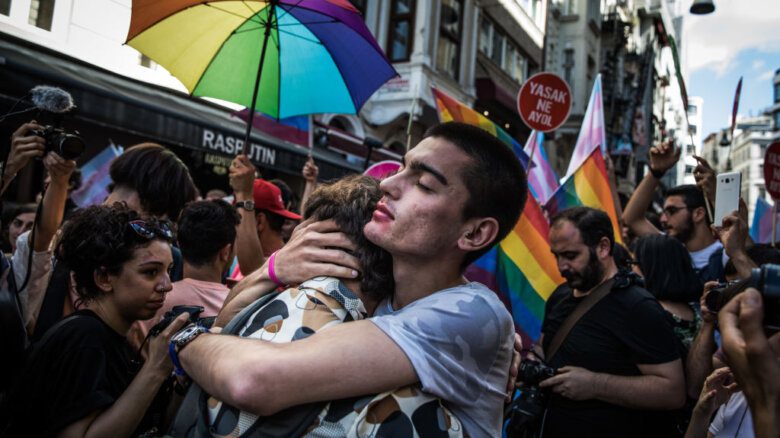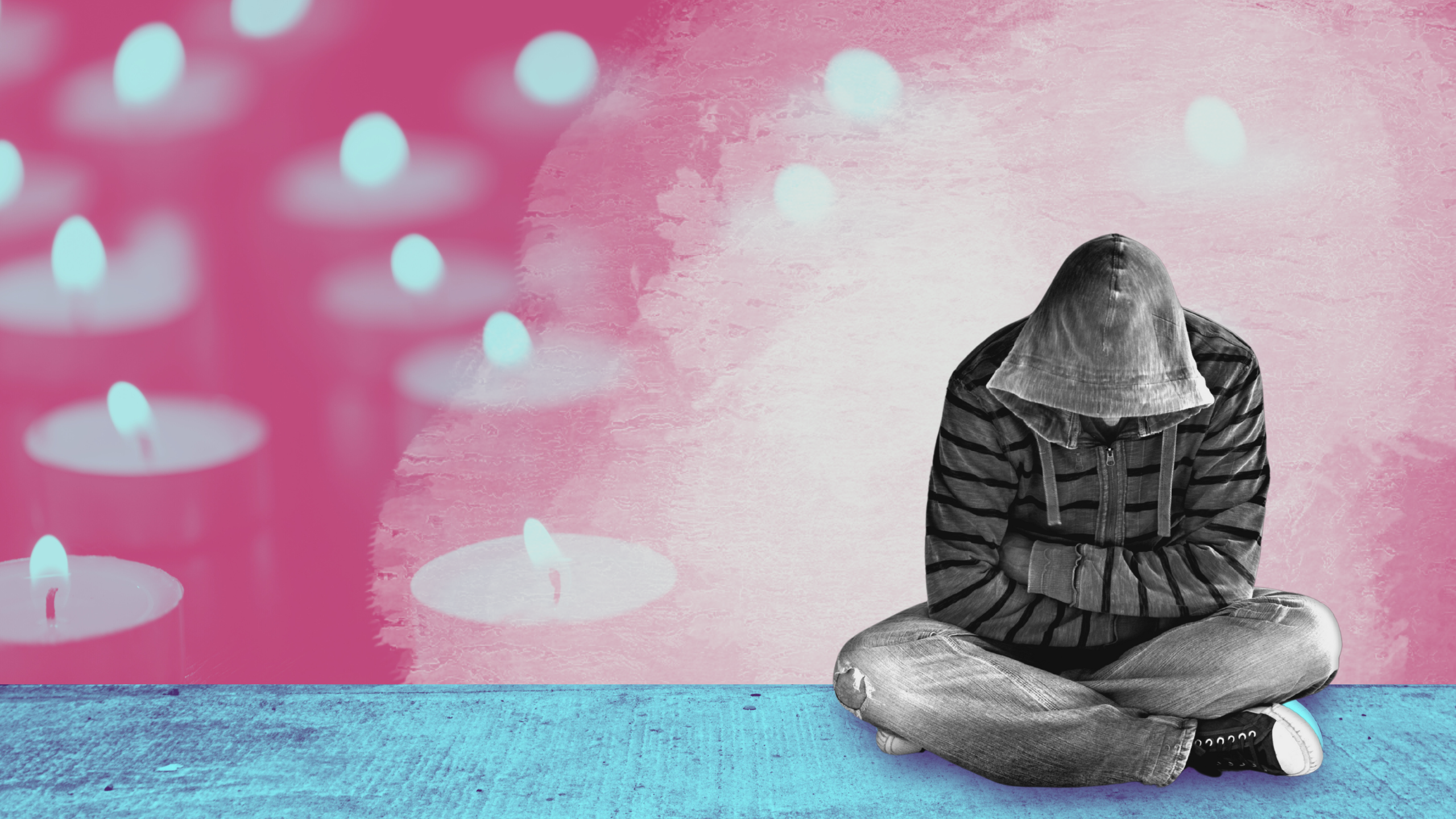
Every year, Nov. 20 marks the international Trans Day of Remembrance. The occasion has been observed since 1999, when it was founded by activists in San Francisco wanting to commemorate the lives of trans women lost to anti-trans violence. In its 26th iteration, the day feels more important than ever. The past few years have been marked by rising anti-trans hate. GLAAD put out a warning in the summer about a dramatic increase in anti-trans violence, reporting that incidents targeting trans people in the U.S. rose by 14 percent from 2024 to 2025. Data released earlier this year by Statistics Canada found that police-reported hate crimes targeting gender identity or expression increased by over 150 percent between 2020 and 2023, the most recent year where Canadian data is available.
This comes within the context of a wave of anti-trans legislation and political sentiment, particularly in the U.S. and the U.K. Canada, long considered one of the leading countries for trans rights and acceptance, has not been immune to this wave, with several provinces instituting legislation limiting the rights of trans youth in particular. Politics and public sentiment do not always go exactly hand in hand—but when our representatives frame trans women as bathroom predators, or youth as needing protection from the trans community, it fosters a climate where hatred can foment.
Trans Day of Remembrance is an opportunity to speak about the lives that have been extinguished by this hatred, and to reflect on the ways that we can put an end to it. Typically, the focus of the day is on the direct physical violence inflicted on members of our community. Trans people—in particular trans women—face a high rate of gender-based violence, including sexual violence and domestic abuse. It is important and necessary to continue to talk about this grave issue and work to end it. But beyond direct, interpersonal abuse, there are other forms that anti-trans violence takes: ones that can be more difficult to name, or to speak about as violence. Poverty in the trans community, for example, is not usually regarded as a type of violence, but it can be seen as one—and it should be. It is a result of systemic transphobia that is inflicted on our community, and it limits the healthiness and longevity of trans peoples’ lives. There are trans people who lose their lives to poverty. They, too, should be in our thoughts during Trans Day of Remembrance.
While there are no specific statistics on trans deaths from poverty available, poverty is a high risk factor in premature death. A study published by Statistics Canada in 2014 estimated that income inequality results in the premature deaths of 40,000 Canadians per year. In 2024, a study in Social Science & Medicine concluded that income inequality was a factor associated with “deaths of despair,” meaning as a result of suicide, drug overdoses or alcohol-related disease. Being a Canadian belonging to a lower-income group is heavily associated with opioid-related mortality, as per a study published in Health Promotion and Chronic Disease Prevention in Canada: Research, Policy and Practice in 2022, which also found that factors such as unemployment and housing insecurity may play a significant role. And as Canada’s medical assistance in dying program expands, advocates warn that it could be another way for poverty to lead to death—with some applying due to their inability to meet their needs for housing and care.
All this goes to show that there are serious implications when considering the high rate of poverty for trans people. Data from the 2021 census shows that trans and non-binary people work fewer hours and tend to work lower-paid jobs than cis men. Among those 18 and older, almost 18 percent of the non-binary population, 11 percent of trans women and 10.5 percent of trans men were living in poverty, compared to 7 percent of both cis men and cis women. Trans women were found to be the lowest-paid among all groups, making about 20 percent less than cis men. One of the major factors that makes queer and trans people vulnerable to poverty is discrimination, both personal and institutional, says Nick Mulé, a professor in York University’s School of Social Work. “Despite the fact that Canada’s now considered one of the leading countries in the world in recognizing sexual orientation and gender identity and expression in our human rights legislation, on-the-ground experiences can be quite different,” he says.
“You don’t need to be trans nowadays to struggle with housing or income security or affordability,” says Susan Gapka, an education and training specialist at The 519, a queer and trans community centre and social service provider in Toronto’s gay village. “But being trans, gender-diverse or non-binary is an additional barrier. And another additional barrier if you’re disabled, or racialized or Indigenous.”
In 2017, gender identity and expression were added to the Canadian Human Rights Act as protected groups against discrimination. This means that ostensibly, trans people are not supposed to be denied employment or housing because of their gender. But people’s actual experiences differ—and discrimination is rarely so explicitly stated that you can prove it in court. Gapka notes that with human rights protections, trans people might be less likely to lose their jobs, “but they’ll not get promotions in employment, or not have the same opportunities.”
Gapka notes that discrimination, and the fear of it, can create a psychological toll on trans people that might lead to them not pursuing opportunities in the first place. She refers to a study that the Toronto Trans Coalition Project conducted in 2022 on employment barriers for trans and non-binary Torontonians, while Gapka was a board member: “One of the things that surprised me is that a lot of younger trans and gender-diverse people did not have the confidence to enrol in training or education to improve their credentials, due to worries about their legal identity or experiencing hardship and discrimination in the education system.” All this helps to further entrench the trans community in poverty. We can trace this poverty back to the systemic transphobia that births it. Though we frequently speak of trans poverty as a complex social problem, it would be apt to consider it as a form of violence: particularly when it leads to isolation, poor health or premature death, as it sometimes does.
We should be able to understand queer and trans poverty in Canada in a more detailed way soon. Mulé is currently leading a massive ongoing study to analyze LGBTQ2S+ poverty across the country, which will result in an action plan that can hopefully direct policy. The study, “2SLGBTQ+ Poverty in Canada: Improving Livelihood and Social Wellbeing,” was funded by the Social Sciences and Humanities Research Council of Canada in 2022, and will conclude in 2029. It consists of a national survey regarding queer and trans people’s economic well-being, which garnered 5,000 responses, as well as qualitative interviews and focus groups across every province and territory. “We are the first study to take a national perspective on the issue of poverty within 2SLGBTQ+ communities across Canada,” says Mulé. There are other studies that exist, but those are more locally oriented and do not offer a full breadth of the economic issues faced by queer and trans Canadians. “Our hope is to take the data that we’re collecting, once we’ve been able to analyze it, then translate it into a means of policy advocacy to affect the changes we feel our communities need, particularly those that are struggling with poverty,” Mulé says.
Ending poverty in the trans community, like ending all forms of anti-trans violence, will be a complicated and unwieldy task. It will take the dismantling of transphobia itself to solve it, and the unravelling of all the minute ways transphobia snakes through the different aspects of our society. For the time being, what we can do is be there for the trans people around us, speak up against both direct and systemic anti-trans hate, and keep its victims in our thoughts. “Trans Day of Remembrance is a way to remember those who didn’t make it, and mourn,” says Gapka. “And be in company and solidarity with those of us who are still trying to figure it out day by day.” On this Trans Day of Remembrance, let’s work toward a world in which we don’t have to remember any more names of trans people who have lost their lives to abuse, poverty or hatred—because there aren’t any more.

 Why you can trust Xtra