In mid-March, Andry Hernández Romero, an openly gay Venezuelan makeup artist, was disappeared by ICE. He was subject to torture and sexual assault at the notorious Salvadoran prison CECOT until his release in July this year. His story exposes only a fraction of ICE’s violent history toward the LGBTQ2S+ community. In 2017, even though the community comprised 0.1 percent of the population in ICE custody, 12 percent of sexual assault complaints came from LGBTQ2S+ people. In 2018, ICE forced trans Hong Kong asylum seeker Yuen “Chin” Tzu into solitary confinement for 19 months, where he was given inadequate access to his hormones and developed a chronic “stomach condition.” A 2024 report from Immigration Equality found that nearly a third of LGBTQ2S+ ICE detainees reported being sexually harassed or assaulted and half were forced into solitary confinement. Many immigrants have been detained for months, even years, and in some cases, possibly indefinitely, like Palestinian Taher Hasan, who has been in ICE detention for 16 months. Legal representatives suspect that ICE attempted to deport him to Israel, a move that violates international law. Some, including trans women Johana Medina Leon and Roxsana Hernandez, have even died in ICE custody.
These horrors of U.S. immigration policy have been going on for decades. Despite this, LGBTQ2S+ activists are still for migrant justice as individuals and within broader movements, across law, government and the arts, all over the country. Here are four of them.
Tiffany Jade Munroe (she/her)
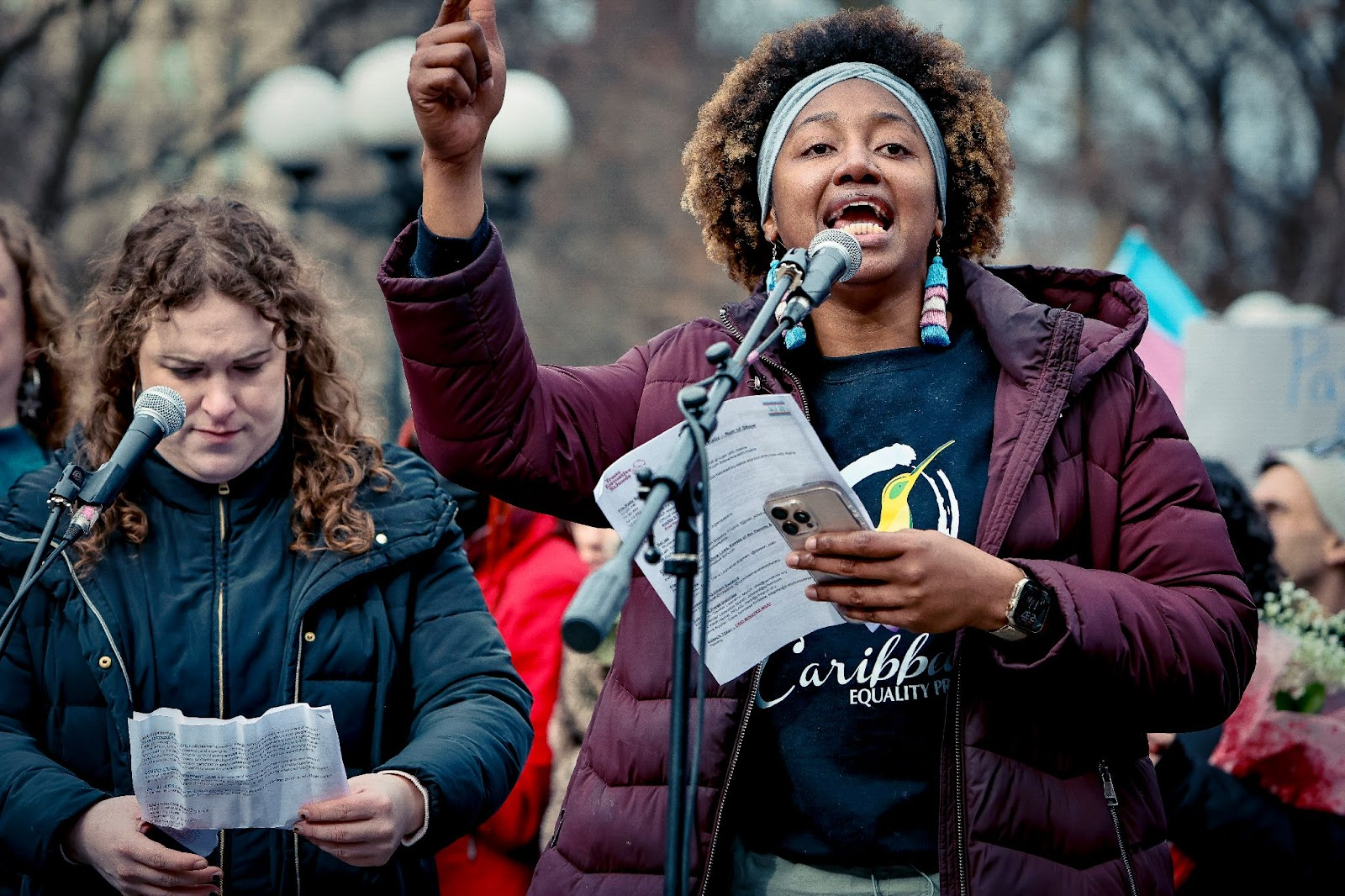
Credit: Alexa B. Wilkinson; courtesy of Tiffany Jade Munroe
A biracial Afro- and Indo-Caribbean trans woman, Munroe came to the States seeking asylum from Guyana, where laws imposed by the British Empire criminalize the LGBTQ+ existence. Displaced from her family and alone, Munroe had to deal with the language and cultural barriers without any support. “The process itself is filled with uncertainty, long waits and constant fear of deportation, all while systems remain deeply transphobic,” Munroe says. “You’re often denied access to safe housing, healthcare or dignified work.”
Without safe shelters of access to mental or physical healthcare, Munroe notes how trans women and HIV-positive migrants are especially vulnerable to violence and afraid to seek help. “This climate of fear often prevents Caribbean LGBTQ2S+ migrants from applying for essential state and city benefits, accessing healthcare or seeking legal support,” she says. “Some are even forced to consider self-deportation due to anxiety about jeopardizing their asylum cases.”
Munroe now serves as Trans Justice Coordinator at the Caribbean Equality Project, which for ten years has supported Afro- and Indo-Caribbean LGBTQ2S+ people in New York City. Munroe’s advocacy has helped city and state-level budgets better support trans immigrants, such as expanding the Trans Equity Fund, advancing the Access to Representation Act that would guarantee the right to counsel for New Yorkers facing deportation, and passing the Trans Safe Haven Bill, and the Lorena Borjas Transgender and Non-binary Wellness and Equity Fund. With that funding, Munroe has organized trans-led programming, peer support groups and wellness workshops catered to the needs of Black and brown trans immigrants to affirm that these people matter.
“What gives me hope is the resilience, courage and creativity of our communities,” she says. “Caribbean LGBTQ2S+ immigrants and trans asylum seekers continue to show up for one another, building networks of care, mutual aid and collective power.”
Aisa Villarosa (she/they)
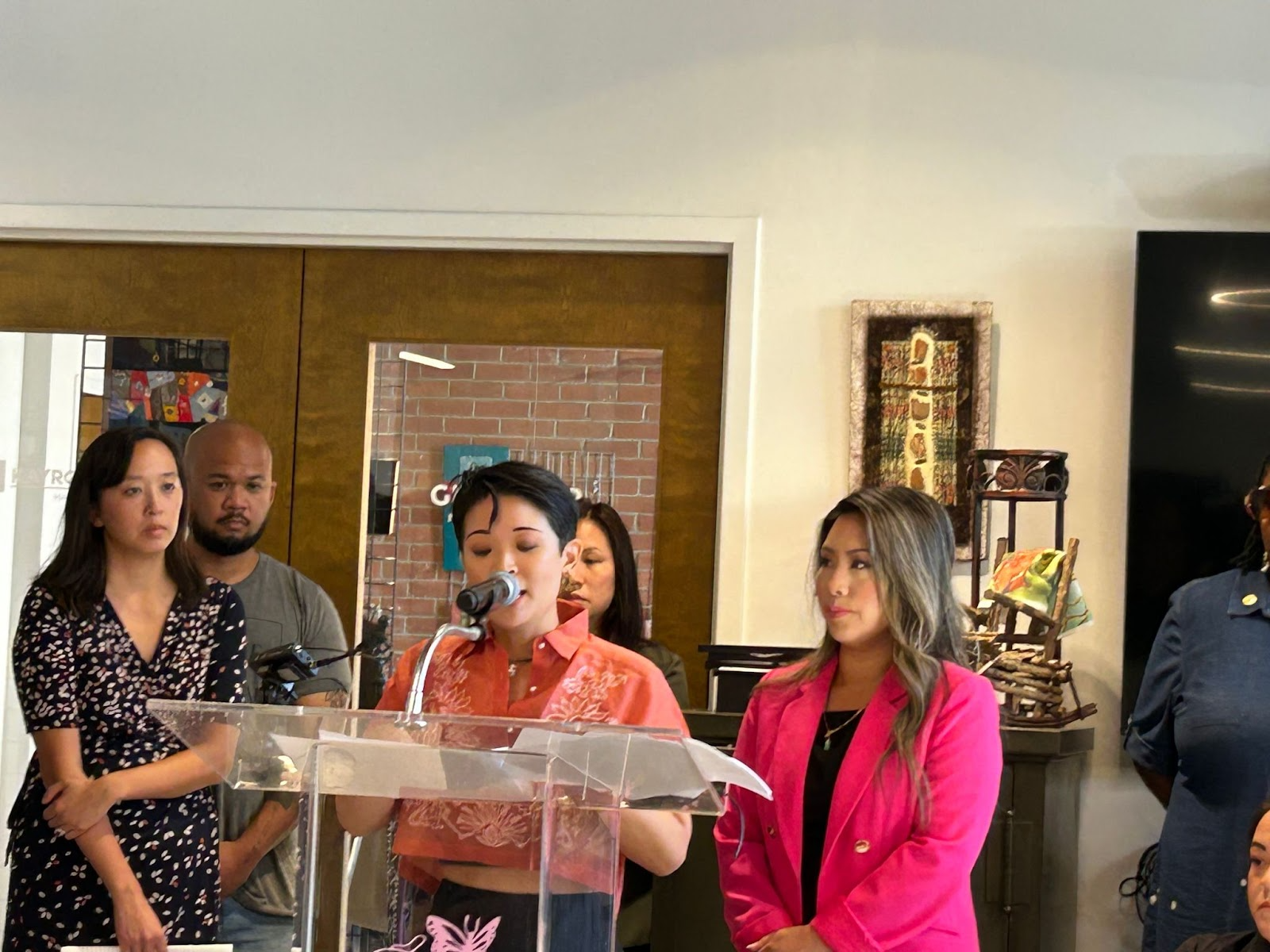
Credit: Courtesy of Aisa Villarosa
According to a research brief from the University of California Los Angeles Asian American Studies Center, ICE’s coordinated attacks on Asian communities have tripled since 2024. Several Asian migrant individuals are clients of Michigan-based Aisa Villarosa, attorney and the Asian American Leaders Table Manager (AALTM) at the Asian Law Caucus. “Since March 2025, several dozen Bhutanese refugees have been detained and deported by the U.S. to Bhutan, only to be expelled from Bhutan within 24 hours,” they say. “Similarly, I was at a Hmong community gathering in Michigan last week that turned into a Know Your Rights and Rapid Response moment as families learned in real-time that their detained loved ones were being staged for deportation to Laos.”
Know Your Rights trainings have become popular ways in the States to educate communities on basic legal protections individuals have against ICE, what to say, and how to legally stop them. Rapid responses, oftentimes dispersed through social media, are community alarms that inform people where and when ICE agents were spotted, what they looked like, and sometimes even the licence plate number of the cars they drove in.
Villarosa recounts the story of Tika, a Bhutanese-Nepali refugee, who was forced to delay going into labour because ICE had taken her husband Mohan the day she was due to give birth. Villarosa and their legal team executed a temporary stay of removal, which gives them critical time to fight for the family. “There’s a long road ahead,” they say. “Mohan remains detained since April and has not yet held or seen his new daughter.”
Through AALTM, Villarosa has united over 70 Asian-led organizations to rally against ICE. They’re also working on initiatives that ensure the rights of immigrants like the Equal Under the Law project, a community-driven campaign to protect birthright citizenship while educating on the law’s legacy of challenging the injustices of Black enslavement, championed by Wong Kim Ark and others.
With two decades of experience in organizing through law, Villarosa, a gay Filipino American, works with LGBTQTS+ individuals and, although still in awe of the solidarity that can pop up, still sees that more work can be done. “I’m still struck that most left-leaning groups serving Asian American communities lack an explicit queer or trans focus,” they say. “This is the time for anyone espousing values of justice and liberation to ask themselves, with clarity and honesty, how they can more intentionally show up for trans rights.”
Papi Churro (they/them)
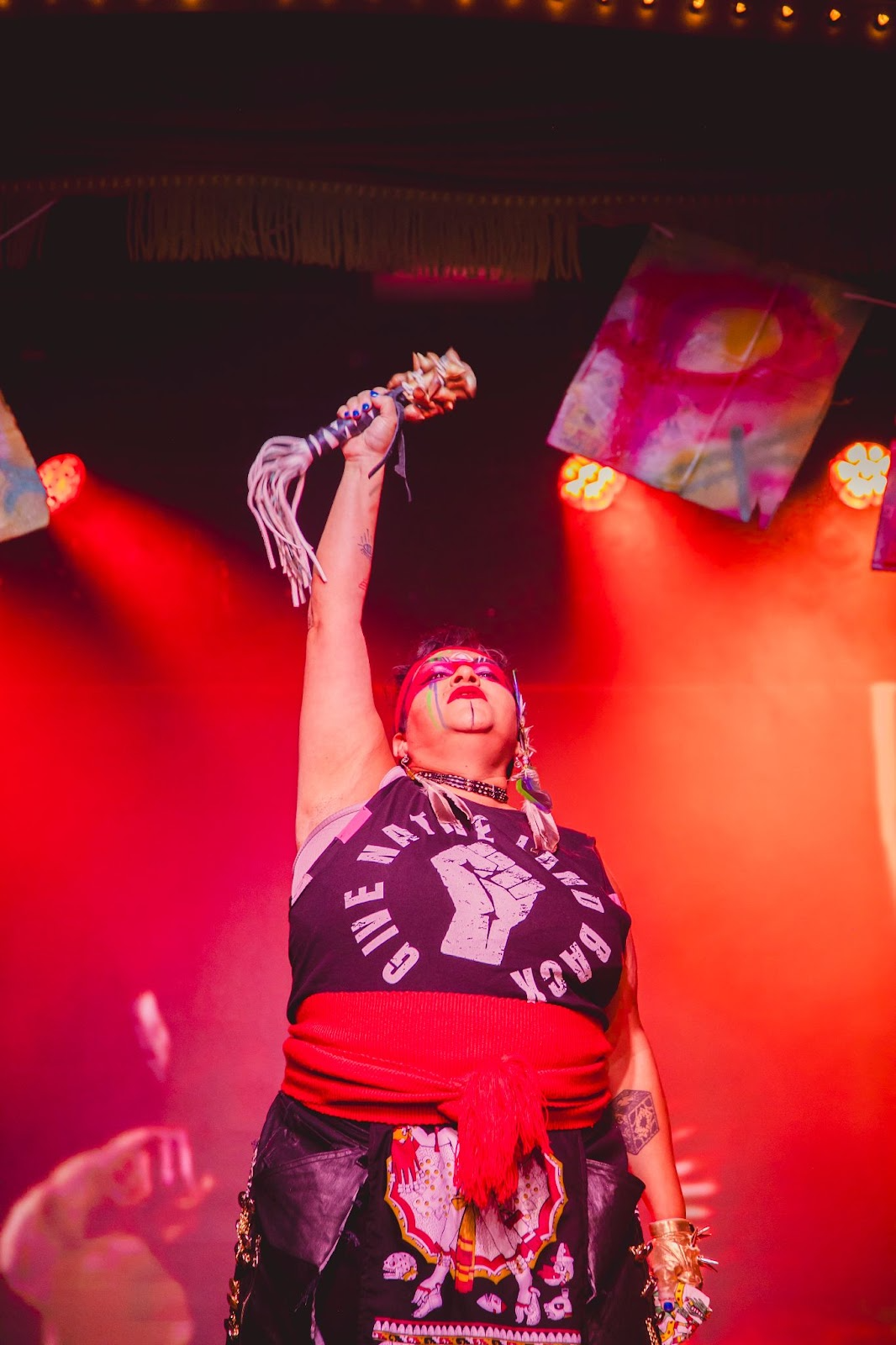
Credit: Fancypants; courtesy of Papi Churro
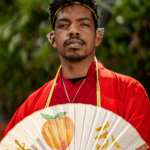
Based in the Bay Area of California, Papi Churro is a Two-Spirit drag king and Native American Chicano of the Tap Pilam Coahuiltecan and Nahua-Otomi people. Both their immigrant paternal grandmother and aunt contracted cancers from harsh chemicals while picking fruits and vegetables for Del Monte, according to Papi Churro. Papi Churro has often been racially profiled and stopped by ICE authorities to show proof of citizenship. This, alongside their obligation to honour their ancestors’ stories, have further emboldened them as an Indigenous drag artist to use their craft to fight ICE, they say. “This land always belonged to my relatives as rightful stewards to the land,” they say. “I am simply fighting the same fight our people have been fighting for 500 years.”
While doing drag shows to raise funds as mutual aid for immigrants, Papi Churro can also be seen on the front lines. “I have worked with the ACLU in protesting against ICE detention centres on the Texas border where children were being held out and that were separated from their parents,” they say.
In a time of fear, Papi Churro encourages folks to join the fight even by doing little things. They add up and they count, they say. “There are so many things you can do behind the scenes,” they say. “Use your platform for advocacy, digital tasks like writing captions and answering emails, making care packages for rapid-response teams, language interpreters or facilitate Zoom teach-ins.”
Uchechukwu Onwa (he/him)
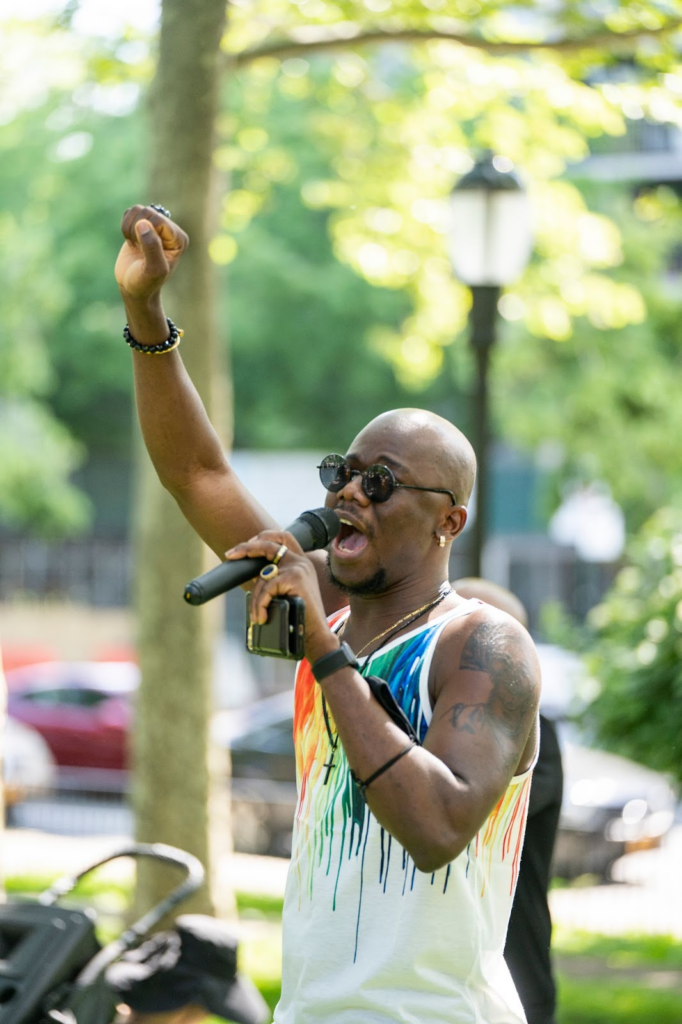
Credit: Luigi Morris
Eight years ago, Uchechukwu Onwa fled Nigeria, where mobs actively target and kill LGBTQ+ people and others in more conservative states have been sentenced to death by stoning for homosexuality. As soon as he arrived at a U.S. airport, Customs and Border Patrol [CBP] arrested Onwa. “I was taken by CBP officers and placed in immigration detention,” he says. “The experience was dehumanizing, being shackled from my hands to my waist down to my two legs, treated unjustly for simply seeking safety.”
Onwa not only felt powerless under ICE control, but also noticed specific racism aimed at Black people. “I saw how people like me—Black, queer, immigrants—are often made invisible in this system,” he says. “Facing harsher treatment, longer detention and fewer resources.”
Onwa’s story is one of many, which he draws power from. “Storytelling is key,” he says. “Sharing personal experiences in safe, public ways shifts narratives, humanizes the issues and creates empathy among allies and policymakers.”
Now a model and fashion designer based in Atlanta, Onwa is the founder and executive director of the Black Diaspora Liberty Initiative, which advocates for the rights and well-being of Black LGBTQ+ immigrants. He works in coalition with organizations like the Black Alliance for Just Immigration and Black LGBTQIA+ Migrant Project, an advocacy program of the Transgender Law Center that is for and by Black LGBTQ2S+ immigrants. He coordinates Know Your Rights trainings, community forums and film screenings to build a safety network through community. “Fighting systems like ICE can be exhausting and traumatizing, so supporting each other, practicing collective care and celebrating small wins are essential to maintaining long-term momentum,” he says.
 Why you can trust Xtra