Japanese culture: weird, wonderful and sexy. Often too much so for North America.
Japanese media is often censored before it gets to us. In the 1990s, there was the complete removal of lesbianism from Sailor Moon when it was broadcast in North America. Earlier this year, roleplaying video game Bravely Default ran into problems with its sexy man flesh.
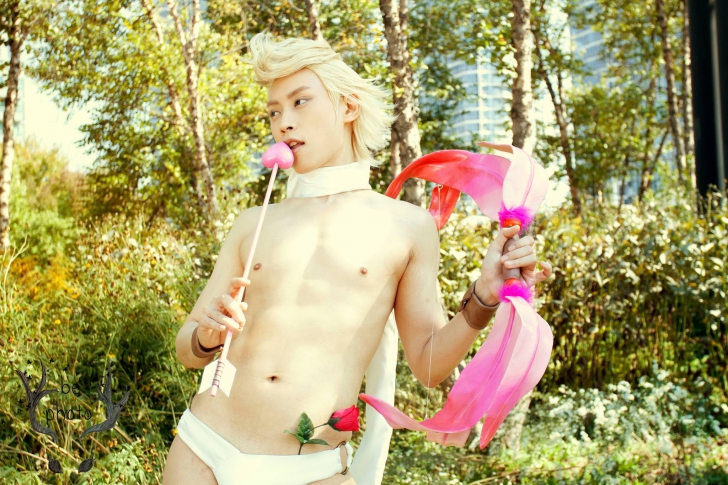
The censored character in question is rakish amnesiac Ringabel — one of my favourite character names of all time — and his “Wakoku Warrior” outfit.
During turn-based combat sequences, Bravely Default uses a system where characters switch “jobs,” giving them different abilities and powers. The Wakoku Warrior outfit was available to download with the original Japanese release, but this was removed in subsequent European and North American releases.
This wasn’t the only change made to the game. IGN reports that publisher and distributor Square Enix changed the skimpy costumes of other characters and, even more importantly, the ages of characters, from uncomfortably underage and wildly sexualized 15-year-olds to 18-year-olds.
The underage thing was pegged as an issue from the get-go, but removing the Wakoku Warrior outfit is a total double standard. Scantily clad women are all right for North American audiences but not sexy man flesh?
Luckily for us, Toronto cosplayer extraordinaire Maestro Hydra is showing off what North American audiences are missing. You may have seen some of his incredible work marching with the Toronto Gaymers in the Pride parade, but he recently released some pictures in which he cosplays as Ringabel in his Wakoku Warrior outfit, shot by Belinda Elizabeth Photography.
It’s . . . well . . . in fandom there’s a little term we like to use called “fanservice.”


 Why you can trust Xtra