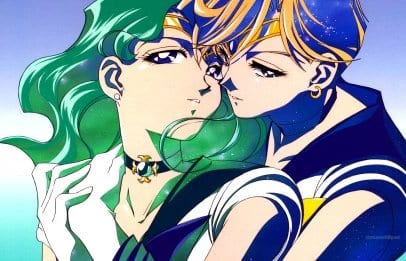
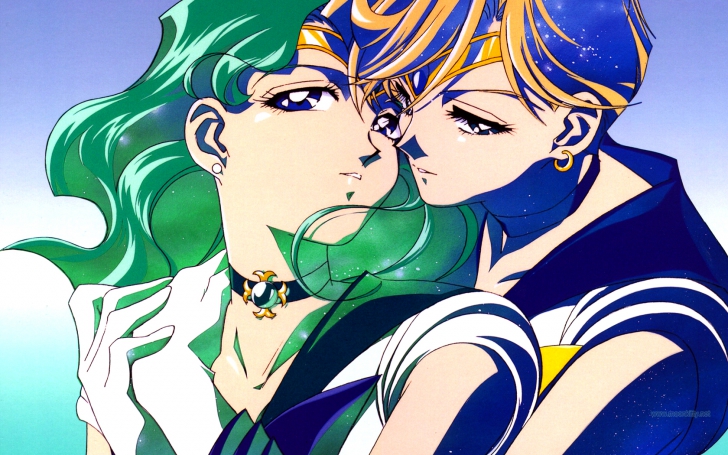
If you’re a ’90s child who was as dazzled by sparkly, kickass women and pretty transformation sequences as I was, you may be thrilled to hear that Sailor Moon is back.
On Friday, Viz Media released an announcement trailer for the cartoon series that brought anime to North America in a big way, and they’ve announced that the series, re-released in North America with Japanese subtitles, will be “absolutely uncut.”
I was seven years old when the US-dubbed transplant of Sailor Moon was first aired by Optimum Productions, and it totally made me gay. I was absolutely enchanted by a show about a group of high-school girls who had secret, cosmic alter egos. Sailor Moon resonated with me more than any other childhood cartoon I ever saw.
More than a decade after the series aired, I heard that it had been censored when it was translated over to North America. Sailor Scouts Neptune and Uranus had been rewritten as “very close cousins.” I never got that far into the series as a child, but I shouldn’t have been surprised that the show was a whole lot more queer than that.
Blogger Rebecca Ballenger has created a fantastic resource that details the way the series was massively altered, cutting out a lot of the queer elements central to the show, and a Sailor Moon Wiki entry on queer plot points from the original rounds off her coverage.
Inspired by Ballenger’s writing, here are five other parts that childhood fans, like me, may be surprised to learn were completely butchered and, frankly, censored when the series made the trip across the Pacific:
1. Zoisite and Malachite
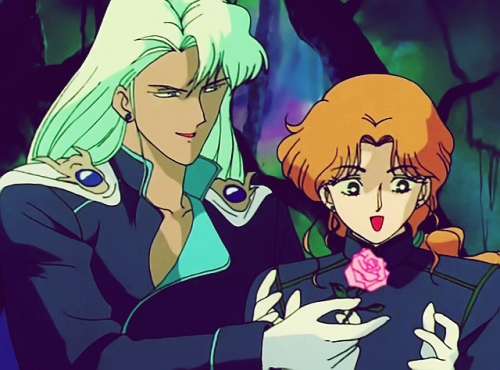
The first season saw the evil Queen Beryl from the Negaverse visit Earth with her minions, Zoisite and Malachite (Kunzite, in the Japanese version), romantically linked antagonists of the Sailor Scouts. Even in my childhood I always found it strange that, compared to the other female characters of the show, Zoisite was strangely flat and shapeless. Turns out, Zoisite and Malachite were gay lovers in the original version.
2. Sailor Neptune and Sailor Uranus

More than just kissing cousins, though the relationship between the characters was too much for North America. Apparently, the two also become mothers in a later episode, or “mama” and “papa,” which leads me to . . .
3. Sailor Uranus

Haruka (Amara, in the US version) was a butch woman. She often dressed in manly clothes, raced motorbikes, and apparently, Sailor Moon and Sailor Venus spend a whole episode swooning over the new “guy” Sailor Neptune is close with, before realizing their crush is on a woman. “Sorry if it disappoints you that I’m a girl,” she quips.
4. Sailor Jupiter and Sailor Uranus
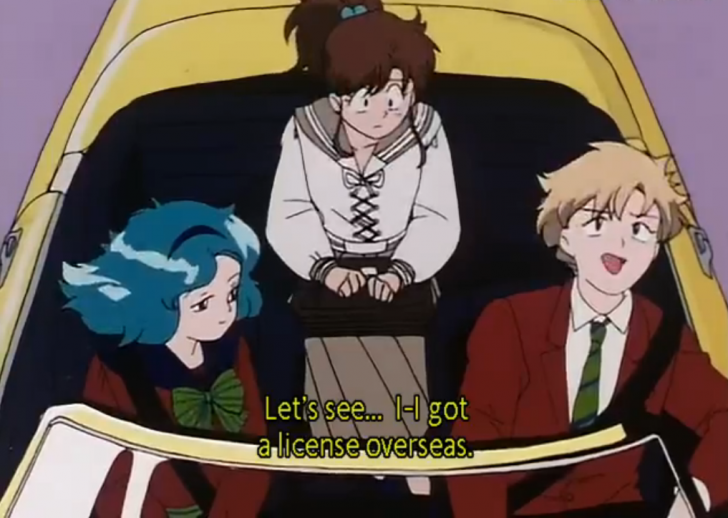
Speaking of crushes, my childhood favourite, Sailor Jupiter, develops a crush on Sailor Uranus (it’s the butch women thing; apparently the Sailor Scouts love them) after her life is saved by Uranus. This was changed to a strong admiration in the US translation.
5. The entire final season
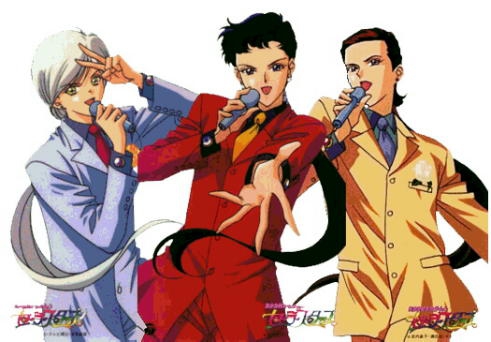
Ballenger describes how the entire last season was cut from the Sailor Moon series, because there’s really no way of getting around the Sailor Star Lights, three women from another planet who come to Earth looking for their princess. Their strategy? Take on male pop-singer personas to draw women to them, which will make it easier to find her. The leader of the Three Lights, Seiya, even falls in love with Sailor Moon, which makes it a transgender or lesbian romance, depending on how you interpret the character.

 Why you can trust Xtra