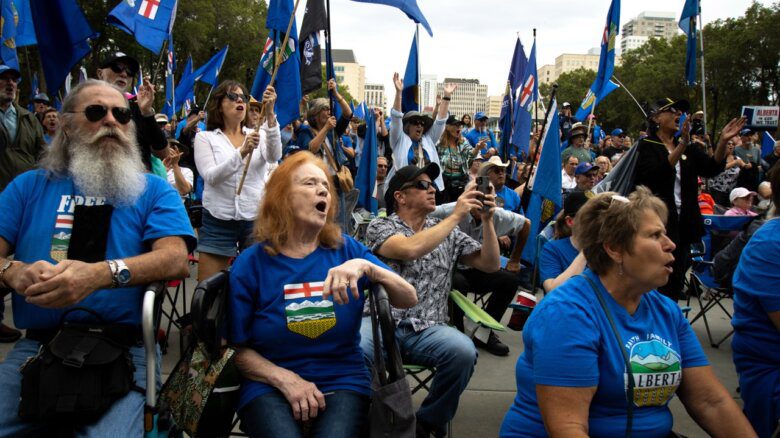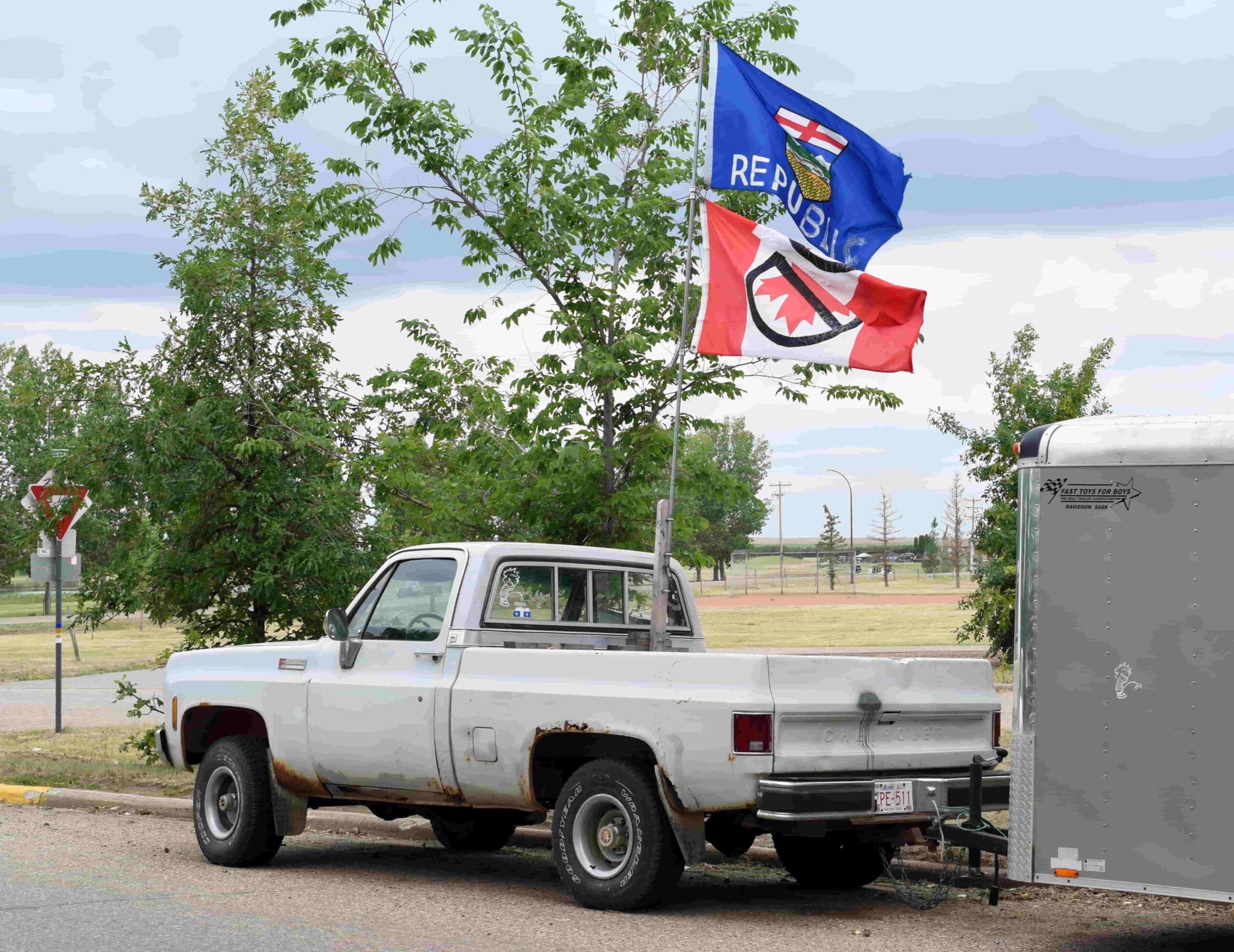
A sense of inevitability has set into the public mood in Alberta, as it seems that a referendum on independence is going to happen this fall, in spite of a cascading series of dubious events. It shouldn’t be this way—no separatist party won an election on a clear mandate for a referendum, so there is no democratic legitimacy for one to take place. Nevertheless, a group of organized separatists was brought into the United Conservative Party by former premier Jason Kenney when he built the party as a vehicle to defeat Rachel Notley’s NDP government. Those separatists turned on him during the COVID-19 pandemic, and then applied pressure to Kenney’s successor, Danielle Smith, to do everything in her power to make this referendum happen. She has complied beyond their wildest expectations.
The situation has very nearly spun out of control over the past couple of weeks, as questions around the legitimacy of the signatures for the citizen-initiated referendum took a back seat to fresh drama, as one separatist group called the Centurion Project were found to have illegally obtained a copy of the provincial voters list, and had made a publicly available searchable database out of it. To compound matters, it also seems that Elections Alberta was alerted to the breach weeks before the actual crackdown by the election agency and the RCMP, and did not investigate—which may or may not have had to do with the fact that Kenney neutered their investigative capabilities after they were digging into questions around his leadership campaign win. The reason why these voter lists are such a big deal is that, unlike a phone book, they contain all the names, addresses and contact information for people who are unlisted from public records, whether that’s judges, politicians, celebrities or victims of domestic violence who don’t want their former partners to find them. That was all exposed by the breach—in fact, Kenney and Notley were doxxed by the Project in one of the group’s webinars on using the database.
It cannot be understated how dangerous this is for vulnerable minorities in the province, because this kind of database will almost certainly be used for harassment. We have to remember that much of the harmful rhetoric that these separatists are employing has been lifted wholesale from MAGA inspiration—they are talking about deporting immigrants, and that in their independent Alberta, citizenship will only be granted to those born there (and that they want women to stay in the home and have lots of children). These separatist groups are virulently homophobic and transphobic, and it is similar pressure groups like these that have been a driving force behind the province’s anti-trans legislation and book bans that are heavily focused on queer and trans materials. They are also heavily invested in conspiracy theories that are completely divorced from reality, like the King being involved in a scheme to siphon wealth from the country, or that trans people are responsible for 75 percent of mass shootings. But there are adherents that will credulously believe the things they say about their supposed oppression by the rest of Canada.
@xtramagazine Mark Carney’s Liberal government says they want to ban social media use for minors under the age of 16. And if they go through with it, it could have huge impacts on queer and trans people across Canada. At their convention last weekend, Liberal Party members passed a policy resolution that calls for a law similar to one introduced in Australia last year that would set a minimum age of 16 for creating social media accounts in Canada, and puts the onus on social media platforms to police who can create accounts. The idea behind the policy is well intentioned: party members said they want to protect kids online from all of the harms and garbage that social media platforms present—and let’s be real, they present a lot of harms to young people. And the policy has widespread public support—75 percent of Canadians polled by Angus Reid said they supported a social media ban for users under the age of 16. An open letter to the prime minister in support of the ban was also signed by groups including the Canadian Medical Association, the B.C. Pediatric Society and the Ontario Psychiatric Association. But the policy could pose new problems for trans people accessing information online. We break down how the process of age verification comes with a lot of caveats for LGBTQ2S+ Canadians. #lgbtqnews #cdnpoli #ageverification #canada #canadanews ♬ original sound – Xtra Magazine
There is fertile ground for believing in this nonsense, because particularly in rural Alberta, there is a hostility toward so much of what makes up our pluralistic society. This is a part of the country that I grew up in. When I was in my teenage years, living near Pigeon Lake, the community decided that my new-agey mother’s Reiki practice was practicing witchcraft, and they started threatening us to leave. Those threats included killing our dog to send a message to get out, and we eventually did (though I wasn’t told that this was the reason until years later). This was the mid-’90s, and they were concerned about witchcraft, and that my mother might be poisoning them when she volunteered for school lunches and what have you. And frankly, these are the same kinds of people that make up the ranks of the separatist movement in Alberta.
It cannot be understated that at its core, Alberta separatism is a white nationalist project, with a heaping dose of Christian nationalism to go along with it. None of this is new either, and it predates MAGA—the roots of this go back to at least the ’70s and ’80s, when they blamed Pierre Trudeau and the National Energy Program for the global crash in oil prices when a supply glut hit the markets, forcing producers to abandon the province rather than lose money. Since then, successive provincial governments have force-fed the population grievance porn, where the federal government, and most especially the Liberals and anyone named Trudeau were somehow invested in Alberta’s demise. This got reinforced by another oil price crash in 2014, and both Notley and Justin Trudeau were blamed, even though neither were in office when the crash happened (and they memory-holed the fact that Stephen Harper was completely indifferent). When the population is indoctrinated with grievances, it feeds the resentment that fuels the separatist movement.
The separatist sentiment, particularly regarding immigrants, hasn’t been helped by the fact that governments at every level in this country have spent the last year scapegoating newcomers for various problems from the housing crisis to collapsing healthcare, to high levels of youth unemployment. (All the while completely ignoring the culpability of the premiers who screamed for more immigration to deal with post-lockdown labour shortages while they did nothing about housing or healthcare, both of which are in their jurisdiction.) The fact that Liberal prime minister Mark Carney adopted the language of U.K. Reform leader Nigel Farage in talking about getting immigration “under control” is exactly the kind of fodder that these separatists and far-right groups do not need, because it reinforces their poisonous narratives. These attitudes fester in the fever swamps of the far-right disinformation ecosystem, so that one of the leaders of the separatist movement believes there are Chinese communist soldiers in Canada in part because he saw six Asian men in West Edmonton Mall wearing new coats. And be assured that the disinformation swamps will get so much worse as foreign actors looking to sow chaos use them to turn Alberta into the Donbas of Canada.
Ultimately, this referendum does not need to happen. If she had any integrity at all, Smith would have put a stop to it because there is no democratic legitimacy for it, and it has only gained public momentum because she created the conditions for it to happen. This is where the real work needs to happen: ordinary Albertans need to start organizing at the grassroots to take the UCP back from separatist control (and remove Smith in the process at the next leadership review). The separatists only represent a small minority in the province, and they should not be dictating the agenda for everyone else, both in Alberta and across the country. We should not be held hostage to these swivel-eyed loons, but that means that everyone in the province needs to stand up and get organized, lest we lose the country in the process.
 Why you can trust Xtra