The U.S. government shutdown ended late on Wednesday, but many LGBTQ2S+ people are still facing hunger amidst the return of the Supplemental Nutrition Assistance Program (SNAP). The federal program provides funds for approximately 42 million Americans to buy nutritious foods at grocery stores. While some states issued full or partial November SNAP benefits during the weeks-long government shutdown, other states issued none. Experts have suggested that there may be delays as states that dispersed partial benefits correct payments.
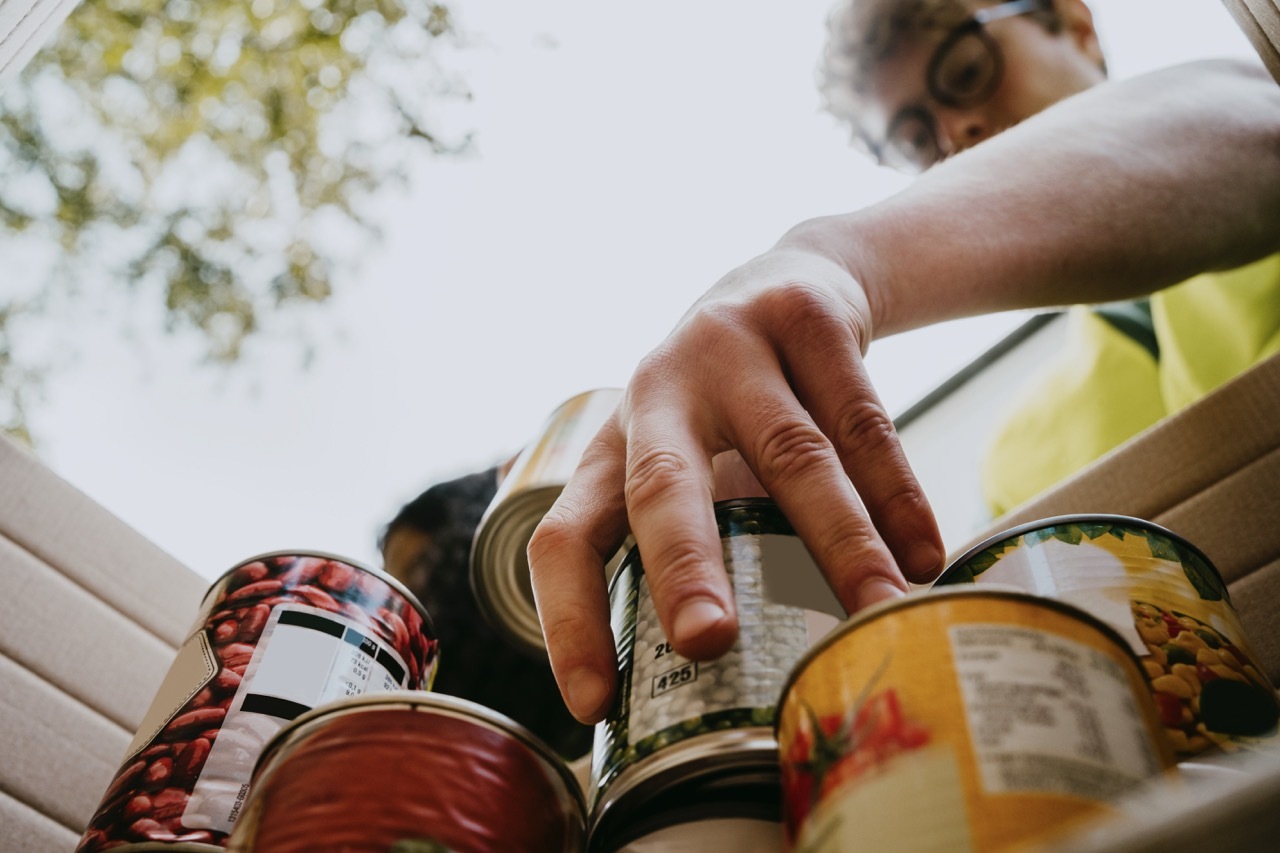
Even as SNAP benefits are restored, food banks are still indicating record demand. Food banks are much less efficient at distribution than SNAP: the program’s beneficiaries receive a debit-like card with funds to use at grocery stores, which is quicker and more convenient. On average, the food bank network can provide only one meal for every nine provided through SNAP.
Like many marginalized communities in the U.S., LGBTQ2S+ people have felt the extreme impact of the SNAP crisis. A 2025 report from the UCLA School of Law’s Williams Institute found that approximately 2.1 million LGBTQ2S+ adults rely on SNAP. That’s 15 percent of LGBTQ2S+ adults, compared to 11 percent of cisheterosexual adults. Queer and trans Americans’ greater dependence on SNAP can be largely attributed to economic injustices such as wealth gaps and employment discrimination.
Emily Hickey works as the Pride in Aging case manager at Chicago’s Center on Halsted, which serves the city’s LGBTQ2S+ community. Hickey says food banks aren’t enough to support the community. “One needs to find a pantry with hours that are compatible with their schedule, coordinate transportation and then potentially wait in long lines due to high community need at this time,” she says. “Many food banks have delivery programs for seniors and those with disabilities; however, they often have wait-lists and it can take some time to get connected. SNAP funding is essential.”
But irrespective of the SNAP disruption, data shows that food insecurity disproportionately affects queer and trans people. According to a 2025 study in the Food and Nutrition Bulletin, 6.7 percent of LGBTQ2S+ people are food insecure in the U.S. The reality is worse for trans people and LGBTQ2S+ people of colour, with 9.8 percent and 9.5 percent experiencing food insecurity respectively.
Tweetie Fatuesi serves LGBTQ2S+ Pacific Islanders as the community services director at the United Territories of Pacific Islanders Alliance Washington (UTOPIA Washington). “Many of our community members experience higher rates of poverty and unemployment,” she says. “This makes consistent access to healthy, culturally relevant food a challenge.” Even as SNAP benefits return, queer and trans Americans continue to face systemic disadvantages around food security.
Food access has been a long-term crisis for marginalized communities in the U.S., but these communities also have a history of resilience on this issue. In 1969, the Black Panther Party (BPP) launched the Free Breakfast for School Children Program, which provided free meals and basic healthcare to tens of thousands of Black children through the 1970s. The free breakfasts drew the ire of then FBI director J. Edgar Hoover, who called them “potentially the greatest threat to efforts by authorities to neutralize the BPP and destroy what it stands for.” FBI raids of these efforts to feed children were commonplace.
A disturbing echo of these violent acts can be found in the weaponization of food access through the SNAP disruption. While refusing to fully fund SNAP during the government shutdown, Trump blamed Democrats, telling reporters last month: “When you’re talking about SNAP, if you look, it’s largely Democrats hurting their own people.” By suppressing food access like the many government leaders before him, Trump starved communities for his own political agenda. The move parallels the U.S.’s historical starvation of Indigenous communities by destroying food sources like the buffalo population and forcibly removing Indigenous people from their lands, causing them to rely on a majority white-led government for nutrition.
Yet despite all odds, LGBTQ2S+ Americans aren’t backing down from the fight for food justice. Center on Halsted has collaborated with food pantries like Greater Chicago Food Depository to offer fresh produce and pantry items at the centre’s multiple locations in the city. Working with local hunger relief organization Nourishing Hope and HIV resource centre the HUB, Center on Cottage Grove provides Instacart-style delivery of free groceries once a month, allowing community members to order food items online for pickup. Center on Addison, which serves LGBTQ2S+ seniors, provides lunches three times a week through the Golden Diners Program, in partnership with the City of Chicago. “Regardless of who’s in office, Center on Halsted will continue to support community members and turn no one away who’s in need of our services,” says Hickey.
Meanwhile, on the west coast, UTOPIA Washington provides food for and beyond the LGBTQ2S+ Pasifika community. In response to the COVID-19 pandemic, in 2021, the organization launched Makeki Village Market. The market is open three days a week, distributes food at schools and provides culturally relevant foods to queer and trans Pacific Islanders, though everyone is welcome. In light of the SNAP crisis, UTOPIA Washington started collaborating with other food pantries to feed more people. Despite the Trump administration’s funding cuts, the Makeki now serves over 500 households.
UTOPIA Washington also runs the Fa’ato’aga program, which allows community members to grow their own produce on shared farming space during the spring and summer. Fa’ato’aga provides a pathway to what Fatuesi calls food sovereignty, or the community’s ability to sustainably provide food for itself and not have to rely on oppressive colonial institutions for nutrition. “Our vision is to create pathways where food access is not just about survival but about dignity, culture and community resilience,” says Fatuesi.
In New York City, a LGBTQ2S+ food liberation group was recently created after co-founders Kadie Radics and London Dejarnette met at a local Butch Monthly meetup. Last week, the new NYC Queers 4 Food Justice coordinated a mutual aid distribution at Ginger’s, Brooklyn’s oldest lesbian dive bar. When the group announced the event at the iconic Sapphic bar, other organizations came forward to help. Lola, a period and sexual wellness store, donated organic, cotton-based menstrual products. A barber from a local gender-neutral barbershop offered donation-based haircuts. Within days of the announcement, NYC Queers 4 Food Justice had raised $4,000 to distribute food, Visa gift cards and health and sanitary products at Ginger’s.
The BPP’s legacy of advancing intersecting human rights and food security can also be seen in the work of multiple Black queer- and trans-led organizations today. New York City’s Black Trans Liberation offers weekly community dinners, paired with political education and free produce. The Brooklyn-based Okra Project, which disperses food to Black trans, non-binary and gender-expansive people, recently expanded its holiday grocery fund to support people during the SNAP crisis. The fund distributes $400 to each recipient to buy groceries.
Dejarnette notes how the delicate ecosystem of SNAP and food pantries has not been enough to keep people safe. “Even prior to this benefit freeze, SNAP benefits, although [they were] the first line of defence for food insecurity in the U.S., have not met the needs of most Americans,” they say. “The average daily SNAP allotment is $6 a day. I can think of very few meals in NYC that are $6.”
SNAP benefits are also difficult for many LGBTQ2S+ people to access because of their intersecting identities. “I remembered my experience being food insecure in college and not being able to enroll in SNAP because of the legislative barriers,” says Dejarnette. “Sixty-seven percent of students who are eligible for SNAP benefits do not utilize them, often because the process is essentially impossible to navigate.” Additionally, the food assistance program requires recipients to have an address, limiting access for many unhoused people. The non-profit National Network for Youth notes that as much as 40 percent of homeless youth are LGBTQ2S+, while a 2020 Williams Institute study found that 8 percent of trans adults had experienced homelessness in the year prior to being surveyed. On top of this, the Trump administration’s notorious “Big Beautiful Bill”-–which was passed this summer—mandates stricter work requirements to receive SNAP benefits, barring access for many Americans.
By these structural inequities alone, many LGBTQ2S+ people are ineligible for SNAP. “Even before the government shutdown, SNAP was not working alone to address food insecurity,” says Dejarnette. “It is well understood in the queer community that we have been failed by our governmental representation.”
So as SNAP benefits are restored, LGBTQ2S+ Americans across the country continue to mobilize for their communities. Dejarnette recalls their journey from being food insecure to becoming a food justice organizer five years ago. “I always dreamt of having a food pantry for queer people,” they say. “There is a whole market of butches who would love to help carry boxes of food and pass it out to their community.” Co-founder Kadie Radics agrees, adding that queer and trans communities will persevere. “Queer community will always prevail,” says Radics. “As they say, an army of lovers will not fail.”

 Why you can trust Xtra