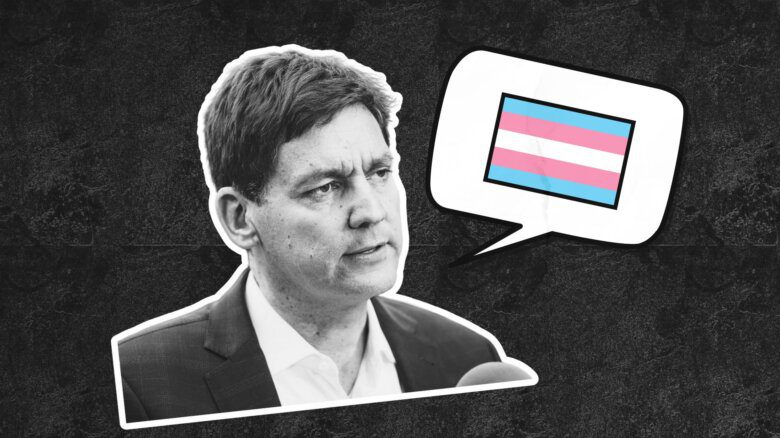
The right-wing political agenda that seeks to legislate trans people out of existence is once again taking aim at some of the most vulnerable trans people: those living in prisons. In the northern part of Turtle Island, currently known as Canada, François Bonnardel, Quebec’s minister of Public Security, announced this spring that trans-affirming policies would be overturned and its provincial system would return to the practice of holding trans people in prisons based on their “anatomical sex.” This follows in the footsteps of U.S. president Donald Trump’s January executive order denouncing “gender ideology extremism” and calling for sex-segregation in spaces like prisons and bathrooms.
The reality is that trans people make up a small fraction of all incarcerated people. In Quebec, the roll back on trans rights is suspected to affect only 0.1 percent of the prison population—just six people. Yet there is a dangerous voice of dissent coming from certain “feminist” organizations and prisoner advocacy groups that loudly target trans women for exclusion by advancing the old trope that imagines trans women as a “threat” to cis women. It is disturbing that a few incarcerated trans women have become scapegoats for the violence that already occurs in women’s prisons. This division benefits the prison system, as it detracts attention from how the prison is the shared source of violence and oppression among all incarcerated people.
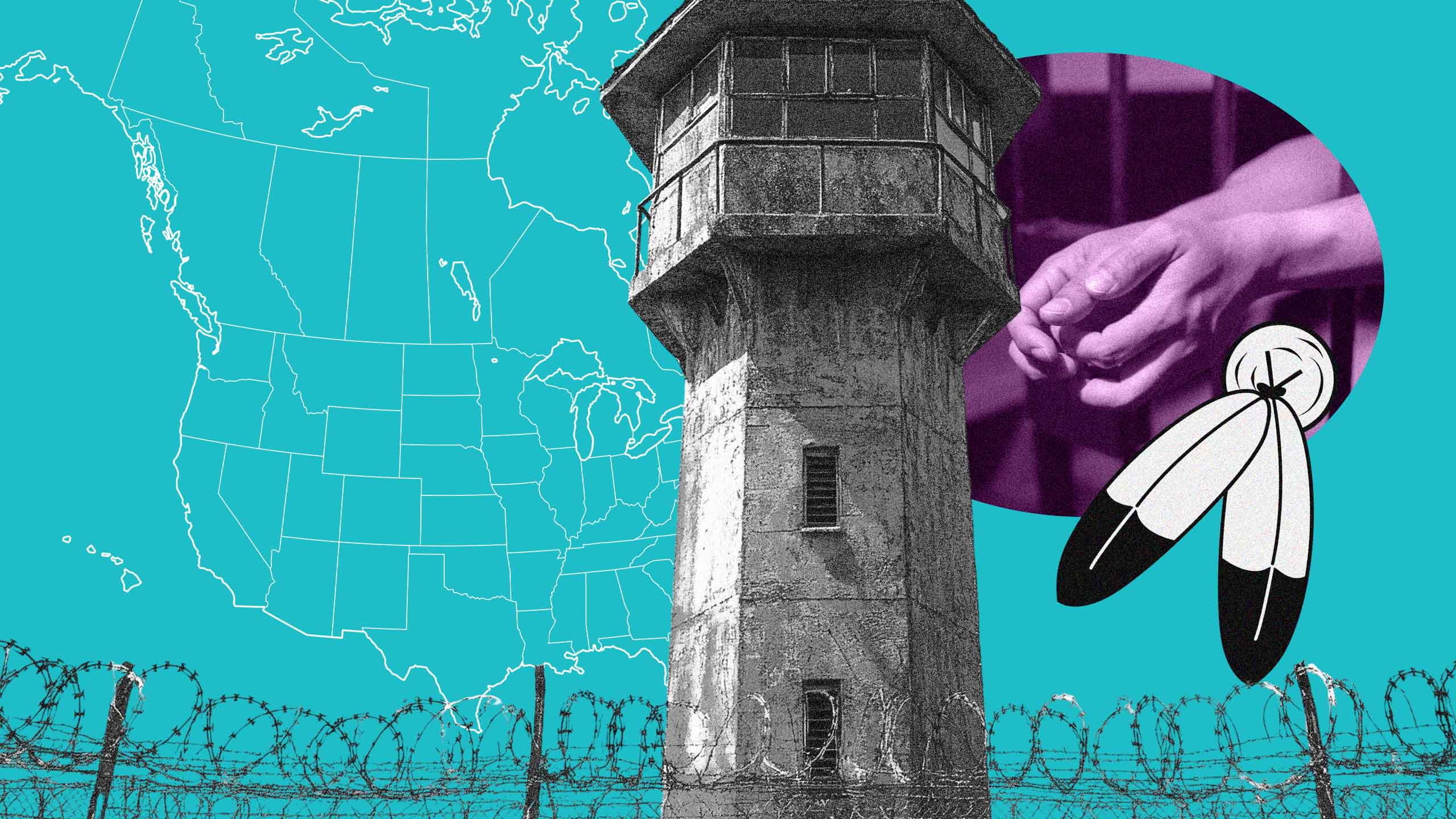
Indigenous trans and Two-Spirit people are most affected by changes to prison policies, given how Indigenous peoples are mass incarcerated in Canadian prisons. According to 2021 data from the Office of the Correctional Investigator, Indigenous peoples make up 30 percent of those who are federally incarcerated, and 50 percent of those in the women’s system. In provincial systems in the Prairies, like Manitoba, a 2020 Statistics Canada report shows that this number is a devastating 75 percent. Considering this context, it perhaps shouldn’t be surprising that nearly half of those accommodated under trans rights policies in Canada’s federal prisons are Indigenous. This is why trans prison policies aren’t just about gender—they are about Indigenous rights.
Our reflection comes from a series of conversations that we, Fallon Aubee and Leon Laidlaw, had about the current state of trans rights in prisons. Laidlaw is speaking from their position as a white settler trans scholar who researches trans prison reforms and abolitionist movements, and Aubee from her lived experience of incarceration and fighting prison injustices as a Métis Two-Spirit trans woman.
In 2017, Aubee was highly celebrated by the news outlets that shared her story as the first trans woman in Canada to be transferred to a women’s penitentiary based on gender identity, not sex. Her transfer was put into action by a then-new wave of prison reform in Canada based on trans human rights. Six years later, Aubee filed a human rights complaint against Correctional Service Canada because she continued to be classified as “male” in institutional records. In her complaint, Aubee explained that the Western gender binary was imposed on Indigenous Peoples through colonization, and argued that the federal prison system was continuing colonization by refusing to affirm her identity as a woman.
In addition to her 12-year battle to be recognized as a woman, she had to fight to be recognized as Indigenous by Canada’s federal prison system. Not long ago, Correctional Service Canada only categorized Indigenous Peoples as either “First Nations” or “Inuit,” meaning that Métis people were completely erased. Being incarcerated only exacerbated a lifetime of disconnect that Aubee already experienced. Having grown up Métis in the 1960s in Northern Alberta and Saskatchewan, being sent to “day school” at six years old, and subject to conversion therapy by Catholic priests and nuns, Aubee knows the pain of having her identity stripped away by violent colonial systems. Now she is an advocate for prisoner rights, and especially for Two-Spirit people who are reclaiming what gender and sexuality mean to them as Indigenous Peoples.
Aubee came out as a trans woman in 2003 while serving a life sentence in a men’s penitentiary. Prison policy insisted that she do things according to the white Western world—like seeing the psychiatrist to get a diagnosis of “gender dysphoria” in order to get a prescription for gender-affirming hormones at the time. In this process, her culture was put to the sidelines. The Western trans narrative never fully or accurately characterized her experience as a Two-Spirit person. Yet she found strength from the Indigenous Elders she met while incarcerated. A Métis Elder came into the prison about once a month. He would share stories about Métis history and culture and, after a while, they began talking about Two-Spirit people. It was around 2008 when Aubee started identifying as Two-Spirit, although this term was not recognized within the prison system at the time. Correctional Service Canada’s current policy as of May 2023 recognizes Two-Spirit people under the umbrella of “gender diverse offenders.” However, there is no definition included for Two-Spirit, nor any explanation of how Two-Spirit people may require different accommodations than non-Indigenous people.
@xtramagazine The Quebec government has decided to crack down on gender-neutral words in official government documents and communications. Minister of the French Language Jean-François Roberge said this week that the government is banning the use of gender-neutral words in all official government communications in what he says is an attempt to preserve the French language. The province will ban the use of words like “iel”—basically the French version of the singular “they” pronoun—as well as ways of writing words that attempt to blend their masculine and feminine forms. For now, Roberge says the policy will apply to government departments and municipalities, but similar rules will be introduced for schools, universities and the healthcare system. It is the latest move against trans and non-binary people by Premier François Legault’s government. Back in June, the province announced a new prison policy that would force trans people to be detained in provincial prisons according to their assigned sex at birth unless they have had bottom surgery. That’s in addition to the controversial “Comité des sages report on gender identity” that came out earlier this year and has advocates preparing for further rollbacks on trans rights. We break down what you need to know about why the Legault government is choosing now—in this broader moment of moral panic around queer and trans people—to create a culture war against a few words. 💬🇫🇷 #quebec #lgbtqnews #canada #canadanews #pronouns ♬ original sound – Xtra Magazine
The term “Two-Spirit” was coined by Elder Myra Laramee at the third annual Native Gay & Lesbian Gathering held near Beausejour, Manitoba, in 1990. It is an umbrella term to describe Indigenous forms of gender and sexuality, outside of a colonial binary mindset (that is, anything that resists Western cis/heteronormativity). Many nations and languages have their own terminology. While there is no universal definition of Two-Spirit, Aubee sees it as a way of walking in both worlds and finding a balance between masculine and feminine energies. Two-Spirit people also often have traditional responsibilities within their nations, such as holding certain roles in ceremony.
Movements for trans human rights entered mainstream discourse in the 2010s, but for Two-Spirit people, this has always been an Indigenous traditional way of life. Reclaiming Indigenous understandings of gender and sexuality is a form of decolonization, and which involves restoring Two-Spirit people’s valued position and sacred responsibilities. Just as “gender identity” and “gender expression” are protected under Canada’s human rights legislation, Indigenous people have the right to self-determine all aspects of their lives and identities as members of sovereign Indigenous nations. Indigenous self-determination is reflected in international human rights, known as the United Nations Declaration on the Rights of Indigenous Peoples, which Canada committed to implementing in 2021.
Colonial governments must be held accountable to the rights of Indigenous peoples. It is equally important that our own communities engage in reconciliation. Indigenous voices can no longer be marginalized or excluded from conversations about trans rights—and anything that affects their lives. Aubee, for one, is committed to ensuring that Two-Spirit people are no longer left out of policy decisions in Canada’s prison system. She calls for Canada’s federal and provincial/territorial prison systems to conduct a review, a comprehensive consultation, and reform their trans prison policies to ensure that they reflect the needs of Two-Spirit people. These reforms have the potential to provide an outlet for incarcerated Two-Spirit people to (re)connect with their cultures, build relationships and embrace their identities while surviving a violent colonial system. Her ultimate goal is for a decolonial and anti-carceral future—a return to a world where Indigenous Peoples are not controlled by colonial governments and where prisons no longer exist.
By establishing the connection between trans rights and Indigenous rights, we hope to strengthen advocacy efforts for incarcerated Two-Spirit and Indigenous trans people, who are most impacted by the roll back of gender-affirming prison policies, and yet who have never been fully represented within these policies in the first place. Collectively, we need to move beyond defensive strategies—and remove ourselves from problematic “debates” about whether trans people exist—and toward actionable change that will benefit the lives of all people. As Aubee puts it, not being able to see each other for the value that we bring as Two-Spirit, trans or any other identity is a barrier for future success for all peoples, from all nations, from all directions.


 Why you can trust Xtra