It’s official: there is no longer a political cost for a government invoking the Notwithstanding Clause, meaning that rights will increasingly be under threat in this country. While Quebec had set the precedent in 2019 for pre-emptively invoking the clause, which can override a certain number of Charter rights for a period of up to five years, in order to stave off challenge to their so-called “state secularism” laws that mostly discriminated against Muslim women and Sikhs, other provinces have now taken it up with wild abandon, and any sense of shame or reluctance to invoke the clause that existed since the Charter’s creation in 1982 has now vanished.
While Quebec’s government set the standard, other provinces have run with it. In Ontario in 2021, Doug Ford invoked it to override certain election advertising laws in order to make it harder for third-party interest groups to run their ads before and during an election, hobbling attacks on his party. That law was able to be struck down at the Supreme Court of Canada because the majority of the court deemed it a violation of the right to vote, as opposed to freedom of expression, meaning the notwithstanding clause couldn’t protect it. Ford’s attempt to invoke the clause to force contracts on school support workers in 2022 was eventually withdrawn after massive protests, but Ford is known to back down if protests get too big, because deep down, he wants to be the “fun uncle” and doesn’t like it when too many people are mad at him.
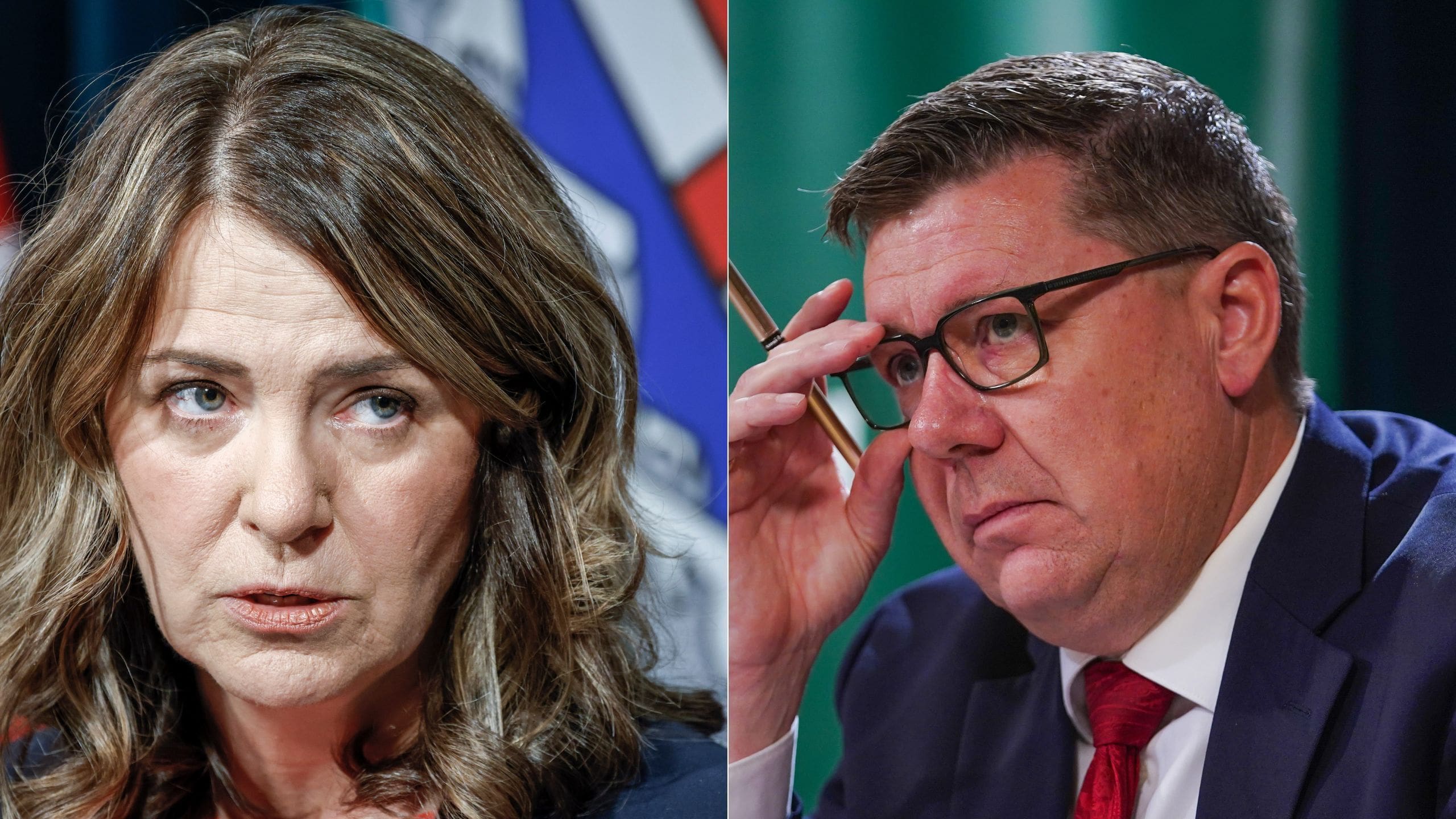
In the fall of 2023, Saskatchewan invoked the clause to protect its bill to force parental consent for students who want to change their pronouns or chosen names—something that normally wouldn’t be legislated at all—and he recalled the legislature early to ram that bill through. That too has been challenged in the courts, but the Saskatchewan Court of Appeal ruled this past August that while they can’t strike down the bill because the notwithstanding clause has been invoked, they nevertheless found that courts can offer what is termed “declaratory relief,” meaning that they can still rule if the notwithstanding clause were not in effect, that law would be unconstitutional and would be struck down as a result. It’s not much, but it’s information for voters who can then go after the ruling party in the next election.
Two weeks ago, the Supreme Court of Canada agreed to hear the appeal of this decision, which it will also likely hear at the same time as the appeal against Quebec’s use of the notwithstanding clause to protect their “secularism” legislation. The reason why is because the Quebec Court of Appeal came to the opposite conclusion of Saskatchewan, that courts can’t offer opinions on any legislation once the clause has been invoked, and now the Supreme Court has to decide which is the correct interpretation. The federal government’s submission to the court in the Quebec case has already caused meltdowns amongst the Bloc Québécois, the federal Conservatives and several conservative premiers, who all want the courts to shut up and not tell people that their laws are discriminatory.
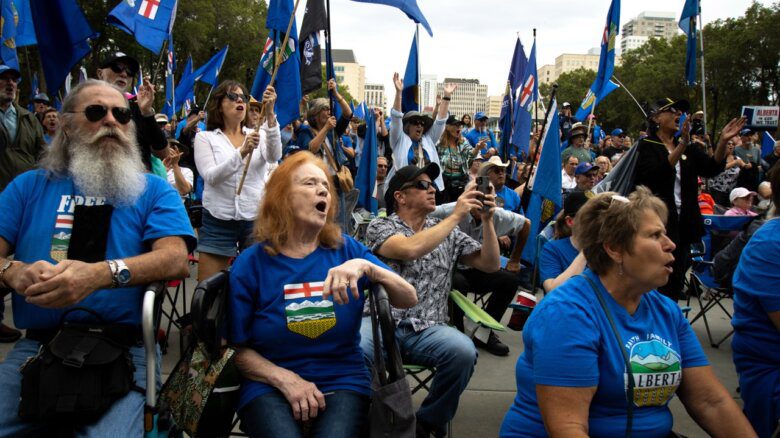
Around the same time as this was happening, Alberta invoked the notwithstanding clause to insulate its back-to-work legislation to end a teacher’s strike, and they also did it by invoking time allocation in the legislature, rushing the bill through with no public input, no committee hearings and a mere hour of debate at each legislative stage, passing the bill at around 2:30 in the morning. While there has been talk of a general strike in the province in protest, nothing has materialized as of yet, but Smith is getting ready to invoke the clause again to protect her anti-trans legislation, again so as to avoid any court challenges, while her apologists in both legacy and social media trot out lines like “Using the Notwithstanding Clause can’t be unconstitutional because it’s part of the constitution.”
@xtramagazine Alberta premier Daneille Smith’s governing United Conservative Party will consider a proposal to ban Pride flags from flying on public property at their annual convention later this month. Every year, party members gather to set the agenda and spell out their priorities to Smith and her government. This year, 36 will be discussed and voted on by UCP membership when they gather from Nov. 28 to 30 in Edmonton. Policy Resolution 3 calls for the party to “Allow only official government flags, specifically Canada, Alberta and/or official Municipality flags, to be flown on Provincial Government, Municipal Buildings or Alberta Government tax funded property.” The proposal’s rationale notes that other flags create “ideological division” in the province and don’t promote “unity and patriotism.” We break down what you need to know, along with other policy resolutions worth paying attention to at the convention later this month that could foreshadow more policy targeting the LGBTQ2S+ community from Smith’s government in the coming months. #alberta #canada #lgbtqnews #albertanews #daniellesmith ♬ original sound – Xtra Magazine Advertisement
To round this off, two weeks ago, the Supreme Court of Canada struck down the mandatory minimum sentences for accessing and possessing child sexual abuse materials because there remain situations where that mandatory sentence would do more harm than good, such as an 18-year-old receiving an unsolicited sext from a 17-year-old, but who didn’t delete it from their phone. However, as is usually the case, critics didn’t actually read what the decision said, where the Court said that a mandatory minimum is fine so long as it’s not overly broad and that Parliament can “build a safety valve that would allow judges to exempt outliers for whom the mandatory minimum will constitute cruel and unusual punishment.” (Plus the fact that the offenders who brought the challenge did in fact receive jail time that met or exceeded the mandatory minimum.)
Instead, Conservatives especially immediately demanded the federal government invoke the notwithstanding clause to override that judgment, and a Conservative senator tabled a bill to do just that. This was suddenly deemed acceptable to invoke in the first instance rather than doing what the Court itself suggested, which was to craft a better law, and fortunately, justice minister Sean Fraser said that the government plans to do just that. Nevertheless, this is the place we find ourselves—a place where parties or governments are willing to simply invoke the clause to override rights and to keep the courts from even weighing in on whether their laws would be constitutional or not (because, remember, all Charter rights are subject to reasonable limits within a free and democratic society). They’re not even trying anymore, and in most instances, there is no willingness from the public to punish these parties or governments for being quick to override rights.
This is a concerning development given the current state of the world, where authoritarian populism is on the rise, and where it is only barely being held at bay in Canada federally. If it becomes easy to override Charter rights at the first instance, then the Charter will soon no longer be worth the paper that it’s written on, which is especially concerning for queer and trans people. Trans rights are already being attacked in multiple provinces, and queer people’s rights will be next. We’re at a place where even the federal Liberals under Mark Carney have decided to go along with the scapegoating of immigrants as part of their budget plans, which is another alarming development. We will have to wait for what the Supreme Court says about whether or not courts can weigh in on these uses, but it still requires voters to care enough to vote those governments out, and that’s a tough hill to climb in places like Alberta and Saskatchewan.

 Why you can trust Xtra