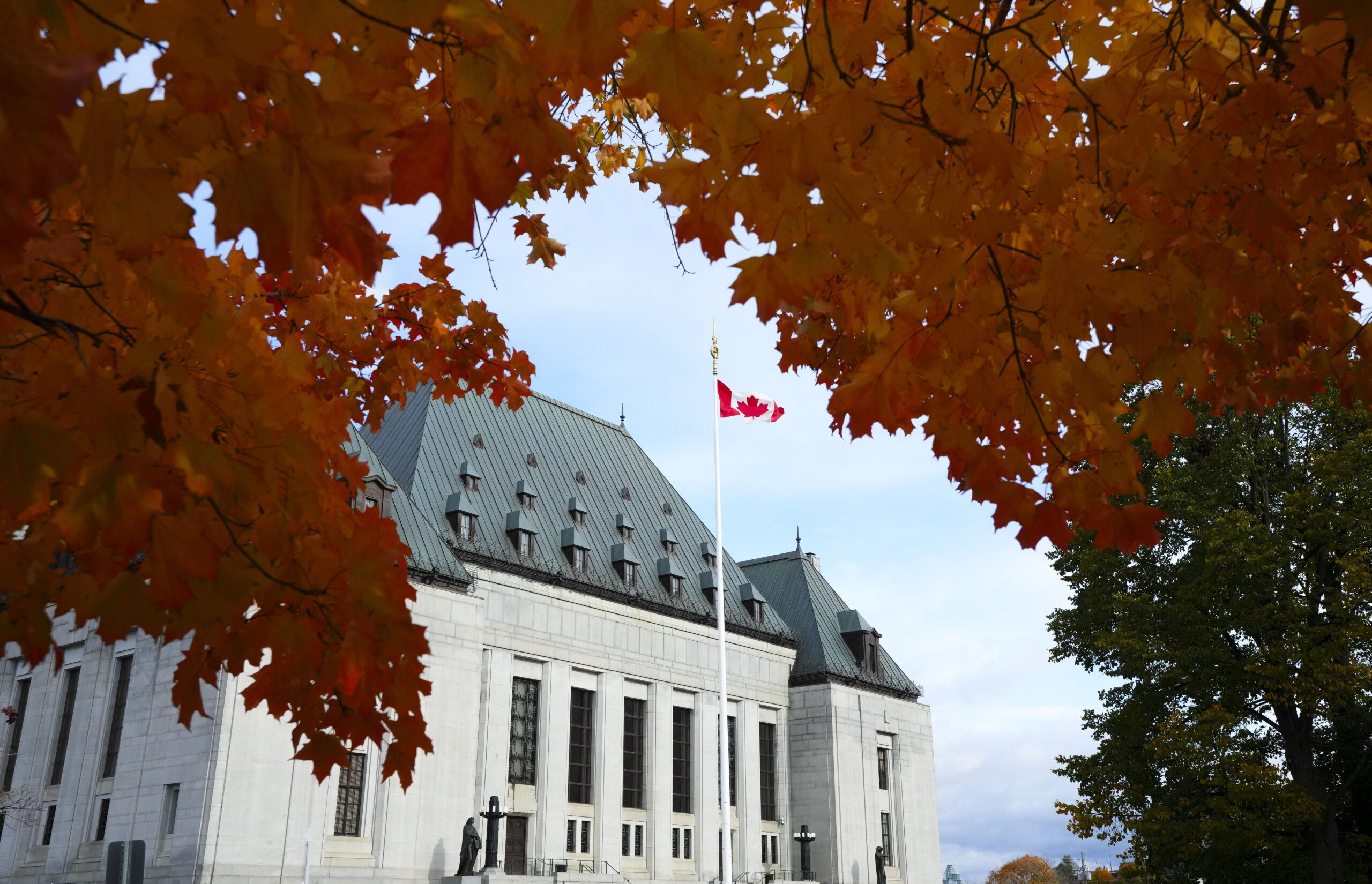
The Notwithstanding Clause has been back in the news lately because of an upcoming hearing at the Supreme Court of Canada regarding its use in Quebec as it relates to the province’s so-called “secularism” law (never mind that their definition of secularism is pretty loose as it tends to largely exclude Catholicism under the rubric that it is “history” and “culture” within the province). As part of this upcoming hearing, the federal government has filed a factum—a statement of facts—with the Court as an intervenor in order to make their own legal argument in the case, as they do on a regular basis when constitutional questions come up. But given the outsize meltdown happening amongst conservative premiers including Scott Moe and Danielle Smith, Bloc Québécois MPs or the right-wing press in this country, you’d think the sky is falling.
While the federal government has been vocal in their opposition to Quebec’s law because it infringes on the rights of minorities—in this case, Sikhs and Muslim women—their factum focuses not on the law itself but rather the underlying legal issue surrounding use of the notwithstanding clause, and whether courts are able to weigh in on its use. The federal government isn’t aiming to strike it down, but rather be able to clearly say that the law would be constitutional if not for the clause.
This is not a novel position. In fact, it’s what the Saskatchewan Court of Appeal ruled this past August following the court challenge against the province’s school pronoun laws. According to the Saskatchewan government, once the notwithstanding clause has been invoked, the courts should have no say whatsoever, and that they shouldn’t be able to touch it. That’s actually what the Quebec Court of Appeal ruled before it was appealed to the Supreme Court. Saskatchewan’s court didn’t agree. Provincial governments are no longer waiting for a court decision before they invoke the clause, but rather they are invoking it pre-emptively in order to head off court challenges. That means that courts have not had the opportunity to weigh in on these laws at all before they are shielded from challenge, which the Saskatchewan Court of Appeal decided was not reasonable.
“Nothing in the remaining text or structure of the Charter, or the Constitution more generally, suggests that the idea of a legislative last word should be equated with a legislature having the only word on the issue of whether legislation limits Charter rights,” Saskatchewan Court of Appeal chief justice Robert Leurer wrote for the majority, emphasis his.
This is largely the federal government’s position in their factum at the Supreme Court, which has the task of determining the final outcome of the different interpretations between the Quebec and Saskatchewan Courts of Appeal. Some of the provinces, like Manitoba, also are taking the Saskatchewan Court’s side that courts should get to weigh in, because of the nature of the clause, and the democratic remedy that is available to voters when governments invoke it.
Under the Constitution, any invocation of the clause can only last for five years, at which point it will either need to be renewed in legislation, or it simply sunsets and dies. The logic behind this is that no government can last longer than five years under our constitution (though we have slowly ensured that the life of a Parliament no longer exceeds four years thanks to creeping Americanization of our democratic norms), so it gives voters an opportunity to either punish a government that invoked the clause, or reward them by letting them carry on in a new Parliament. When the courts get to weigh in and say that this government that has invoked the clause in order to shield an unconstitutional law, that gives the voting public some rather authoritative information that they can then use when it comes time to head to the ballot box.
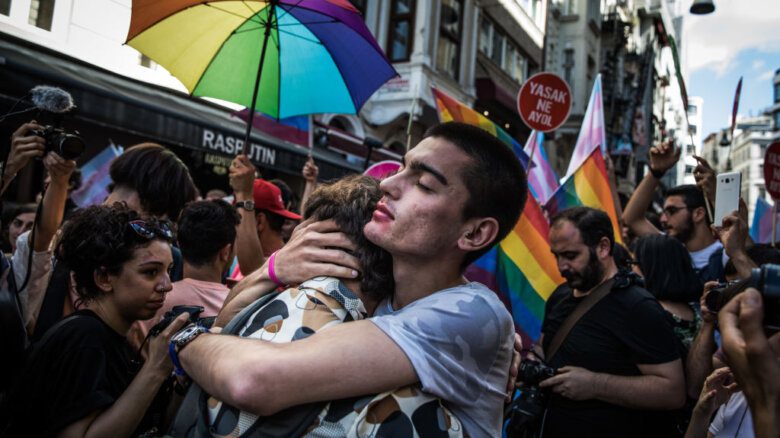
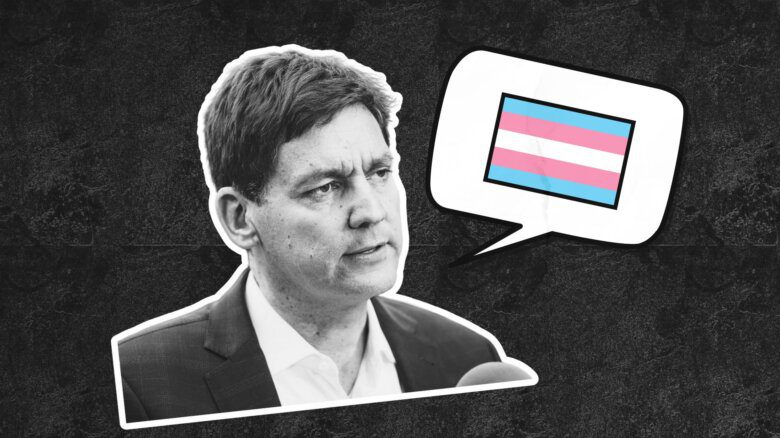
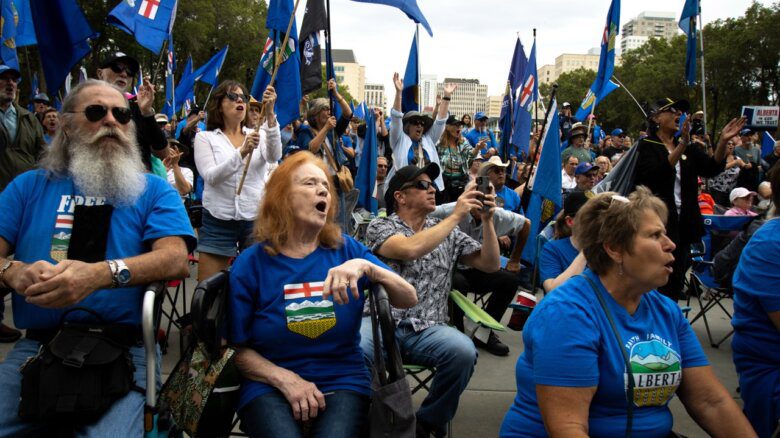
As you might expect, there are a whole lot of provincial governments who don’t want this to happen. Quebec, Alberta, Saskatchewan and Ontario have all lined up at the Supreme Court to say that when a government invokes the clause, the courts should stay out and not even look at the case. It’s pretty clear that’s because they don’t want to be told that they’re violating the rights of minorities, and vulnerable youth most especially when it comes to trans and gender-diverse youth in the cases of Saskatchewan and soon to be Alberta. It would be tremendously embarrassing for those premiers, and it exposes the fact that their arguments have been false, whether that’s Quebec insisting that they need to violate the rights of Muslim women and Sikhs to “protect state secularism,” or Danielle Smith’s bizarre belief that she is somehow protecting the future fertility of these gender-diverse youth whose rights she is violating (because she read up on puberty and considers herself an expert now. No, seriously).
Amidst this, we have seen the ongoing meltdowns cross the opinion pages of newspapers across the country, and in Question Period in the House of Commons. The claim would seem to be that the federal government saying that the courts should get to weigh in on these invocations is somehow attacking the rights of provinces to govern themselves. Others insist that this is going to tear confederation asunder because the notwithstanding clause was the compromise that allowed the Charter to be adopted in 1982 (never mind that pre-emptive use was never the intention of the premiers who adopted the Charter in the first place). Nowhere does the federal government’s position say that provinces can’t invoke it, nor does it say the courts can strike it down, because clearly, they have to follow the letter of the Constitution (and nobody wants to open the Pandora’s box of constitutional renegotiation). They just want voters to be made aware of what their governments are doing when they decide to curtail rights for the sake of political expediency, which is more than fair and reasonable. We can hope that when the Supreme Court hears this case next year, that they will agree.

 Why you can trust Xtra