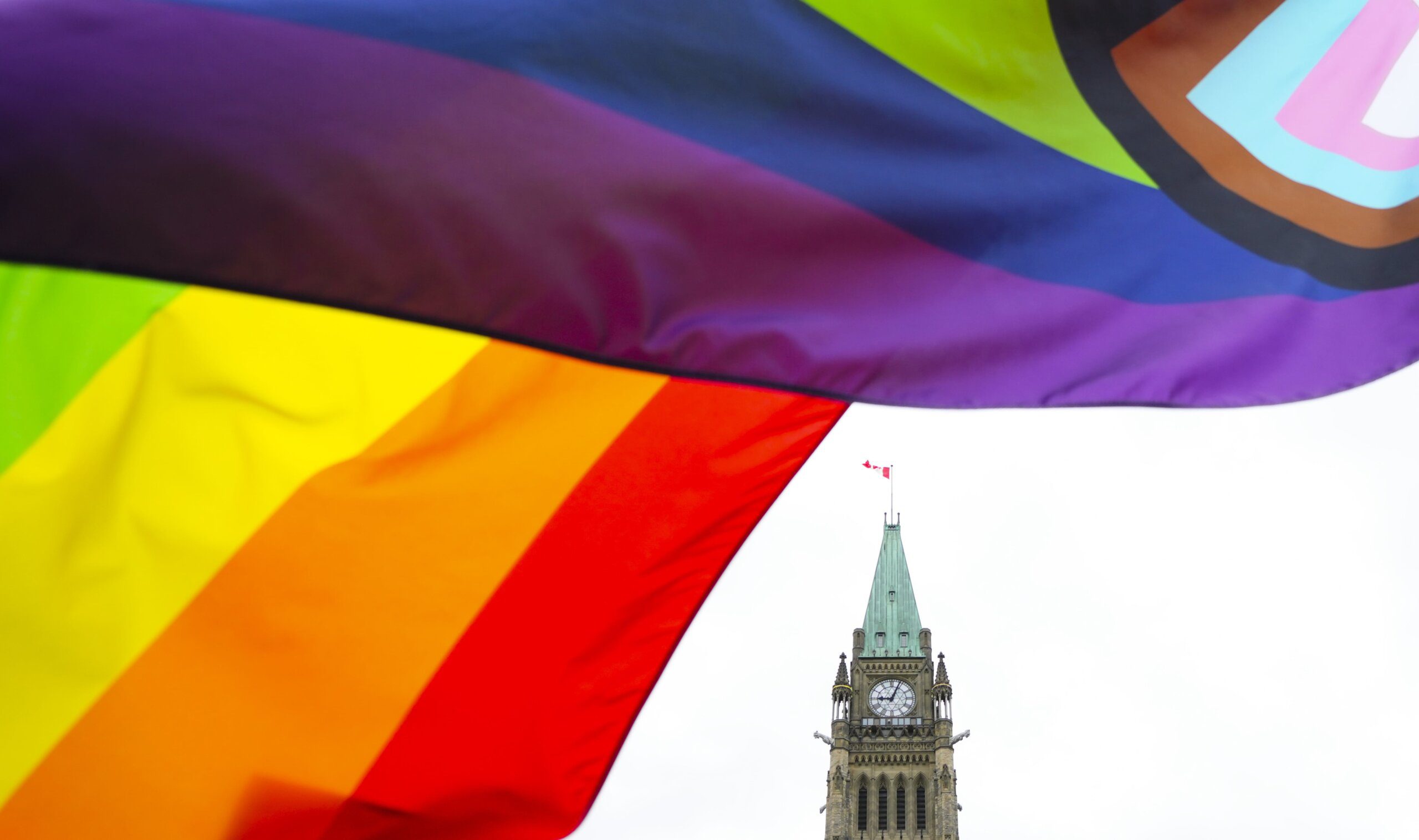
The Parliamentary Pride Caucus has reconstituted following the 2025 federal election, with a bit of a different composition than before. The addition of new senators shortly before the election and the loss of several queer MPs means that queer senators now outnumber MPs within the caucus. In light of this change, there has also been talk that they are discussing opening up the caucus to allies and not just LGBTQ2S+ parliamentarians, which is something I am dubious of.
For a non-partisan and all-party caucus, I am certain that there is a bit of an awkwardness that there is no representation from at least two of the parties in the House of Commons, now that there are no longer any queer NDP MPs, nor have there ever been any out Bloc Québécois MPs. And while there are two out Conservative MPs, Eric Duncan and Melissa Lantsman, neither are currently members of the current Pride Caucus. (Duncan had mentioned in passing at one point when the caucus had first been launched that he was not included in the caucus during the last Parliament because he had missed organizational meetings, not because of any particular objection to being included). That could change when Parliament returns in the fall, and we can hope that it does, but looking for more party representation is likely one of the goals of opening up the caucus to allies.
Working with allies has traditionally been positive for the queer and trans communities—more voices make for louder representation, and more hands make the burden lighter. But, this being said, we are at a place in Canada where we have a critical mass of out MPs and senators. There are more out senators than at any point in Canada’s history, and while the number of queer MPs has diminished (and indeed, there are currently no out queer cabinet ministers after we had three for most of the last Parliament), we are still far ahead of where we used to be as a country. We are still a world leader for openly queer parliamentarians, and that says something. It’s not the 1990s any longer, and we are at a point where our out parliamentarians have enough critical mass to stand on their own, and speak to their own issues in a way that carries more weight.
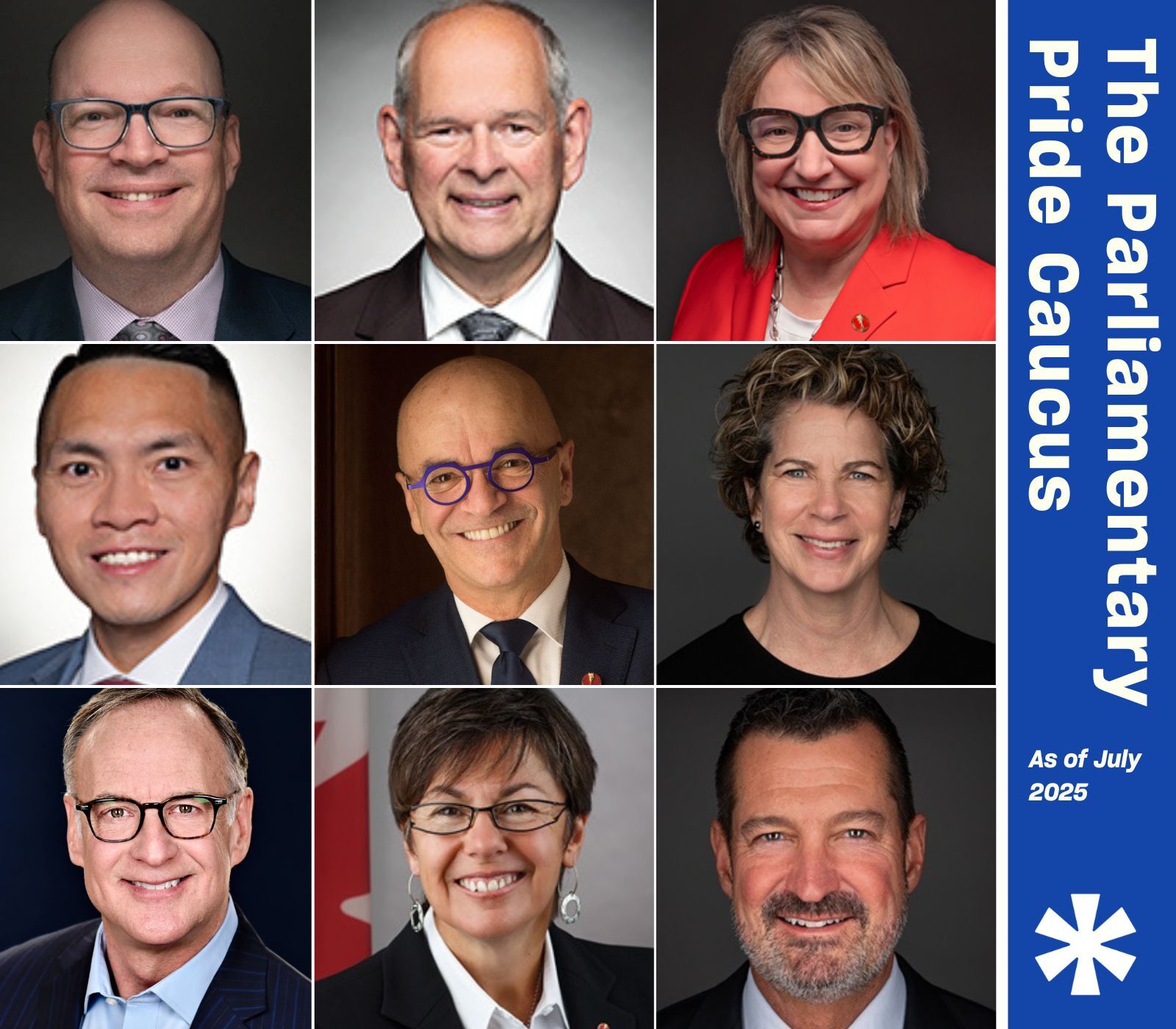
TOP (L-R): Kristopher Wells, independent senator from Alberta (co-chair), Ernie Klassen, MP (Liberal) from South Surrey—White Rock, B.C. (co-chair), Martine Hébert, independent senator from Quebec (Senate vice-chair). MIDDLE (L-R): Wade Chang, MP (Liberal) from Burnaby Central, B.C. (MP vice-chair), René Cormier, independent senator From New Brunswick, Marnie McBean, independent senator from Ontario. BOTTOM (L-R): Robert Oliphant from Don Valley West, ON, parliamentary secretary to the minister of Foreign Affairs, Kim Pate, independent senator from Ontario, Duncan Wilson, independent senator from B.C. Credit: Mel Woods/Xtra
There are plenty of places where allies make contributions to the advancement of queer and trans rights, not just in Canada but around the world. The Global Equality Caucus is important, particularly in contexts where you have countries that don’t have out legislators because they don’t feel safe being out, or where they may face persecution. This includes places like Europe, where LGBTQ+ scapegoating is a common political tactic, even in countries that are ostensibly liberal democracies (like Poland). This is the kind of thing where allyship is crucial, because you have these places where you don’t have queer and trans legislators who can speak for themselves, and there is a greater need for solidarity in the face of oppression. This is not a situation that Canada finds itself in.
While the subject of opening up the caucus to allies was discussed during its formation, at least one of the former members objected strongly to it, and that their participation was contingent upon this stipulation. It’s important to note, because it helps to situate the intention of the caucus when it was formed, and how they saw the role that they could play, particularly in having a common voice on certain queer and trans issues internationally, though one could argue that they could also do so nationally. We find ourselves in a time where that same LGBTQ+ scapegoating has seeped into the discourse here, whether it was with New Brunswick starting with its ban on trans youth changing pronouns in school (since repealed with the change in government in that province), to the more draconian anti-trans measures being implemented in Saskatchewan and Alberta. That being said, a unified voice on this issue may have come up against more internal roadblocks from Conservatives in the caucus, given that their own leader had a number of anti-trans policies he was pursuing.
Having a queer caucus that can speak to the lived experiences of its members is more powerful than expressions of sympathy. For example, in early June, speaking to a debate on the Senate public bill to add guardrails to use of the Notwithstanding Clause of the Charter of Rights and Freedoms, Senator Duncan Wilson spoke about his own experience being gay-bashed with a tire iron in 1996, where his face was fractured as a result. Or Senator Marnie McBean speaking out about the disrespect shown during a television interview when the interviewer was dismissive of the acronym of the LGBTQ2S+ communities, and what it feels like to be isolated, vulnerable and alone as being part of a minority. These are first-hand experiences that carry the weight of the lives these parliamentarians have lived, and I think that this brings a gravity to the work that the caucus does that would only be diluted by the addition of allies to this particular group. And maybe they do want to organize more events or discussions that can include allies, but I believe that for the core work of the caucus, and the statements that it will make as a result of that work, it would be best served by having these queer parliamentarians speak for themselves.

 Why you can trust Xtra