Warning: If you haven’t seen the cartoon series The Legend of Korra (what are you doing with your life?), this blog post will contain some spoilers.
When Nickelodeon’s The Legend of Korra ended last December, creator Michael Dante DiMartino revealed that in the final moments of the season finale, the show’s protagonist, Korra, and her best friend, Asami, realize the extent of their relationship (the link is also helpful if you have no idea what The Legend of Korra is).
This was both wonderful and frustrating. It was somewhere between a “Dumbledore moment” (when author JK Rowling revealed in the aftermath of her Harry Potter series that she always thought of the Hogwarts headmaster as gay) and a wonderful representation of a same-sex relationship on what is ostensibly a children’s show.
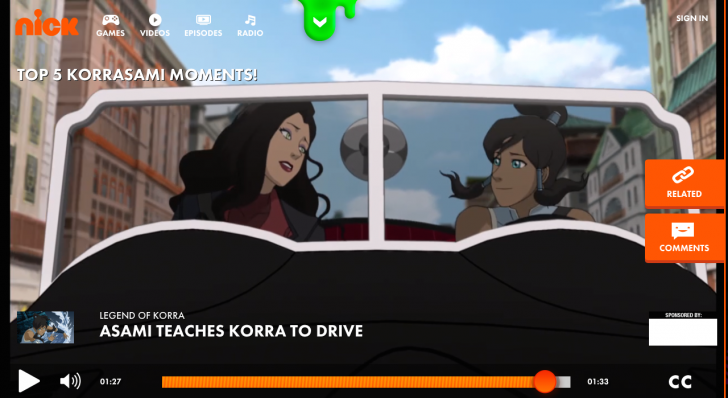
That’s why a single tweet from Nickelodeon’s official Twitter account completely blew my mind: “Hey #LegendofKorra fans, check out our top 5 #Korrasami moments.”
The tweet then links to a series of clips from Korra featuring some of Korrasami’s (the fan name for the couple) best scenes.
Given the somewhat fraught relationship between the series and the kids’ programming broadcaster, the tweet is, again, both frustrating and wonderful. It’s incredible that a mainstream broadcaster would acknowledge a same-sex relationship. It’s irritating because of the seeming lack of support the show received. As Joanna Robinson writes in the Vanity Fair piece “How a Nickelodeon Cartoon Became One of the Most Powerful, Subversive Shows of 2014,” creator Bryan Konietzko said, “Some Nickelodeon executives were worried about backing an animated action show with a female lead character. Conventional TV wisdom has it that girls will watch shows about boys, but boys won’t watch shows about girls.” The show was dropped to air entirely online during the most recent season.
That there are still things to say about the series beyond the finale is evidence of how significant it was. Here’s hoping Nickelodeon will take the lesson from Korra to heart and start featuring more amazing shows with female and queer leads.

 Why you can trust Xtra