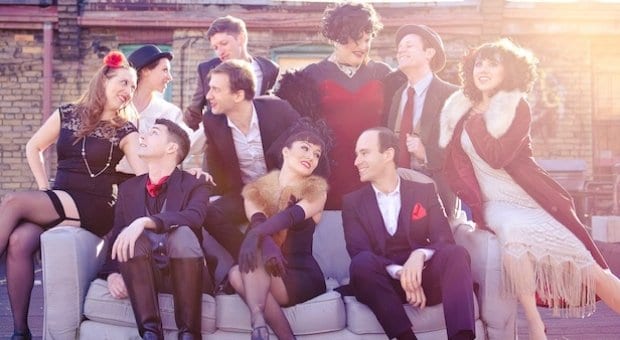
The cutlery clinks as a couple of friends and I grab front row seats among a mish mash of dining chairs, stackable dealies and benches. Performers mill about with the crowd, spread out around Bite, the cavernous dining, bar and (temporary) theatre space. The sizable band, a small orchestra really, warm up, grouped about just in front of stage right. Love Is A Poverty You Can Sell 2: Kisses For A Pfennig begins with little ceremony as servers continue to circulate and the bar keeps open to the side. The audience is about to be served a decadent treat.
It’s a challenge to find fault with this fantastic show, a rarity for a theatergoer as picky as me, though to be fair LIAPYCS2 is a show ready made for my tastes; musical theatre, though taken a step further with bawdy ballads of Weimar era Berlin and sung so well by this powerhouse cast; cute boys, and clothes come off (a little more on that later); beautiful, powerful, Weimar-chic women; and a dark, dirty edge.
I’ll get my only criticism over with so I can get back to telling you all my favourite parts of the show. Every so often the softer singing would be lost in the big space with the orchestra playing directly before the stage. The space itself proves a bit of a challenge as well, since the stage doesn’t afford for some big dance numbers that the show could have, and tries to.
Actually I have one other issue, and that’s a result of so many incredible performers who get precious little stage time, though they certainly make the most of what they have. To pick favourites would be doing the cast a disservice, but I can at least choose some fabulous numbers I especially adored. Though much is the Weimar standards of Kurt Weill and Frederick Hollander, LIAPYCS2 seamlessly sneaks a few more contemporary tunes, including a Dresden Dolls song that is oh so apropos, expertly handled by Natalie Kulesza. The indelible Jeni Walls and the operatic expertise of Natasha Negovanlis grace the stage repeatedly. The elegant, lovely Christian Jeffries rocks a version of Cabaret’s “Mein Herr” complete with sexy backup dancers (remember what I said before: clothes come off). Hart House Cabaret star and singer extraordinaire (not to mention complete hunk) Michael-David Blotstein, with the cast backing him up, blew me away with “Don’t be the Bunny” from Urinetown. The whole evening is marshaled by hosts Hans and Jodel (Ryan Anning and Scott Dermody), a delightful, foppish, top-and-bottom duo who thrill and chill the audience with the tale of an evil, inept, red-faced butcher turned mayor. (Sound familiar?)
Most impressively the LIAPYCS2 team creates an environment that actually feels like what I’ve always imagined a Weimar era cabaret should feel like. The performers hang around the audience throughout the evening, drinking, flirting, enjoying the show. As the Emcee from Cabaret says: “We have no troubles here! Here life is beautiful… The girls are beautiful… Even the orchestra is beautiful!” These sentiments echo with LIAPYCS2: my friend and I were ogling the adorable accordion player all night long while indulging in this delectable show.
Love Is a Poverty You Can Sell 2: Kisses for a Pfennig
Bite, 423 College St

 Why you can trust Xtra