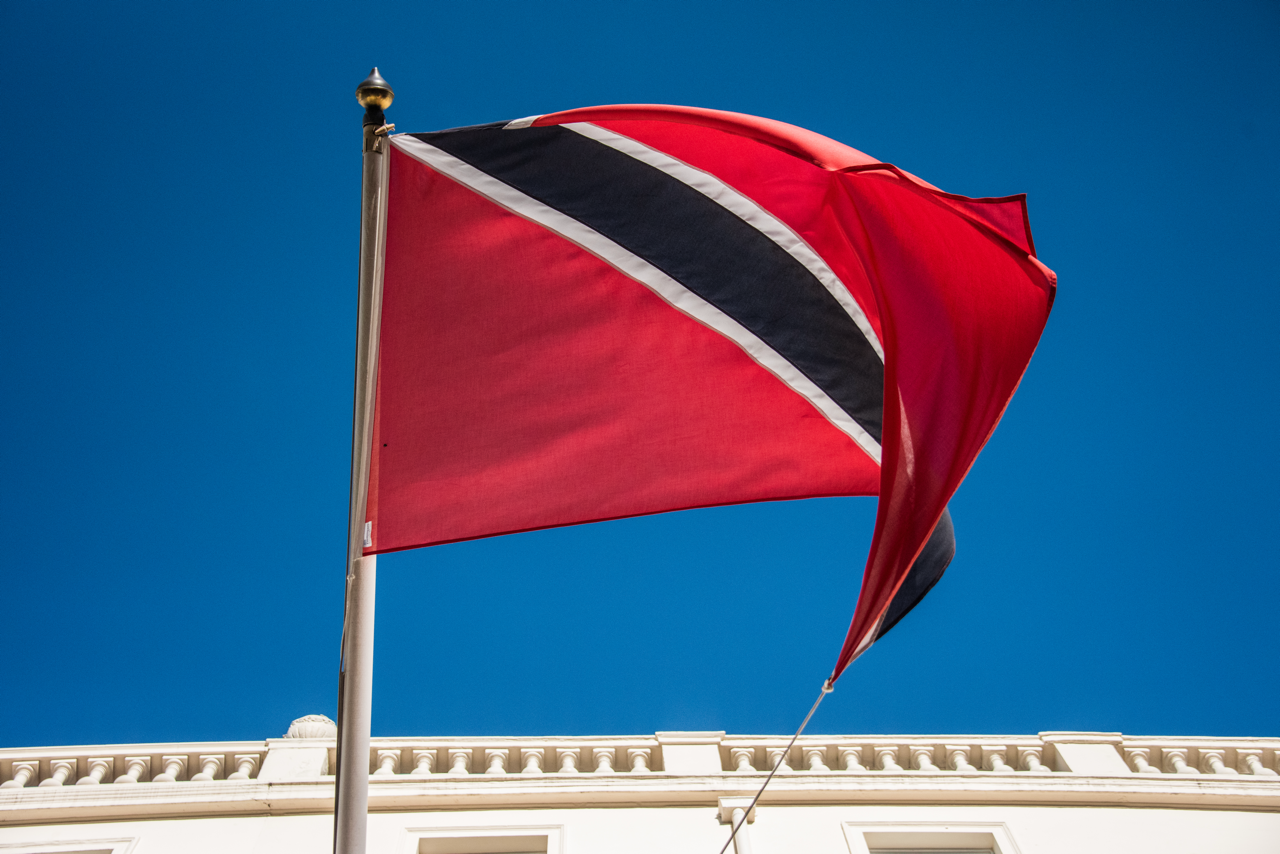
When Trinidadian activist Jason Jones first began working on a court challenge of his native country’s laws banning gay sex 11 years ago, there seemed to be little hope of success. At the time, 11 countries in the Caribbean—all former British colonies—banned gay sex, and legal advisors had warned him that a constitutional challenge was unlikely to succeed.
But when his legal odyssey concluded in a courtroom in London last week, Jones scored a victory that not only struck down Trinidad and Tobago’s buggery laws for good but also may have sounded the death knell for all the remaining anti-gay laws in the Western Hemisphere and beyond.
Like many former British colonies, Trinidad and Tobago inherited a criminal code that penalized gay sex—often referred to as “buggery,” “sodomy,” “gross indecency” or “unnatural offences”—from the colonial administration when it gained independence in 1962. But although the new state’s constitution guaranteed individuals broad human rights, it also contained a “savings clause” that insulated pre-independence laws from constitutional challenge.
That meant that even if pre-independence laws violate the basic human rights guaranteed by the constitution, they can’t be struck down by a court.
Despite the legal hurdle, Jones, then 51 and living in the United Kingdom, decided to pursue a constitutional challenge in 2015. He believed that the savings clause couldn’t apply because the government had amended the law since independence—they had raised the maximum penalty for “buggery” from five to 25 years’ imprisonment in the Sexual Offences Act of 1986.
“I was 18 years old in 1982 when AIDS first hit the world … and all my friends died,” he says. “I really felt if I was spared, and if I have these privileges … [then I would be] very committed to leave this legacy for future generations.”
Jones found a law firm willing to take on his case pro bono, and fundraised and spent his own money to cover incidentals and travel for the case. By 2017, he’d filed his challenge.
In April 2018, the Trinidadian High Court issued its ruling. Jones had won on all counts. In his decision, Justice Devindra Rampersad found that the law violated the right to privacy and expression, and it was not protected by the savings clause. The law was struck down.
But that wasn’t the end of the story. The Trinidadian government appealed the decision, and in 2025, the Court of Appeal overturned it. The Court ruled that although the government’s amendments to the sodomy law weren’t protected by the savings clause, the original buggery law was. The law was reinstated, but with the original, lower penalty of five years’ imprisonment.
Jones had one more venue to appeal the decision: the Judicial Committee of the Privy Council (JCPC) in London, U.K., which is the final court of appeal for several former British colonies, including Trinidad and Tobago. The JCPC heard his case in July 2026 and issued its final judgment on Nov. 10.
Once again, Jones had achieved a total victory that could not be undone by any other court. The JCPC ruled that the savings clause must be interpreted very narrowly or risk unduly impinging on people’s rights, and thus the amendments made to the sodomy law rendered it outside the clause’s protection. And it found that Trinidad’s gay sex laws were an unconstitutional violation of the right to privacy and family life.
“It is at the core of [Jones’s] existence as a human being and of his identity as a gay man,” the ruling says. “The ability to form a deep connection with another person through an intimate and loving relationship is a vital interest for all human beings.”
Trinidad’s laws banning gay sex were once again voided, insofar as they apply to consensual activity in private.
But the ruling may have also set an important legal precedent in the fight for queer rights across the region—and indeed the world.
Britain’s presence in the Caribbean dates back over 400 years and left behind 12 states that achieved their independence between 1962 and 1981: Antigua and Barbuda, the Bahamas, Barbados, Belize, Dominica, Grenada, Guyana, Jamaica, St. Kitts and Nevis, St. Lucia, Saint Vincent and the Grenadines and Trinidad and Tobago.
Each state inherited buggery laws from Britain, and to date, only one of them has repealed the law without a court order—the Bahamas, in 1991. Social attitudes toward homosexuality remain extremely conservative across the region. Local politicians are loath to discuss queer rights, there are few prominent openly LGBTQ+ people and activists have reported extreme violence and discrimination in many countries.
Jones wasn’t the first person to challenge these laws through the courts. Jamaican-Canadian activist and lawyer Maurice Tomlinson has fought a lonely ongoing battle against that country’s anti-gay laws since the early 2010s, with limited success.
And in April 2016, the Belize Supreme Court struck down that country’s sodomy law, making it the first state in the region where a court challenge was successful.
Buoyed by the victory in Belize and Jones’s initial victory in Trinidad and Tobago, in 2019, the Eastern Caribbean Alliance for Diversity and Equality (ECADE), an umbrella organization of LGBTQ+ groups across the region, filed court challenges in Antigua and Barbuda, Barbados, Grenada, St. Kitts and Nevis and St. Lucia. The joint legal strategy was pursued because the countries share a legal and constitutional framework, as well as a common court of first instance in the Eastern Caribbean Supreme Court (ECSC), headquartered in Castries, St. Lucia.
Around the same time, two more challenges were filed in Dominica and Saint Vincent and the Grenadines by activists not working with ECADE.
So far, the strategy has been a success. In a series of separate judgments from 2022 to 2025, the ECSC struck down the sodomy laws in all of those countries except for Grenada, where a judgment is still pending, and Saint Vincent and the Grenadines, where the court upheld the sodomy law. None of the countries that lost appealed the decision—a handful even refused to defend the law in court.
Sean Macleish, a plaintiff in the Saint Vincent case who lives in Chicago, says only religious groups intervened in his original case.
“The attorney general in Saint Vincent said really nothing throughout the whole proceedings. The interested parties who oppose decriminalization were a whole bunch of churches and their lawyers,” he says. “The government, they say we never really enforce this law, so it doesn’t really have any teeth. Okay, well, then remove it. And they won’t because it’s sending a clear message to people like me, LGBTQ+ Vincentians, that you are not equal and you’re second-class citizens.”
But that setback will likely be short-lived. Macleish’s appeal of the decision was to be heard briefly on Nov. 3, but the Eastern Caribbean Court of Appeal said it would be adjourning until the Privy Council ruling in the Trinidad case was released, since Saint Vincent is also under the Privy Council’s jurisdiction.
“When I heard Jason’s judgment, at first it took me 10 minutes to realize what it was, and then I started crying because, to have a win, it’s a validation of who you are,” Macleish says. “You realize all of the negative things that you go through living and thinking inside, the homophobia, and then to have a judge say that this isn’t right, it means a lot.”
Saint Vincent doesn’t have a savings clause in its constitution, so the only question is whether or not the law is unduly restrictive of rights, and the Privy Council has already ruled on that.
Since Grenada also uses the Privy Council as its apex court, the ruling will influence its court’s decision in that case.
The case challenging the sodomy law in Grenada has still not been scheduled, but a spokesperson for ECADE says the organization hopes to receive a date in the next several months.
In Jamaica, the situation is more complicated. Tomlinson’s sodomy law case was finally dismissed in 2023, with the Jamaican Supreme Court ruling that the law could not be challenged because the country’s 2011 constitution specifically insulates laws dealing with “sexual offences” from challenges if they were in effect when the constitution was enacted. Tomlinson argues that the savings law doesn’t apply because Parliament amended the buggery law a month after the constitution came into force by stiffening penalties.
But Tomlinson is appealing the decision, with a hearing scheduled for Jan. 25 at the Jamaican Court of Appeal. Tomlinson believes that the Privy Council ruling on Jones’s case could sway the decision, since the issues in the challenge are similar.
Ultimately, whatever the Court of Appeal decides, the matter will be taken to the Privy Council by either Tomlinson or the Jamaican government, whichever side loses.
“The Court of Appeal of Jamaica tends to not want to run afoul of the Privy Council, so I think our chances are pretty good, now that the Privy Council has provided clarity on how they view the savings clause,” Tomlinson says. “This matter will go to the Privy Council, because the Jamaican government is not going to let it go like that. Even if they lose, they’re not Belize, they’re not Antigua, they’re going to push it.”
While no court challenge has been filed in Guyana, the political class appears to see the writing on the wall. During the 2025 election, every mainstream political party promised to repeal the law, including re-elected president Irfaan Ali. However, a year later, a repeal bill has yet to be filed.
The JCPC is also the final court of appeal for two other former British colonies that maintain laws against gay sex: Kiribati and Tuvalu, both in the South Pacific. No challenges to their laws are known to have been filed as of yet.
But Jones’s campaign has already yielded results far beyond the Caribbean. The initial 2018 decision that decriminalized sodomy in Trinidad was cited months later in the Indian Supreme Court decision that decriminalized sodomy in that country. The new Privy Council ruling will likely be persuasive to other countries’ courts when sodomy law challenges are brought there.
It is perhaps ironic that in order to remove an oppressive law that was put in place by the British, it took a man living in England to file a case and a court in London to issue the final decision.
But the activists filing these cases from abroad have little time for people who suggest that their activism or the Privy Council’s decision are a form of colonialism.
“It’s ironic, and also a form of reparations, because the law was imposed by the British. So this is now the opportunity for them to clean up their mess,” says Tomlinson. “When they left, they could have repealed them. They had the authority at the time to get rid of these archaic colonial laws, and they didn’t.”
Jones says his home in England affords him an amount of privilege that better positions him to advocate for queer rights.
“I have privilege. I live in the U.K., I have dual citizenship. I’m mixed race, so I have passing-for-white privilege. I can rock up to a billion-dollar law firm and, you know, they will speak with me,” Jones says. “The only way that this case could have happened was if somebody had the resources and tools to be able to do it.”
Jones, Tomlinson and Macleish all emphasized that living in other countries was also an important security concern.
“When I was on social media, I got death threats when the case was filed,” Macleish says. “There was no one at home who’s actually gay who’s living in Saint Vincent who wanted to be a claimant in the case. That’s why I live here in Chicago, and Javin [Johnson, a co-petitioner in the case] is in the U.K.”
But Jones adds that it would be better to counter the allegations of colonialism if queer groups based in the Global North contributed more to the struggle for queer rights in the Global South.
“Global North organizations have done absolutely nothing to help us dismantle these laws, even though they were created in the Global North,” Jones says.
Jones says he didn’t receive any support from large LGBTQ2S+ advocacy groups for his work.
“Even though my lawyers were pro bono, I paid all the out-of-pocket expenses. My photocopying bill alone for the first case was 4,000 U.S. dollars,” Jones says. “Literally, I sold everything. Anything that wasn’t nailed down. I sold my house, I sold my family heirlooms, my mother’s jewellery, everything went into this.”
Jones says he’s not done fighting for queer rights in Trinidad. He’s called on the Trinidad government to pass an anti-discrimination law next.

 Why you can trust Xtra