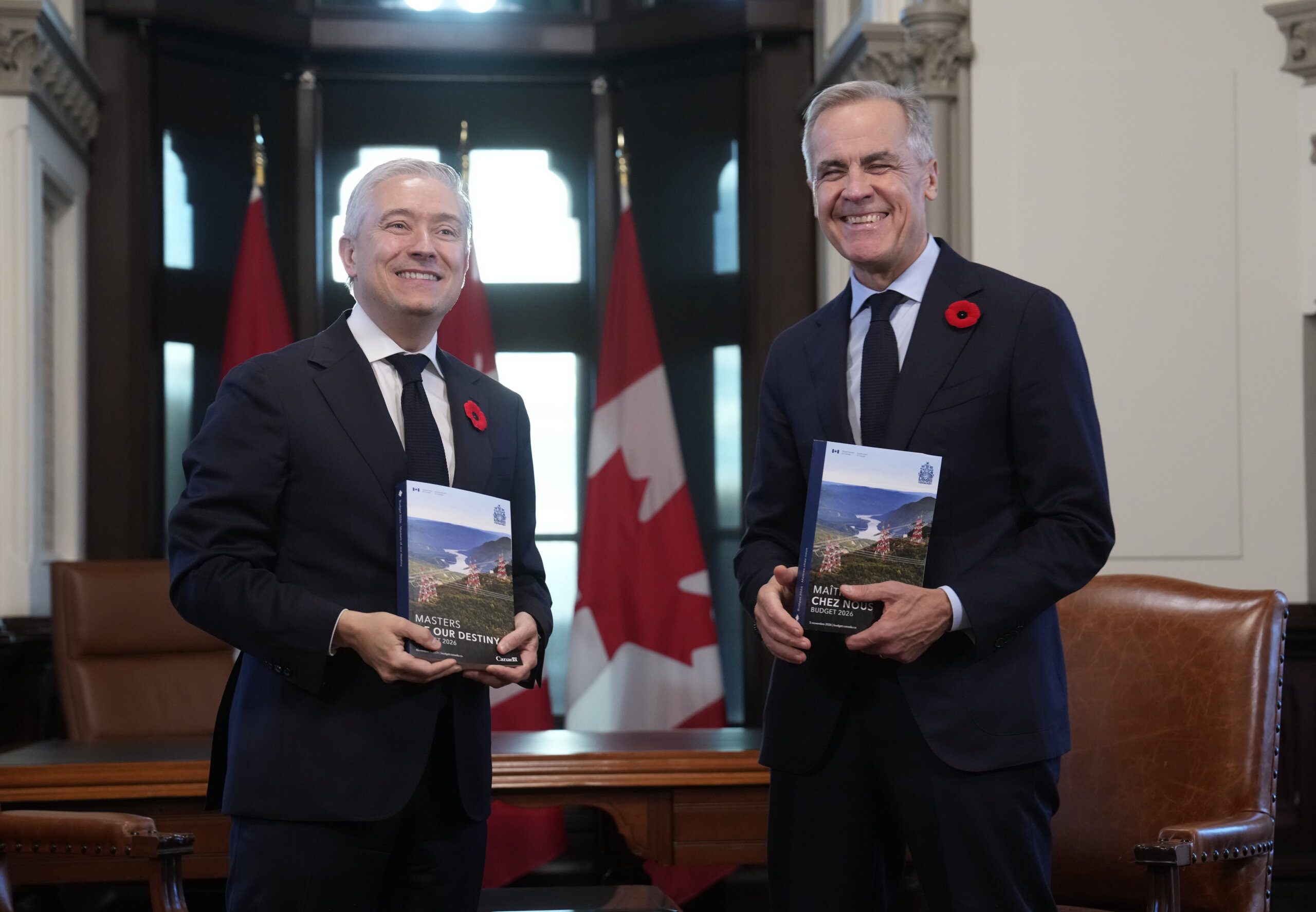
Last week’s federal budget announcement may have been a mixed bag overall, with a whole lot of support for big corporations and a few added supports for Canadians in a cost-of-living crisis, but it did have a small ray of sunshine as far as queer and trans communities are concerned. The promise is that $60 million over four years has been allocated for the Federal 2SLGBTQI+ Action Plan’s project stream, which builds on the $54.6 million over five years that the government allocated in last year’s budget for the Action Plan’s capacity funding. Both funding streams are important, but they continue to exist in what is termed the “workhouse” funding model, which doesn’t guarantee sustainability over the long term.
“We remain committed to continuing the work and advancing the priorities of the 2SLGBTQI+ National Action Plan,” the 2026 budget document declares.
Included in the funding promises both last year and this year are promises for “ongoing” funding once these four- and five-year-funding envelopes expire. For the capacity fund, that promise was $10.9 million annually, while for the project fund, it’s $15 million annually, but that also includes funding for the 2SLGBTQI+ Secretariat within the Department for Women and Gender Equality (WAGE). While it’s nice to have a signal that these ongoing funds are intended to be “permanent,” the thing with government spending is that nothing is actually permanent. Governments change priorities all the time, particularly in periods of austerity when everyone is told to make sacrifices—even if they might be serving vulnerable populations—and these funds are especially susceptible to being cancelled by a future government that is less sympathetic to queer and trans rights.
In many ways, this was something that women’s groups learned the hard way during the Stephen Harper years, when Status of Women Canada, as it was then known, was slashed to the bone, and program funding that the department supported was severely curtailed. At the time, former Conservative senator Nancy Ruth, Canada’s first out lesbian senator, had tried to help organizations that she sponsored as a philanthropist find sustainable funding models such as by becoming foundations, because she knew that there would be governments hostile to ongoing funding of these kinds of organizations. LEAF (Women’s Legal Education & Action Fund), which advances gender equality through the law, was one such organization that Nancy Ruth helped found and ensure they would have long-term viability.
Tyler Boyce is the executive director of the Enchanté Network, which connects over 300 queer and trans organizations nationally and has a mandate to advance capacity-building and sector-strengthening. He says his membership is well aware that becoming more sustainable and less reliant on future tranches of government funding is a top priority for the capacity fund.
“Permanent federal funding is not the same as permanent organizational funding,” Boyce tells Xtra. “We need to think strategically about how we’re using this money to build strong institutions.”
The project funding, meanwhile, is geared toward time-limited projects such as public-awareness campaigns and research, but also more immediate issues in particular communities like LGBTQ2S+ youth homelessness.
“We welcome the project fund announcement this year, but the really long-term work that came from Budget 2025 around the capacity pieces—investing in leadership, fundraising capacity, the financial infrastructure of the organization to hold investments,” Boyce says. “That’s what Enchanté’s membership organizations need in order to not wholly rely on federal funding or a project grant.”
Enchanté is now pushing the federal government to use a collaborative model rather than the current centralized one in WAGE and the Secretariat in order to help determine which organizations are best placed to get this funding. Boyce says that the staff at WAGE can be out of touch because they aren’t in civil society.
“What we’re proposing is a heightened partnership between WAGE and the Enchanté Network, our members and partners to co-create what a strategic use of these funds would be,” Boyce says.
Boyce says that the network is trying to expedite the process of allocating these capacity funds in order to build resilience against future government cuts. He says that process needs to happen now, and not two or three years from now when the next election cycle approaches.
There have been attempts to build up an endowment-fund model, but that work remains slow and Boyce says that it continues to be part of Enchanté’s pre-budget submissions to Parliament. The network has also been releasing research that shows how an endowment model could work similar to the federal government’s existing Black-led Philanthropic Endowment Fund and the Equality Fund.
“An endowment fund is something that can survive changes in who holds power within government, which is why we continue to push on it,” Boyce says. “We haven’t heard a definitive answer on whether or not this is a model they’re looking to pursue within the sector, and because of the issues around boom and bust, we’re still pushing for this endowment.”
Boyce says that the working relationship with the government and WAGE minister Rechie Valdez has been positive, but queer and trans communities have already seen instances of the government patting themselves on the back for doing the bare minimum. Often that means just highlighting existing funding in spite of calls for new funds because of the precarious state of the economy and the outsized effects it can have on queer and trans communities.
With the government’s recent funding promises, it’s good to see that there is such a focus on building sustainability in our community organizations. But that work needs to be top of mind as the government’s funding models continue to be time-limited and largely inadequate to the scope and scale of the needs out there, while the government expects communities to be grateful for what they do get—the epitome of that “workhouse” funding model. While it’s important that Enchanté continues to press for the creation of an endowment fund, this creation is something that the community can also focus on advocating for in the months ahead. We can’t rely on government funding forever, and there will come a time, possibly sooner than later, when the government of the day will start to cut us off, and come up with all manner of justifications and rationalizations for doing so. Doing the work of sustainability needs to be a community priority now, to avoid ugly surprises in the future.

 Why you can trust Xtra