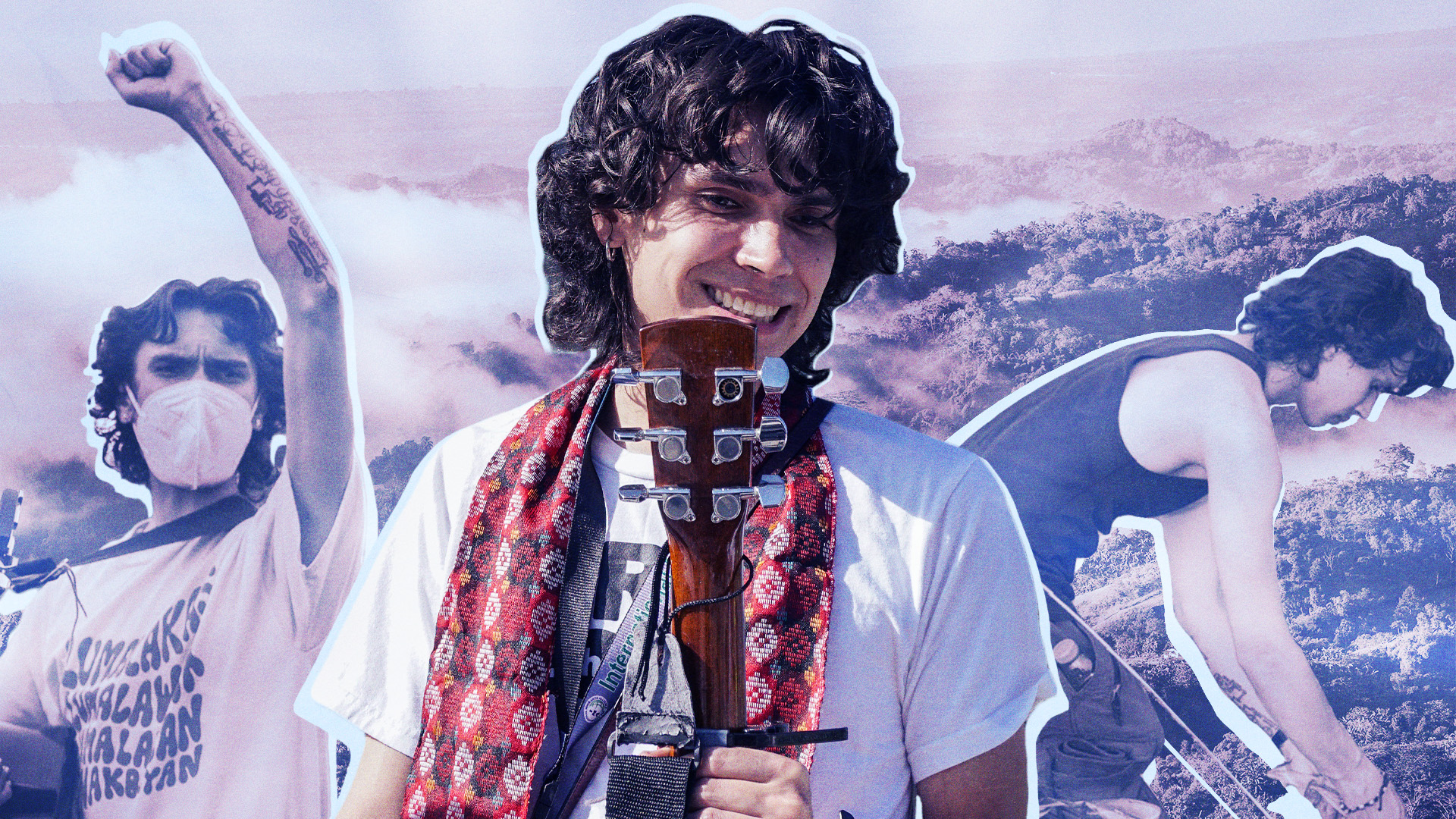
In the summer of 2025, as the monsoon rains swallowed much of Southeast Asia, a 26-year-old trans woman, Kai Sorem, travelled to the Philippines for the first time in her life. A Filipina-American activist from South Seattle who organized with her local chapter of Anakbayan, a Filipino democratic youth movement, Sorem spent four weeks shucking corn with peasant farmers on the island of Cebu, volunteering in relief kitchens for those displaced by the floods and singing Philippine liberation songs in imperfect Tagalog.
Upon coming home, Sorem, whose day job was at a care home facility, spoke fondly of her trip and her eagerness to return to the Philippines, says Poppy, a close friend and fellow organizer at Anakbayan South Seattle who prefers to go by first name only. Sorem, like many advocates, had been driven to activism amid the 2020 Black Lives Matter protests. The killing of George Floyd in particular, Sorem’s friends say, had revealed to her the many parallels between police violence in the U.S. and the state violence experienced by farmers, fisherfolk, landless workers and Indigenous Peoples at the hands of the largely U.S.-funded Armed Forces of the Philippines.
“Kai wanted to really understand what our people are going through,” says Poppy. “It was so important to her.”
It came as no surprise then, when earlier this year, Sorem decided she would return to the Philippines. In the spring, before she was scheduled to leave, Sorem spoke to her sibling PJ, describing her plans to work alongside and learn from sugar-cane farmers and plantation workers on the island of Negros. For decades, rural communities across Negros’ verdant plains have laboured under an exploitative feudal-like agricultural system supported by repressive governments and surveilled by the Philippine military. PJ, who is also trans and was “unbelievably close” with their sister, admired her decision, but couldn’t quite understand her motivation to enter such difficult circumstances abroad.
“I was like, ‘Why are you talking so happily about tilling the land with farmers?,’” says PJ, also an activist, who has long been involved with the Filipina feminist organization GABRIELA Seattle. “But Kai was always excited to talk about the things she learned, not because she was glorifying the atrocities faced by people in the Philippines but because she understood people’s humanity.”
After arriving in Negros, Sorem spent time in the coastal municipality of Toboso alongside a group of journalists, activists, lawyers and students, including San Francisco-based activist Lyle Prijoles. Together, they helped with farming activities in the area, including planting bananas. Given the poor cell service, which isn’t unusual for rural areas, PJ didn’t speak to Sorem while she was away.
In the early morning hours of April 19, Toboso’s community of Salamanca, home to around 6,000 people, heard a barrage of gunfire by the local fish pond. While five military battalions were stationed across Negros—an island home to nearly five million people—the community had seen an increase in military presence in the days before, followed by constant gunfire throughout the night. Around five days later, when families could finally return to the pond to harvest shellfish, reports began to surface that 19 people, including nine civilians, had been killed by the military.
Among them was Sorem.
According to the environmental not-for-profit organization Global Witness, each year, hundreds of environmental defenders are arrested, assaulted, disappeared and killed while defending their land from powerful industries often supported by repressive governments. From Indigenous Peoples protecting their ancestral lands to peasants resisting industrial agriculture, environmental activism is widely intersectional and at times violent, with activists often targeted by private armed groups and state militaries.
The Philippines is among the world’s most dangerous countries for environmental defenders with nearly 100 activists killed or disappeared since 2020, according to Global Witness reports over that period. This year, an estimated 11 environmental defenders have been targeted, with the Toboso massacre—during which Sorem was killed—accounting for the majority of cases.
“To have a police officer watching you as you cry over your sister’s dead body is horrific.”
In mid-April, PJ and their family arrived in Negros to retrieve Sorem’s body. While the trip was PJ’s first to their ancestral home and helped them better understand their sister and her motivation to volunteer in the Philippines, it also made them acutely aware of the level of state violence people in the Philippines face daily. While Sorem’s family drove through Negros, accompanied by lawyers and human rights activists, they were constantly surveilled, PJ says, and at times, had to quickly leave a location due to the presence of armed forces.
“To have a police officer watching you as you cry over your sister’s dead body is horrific,” they say. “I had never felt surveilled by the state in that way.”
In the five months since the massacre, independent autopsies and a fact-finding mission have revealed not only the brutality of the killings and the extensive mishandling of evidence and human remains, but the continued and violent repression of environmental activism in the Philippines. Sorem’s death, however, and that of her companions, land rights activist Maureen Santuyo and community journalist RJ Ledesma, who were also queer, reflect another, more complicated issue—violence against LGBTQ2S+ environmental defenders.
These aren’t the only cases.
In 2021, Fernando dos Santos Araújo, a gay land rights defender in Pará, Brazil, was gunned down in his home. In 2022, Gabriel de Souza Araújo, a gay 21-year-old member of Brazil’s Landless Rural Workers Movement, was found floating in the Cricaré River in the southeastern state of Espírito Santo. In 2023, unidentified assailants attempted to kill Siti Kasim, a Malaysian trans woman and human rights lawyer known for supporting Indigenous communities in their fight against extractive industries. That same year in the U.S., queer and non-binary environmental defender Manuel Esteban Paez Terán, known as “Tortuguita,” was killed by police while protesting the construction of a police training facility in Georgia’s Weelaunee Forest.
But while global cases of violence against environmental defenders, such as these, have been consistently tracked for more than a decade, there is no data to show the ways in which LGBTQ2S+ activists are specifically impacted. Because of that, it is difficult to determine whether an individual was targeted because of their gender identity, sexual orientation or gender expression—or if they were simply queer activists working in a dangerous space.
This dearth of data has been described by Jeff Feng, a scholar whose work focuses on climate and environmental justice and queer liberation, as an “invisibilization” of the contributions of LGBTQ2S+ environmental defenders. Six years ago, while co-authoring a chapter on global violence against environmental justice activists, Feng noticed that information on the intersection of environmental defenders and gender and sexual orientation, including the contributions of women, was limited at best. This oversight, they say, might be explained by the cisheteronormativity of many environmental organizations and the fact that the contributions of queer people, much like those of other marginalized communities, have long been overlooked.
“Part of what these cases of violence toward LGBTQ2S+ environmental defenders raises is that there’s a specificity in their vulnerabilities,” they say. “I think we need to have that knowledge about those vulnerabilities in order to raise awareness and to craft policies that protect people.”
And slowly, things might be moving in that direction.
In August, the SOGIESC Climate Alliance—a coalition of civil society organizations, academics and advocates working at the intersection of sexual orientation, gender identity and expression and climate justice—submitted a list of these vulnerabilities to the United Nations. In their submission to Astrid Puentes Riaño, the UN’s Special Rapporteur on the human right to a clean, healthy and sustainable environment, the alliance documented five LGBTQ2S+-specific risks including legal barriers, exclusion from consultation, structural invisibility and “stigma-driven violence and harassment.”
According to Victor Madrigal-Borloz, who convenes the SOGIESC Climate Alliance and is a visiting researcher at UCLA’s Williams Institute—a legal think tank that focuses on sexual orientation and gender identity—these issues highlight how LGBTQ2S+ environmental defenders face compounded risks. This includes the fact they are rarely recognized as a group facing “specific and distinct risks” in the first place.
“There is a double risk of you being queer and being an environmental activist,” says Diego de León, advocacy chair for the U.S.-based queer climate organization, OUT for Sustainability and a member of the SOGIESC Climate Alliance, “that is not necessarily shared with other marginalized communities.”
Among these, is the fact that LGBTQ2S+ people are more likely to be involved in environmental or climate activism to begin with. A 2018 study from Arizona State University found that lesbians, bisexuals and gay people were “more than twice as likely as heterosexuals to join antiwar, environmental and anti-corporate movements.” This higher involvement is perhaps also tied to the fact that LGBTQ2S+ people are disproportionately impacted by the effects of climate change and environmental injustice.
“Because of the different challenges we have faced as individuals and as a community, queer people have a tendency towards a more progressive agenda which includes environmental and climate action,” he says.
According to PJ, this was the case for Sorem.
As a trans woman, Sorem intrinsically knew how it feels to be denied your basic rights and struggle to meet your basic needs, says PJ. They explain that when it is difficult to find housing, access healthcare and feel safe in school or at work, you are able to better understand the immense struggles others experience, even when they are vastly different from your own.
“While I did not grow up with the state of surveillance that peasants face in the countryside,” PJ says, “as a trans person, I know that base understanding of fear because I am constantly contextualizing the risk I may face in any room I walk into.”
Queer Filipino climate activist Benedict understands that feeling too. (Benedict is a pseudonym to protect the safety of the source.)
After witnessing the impacts of worsening typhoons in his home of Cebu, Benedict founded the Philippines chapter of Zero Hour, a U.S-founded youth-led climate movement. In recent years, after speaking out about the impacts of mining and quarrying, he has been attacked online, surveilled, followed and even “red-tagged.”
Essentially legalized by Philippine anti-terror laws, red-tagging is a practice—and often precursor to violence—that involves publicly accusing a leftist of being a “terrorist” or member of the long-running communist insurgency group, the New People’s Army (NPA). According to Human Rights Watch, most red-tagging is connected to the state and in recent years, as Benedict describes, it has been an effective means of silencing dissent.
Red-tagging “blurs the differences between what is considered activism or advocacy and what is considered terrorism,” Benedict says, adding that such policies are helping to ensure that advocating for the environment is considered illegal.
In the wake of the Negros massacre, Sorem and the other eight civilians who died were red-tagged by the Philippine government, as detailed by a fact-finding team. In early May, 117 people from local, national and international organizations conducted an on-site investigation into the Toboso massacre. The team found that while 10 NPA members were killed during the massacre, interviews with local residents confirmed that Sorem, Prijoles and their fellow civilians were unarmed volunteers.
“They criminalize environmental activists, they criminalize human rights defenders and they criminalize people who are standing for what is right,” says Yell Teresa, the spokesperson for Bahaghari, an alliance of LGBTQ+ individuals and organizations in the Philippines. “The topic of violence against LGBTQ+ [people] is inseparable from the violence that is inflicted on the Filipino people.”
While Bahaghari was founded in 2013, Teresa explains, it wasn’t until the killing of Jennifer Laude the following year that the organization became a mass movement. In 2014, Joseph Scott Pemberton, a U.S. Marine stationed in the Philippines, killed 26-year-old trans woman Jennifer Laude. While Pemberton was convicted on homicide charges, only to be pardoned five years later, Laude’s killing spurred protests across the Philippines, with activists, including those from Bahaghari, connecting the struggle of queer and gender-diverse people to the fight against militarization, U.S. imperialism and other oppressive systems.
“It was cold-blooded murder of our kababayan [fellow Filipino],” Teresa says. “As long as there is U.S. military in the Philippines, this kind of violence will not stop.”
Following 48 years of American colonization that ended in 1946, the Philippines is now the largest recipient of U.S. security assistance—weapons, military funding and personnel training—in the Indo-Pacific region. This security assistance, which largely supports the Armed Forces of the Philippines, has been linked to violence against environmental and human rights defenders. The outsized presence of the military across the Philippines is connected to violence against women and LGBTQ2S+ people, Teresa says. The killing of Sorem—who Poppy says, often spoke of the injustice suffered by Laude—is just one such recent case.
“We organize LGBTQ2S+ people to realize that gender issues are not the only issues we have to tackle to be truly free,” Teresa says. “We need to actively fight for our freedom, for our sovereignty and to be free from discrimination, harassment and violence.”
Over the past four months, as word of the Negros massacre spread across global activist networks, sometimes even making international news, memories of Sorem have been shared across Instagram, Facebook and, of course, among friends. Many remember her deep love and talent for music. Others speak of the way she was beloved by animals of all kinds. But above all, Sorem has been remembered as a friend and activist who, despite her shy demeanour, would meet people—from her colleagues at the home care facility to the farmers of Negros—where they were.
“A lot of her co-workers were Filipino and she really pushed herself to use as much of the little Tagalog or Ilocano she knew to be able to communicate with them,” Poppy says. “She also picked up a bunch of hobbies to be able to build with others.
“Even if people laughed or didn’t understand,” she adds, “it didn’t stop her from trying her best.”
As activists, friends and even some elected officials call for an independent, impartial and credible investigation into the massacre, the Philippine government has commended the military for a “successful” operation while the Trump administration has remained silent. For many activists, justice for Sorem and those killed in Negros would mean justice for all those impacted by exploitation and state violence. But five months later, those closest to her are mostly left with impossible and unanswered questions.
“I don’t know if I’ll ever get my sister’s clothes back, or the things she had on her person. I don’t even know if I’ll ever find her phone,” PJ says. “There are just so many things that have been unrightfully taken from me—the first and foremost being my sister.”

 Why you can trust Xtra