Millions of Canadians will head to the polls next month, with a slate of municipal and provincial elections taking place across the country.
There’s the Quebec provincial election on Oct. 5. Municipal elections in Ontario and Manitoba at the end of the month. And in British Columbia, where I live, we will head to the ballot box twice this October—first for a municipal election, and then a week later for a snap provincial election.
That’s a lot of ballots in boxes.
Every election campaign brings with it a new slew of candidates and parties offering up their vision of a better tomorrow—a better province, city, town, school board or even park board. It also brings a pile of usually socially conservative candidates dredging up queer and trans rights as an electoral issue, despite the fact that who plays on what children’s sports team is hardly the most impactful issue for voters today.
Just look south of the border, where fear-mongering about trans people was a key tenet of U.S. president Donald Trump’s 2024 campaign, and seems to be a strategy for both Republicans and Democrats for the upcoming midterm election. A PAC funded by billionaire Elon Musk has doubled down on anti-trans attack ads this fall, reportedly spending upward of US $100 million. And even Democrats like Ohio Rep. Marcy Kaptur are boasting about their anti-trans stances—Kaptur came under fire for ads highlighting how she voted alongside Republicans to “keep transgender ideology out of schools.”
In particular, the Democrats’ participation in this needless scapegoating should act as a warning to progressive parties and candidates in Canada’s various elections this fall: if you let the other side set the terms of the conversation about queer and trans issues, you risk slipping into transphobia yourself.
Across Canada, school board candidates are campaigning explicitly on restricting queer and trans rights in schools. At the provincial level, B.C.’s right wing has fractured following the implosion of the formerly Kerry-Lynne Findlay-led Conservative Party of B.C., which pledged a slate of regressive anti-trans policies. Three parties have risen from the ashes of following Findlay’s implosion: the Conservative Party under new leader Lorne Doerkson, the right-centrist CentreBC party led by Elenore Sturko, and the far-right People’s Party-esque OneBC led by Dallas Brodie. Both the Conservatives and OneBC have, to varying degrees, already promised regressive queer and trans policy if elected, pledging to repeal SOGI 123, a program for teaching inclusive sexual and gender diversity in schools.
And even at the federal level, Conservative Party of Canada MP Jamil Jivani is fairly openly campaigning for party leadership—whenever the party wolves finally come for current leader Pierre Poilievre—on a nationwide speaking tour where he’s saying that “gender ideology” is “nuts” and complaining about schools teaching kids about gay people.
But when it comes to progressive parties and candidates, silence until asked—or broad platitudes about standing with queer and trans people—have tended to be the strategy on LGBTQ2S+ issues.
In recent years, most mainstream progressive politicians have increasingly demonstrated a skittishness when it comes to all of this, likely out of some constructed fear of alienating the elusive undecided voter in the middle. This is an unfortunate result of a two-party (or functionally two-party) system, where each faction sees their opponent’s castoffs as potential voters.
Just look to Prime Minister Mark Carney in the most recent federal election. While Pierre Poilievre was functionally yelling about trans women in women’s prisons and “parental rights,” the Liberal leader was largely silent on any related issue. It took a reporter asking about the issue at a late campaign stop for Carney to finally verbally say that LGBTQ2S+ rights are fundamental—and that felt like a big deal.
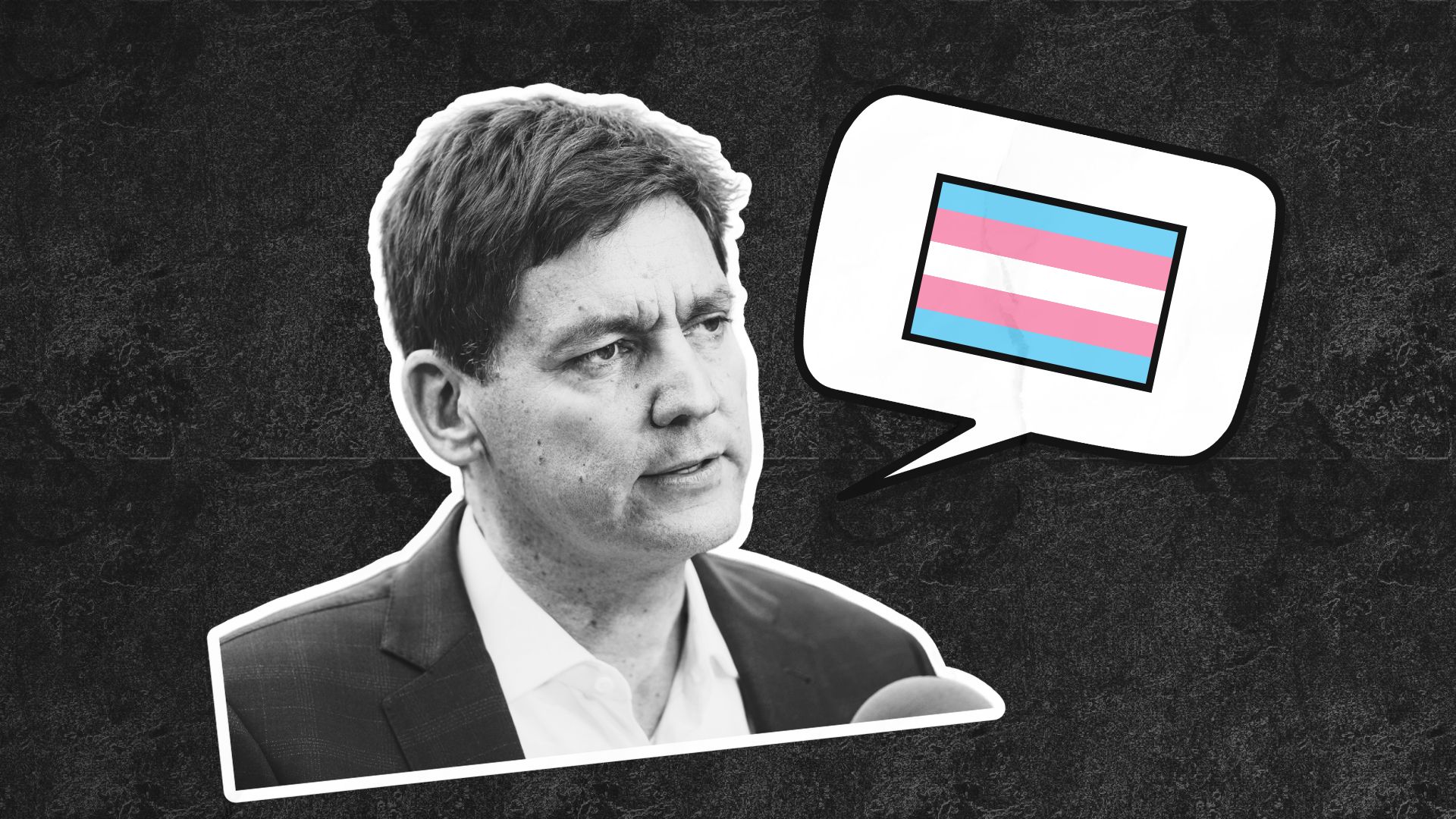
To an extent, centrist and left-leaning politicians like Carney or B.C.’s NDP premier David Eby are actually right to not focus too much on trans girls playing sports or gender-affirming care for youth, because those aren’t actually issues that impact the vast majority of voters. Who plays for what kids’ sports team shouldn’t matter this much to your average random voter. And if you want to win an election campaign, basic logic suggests that you should focus on the issues that matter to a lot of voters.
But there is a well-funded and methodical movement to spark moral panic around trans people in North America right now, and particularly around trans kids, that does not follow basic logic. We’ve seen the slow creep of legislative transphobia from the U.S. and U.K. to Canada at the provincial level—hello Alberta!—and other levels of government or jurisdictions are not immune. This has led to an outsized focus on trans issues, and particularly trans kids, in the public political discourse.
Trans girls participating in sports is only an issue because bad actors with an explicit agenda of removing trans people from public life made it one. Pronouns at school is only an issue because they made it into one. Gender-affirming surgery for kids is only an issue because they made it one. But they became pressing concerns because bad actors invoke them to prey upon peoples’ vulnerabilities. It’s reasonable to worry about your kids’ safety, and these moral panics are designed with that in mind.
This has left progressive (and progressive-adjacent) politicians in a bit of a bind. They are forced to react—rather than act—to these problems that aren’t really problems at all. When one side is out here yelling about “parental rights! sports! no more SOGI!,” their opponents feel pressured to either ignore it and move on, or declare where they stand on these topics—and of course, they want to affirm that they care about kids and vulnerable women. And at that point they’ve already lost.
That’s how the U.S. got what’s happening to the Democrats right now, where there’s this idea that “meeting in the middle” means throwing trans people under the bus. Democrats like Kaptur or Senate candidate James Talarico in Texas—who’s come under fire for his mealy-mouthed statement condemning trans girls’ participation in sports—obviously feel like this is a winning election strategy for them.
So what’s the solution, particularly for Canadian progressives on the campaign trail?
It’s worth it for journalists, voters and the public in general to push progressive politicians to not only vocally affirm their support of LGBTQ2S+ folks (and specifically trans people) but to pledge policy that positively impacts our lives, rather than let social conservative dictate the shape of public conversation. Because right now, that conversation is that kids learning about gay people in school is “controversial,” and that we should all be worried about the youth getting transed.
But imagine if instead the B.C. NDP were out here bragging about the Canada-leading trans healthcare system here, and pledging more funding for it? Or if we had more school trustee candidates promising to introduce inclusive library book programs? Or city council candidates pledging support of LGBTQ2S+ community centres? Imagine if literally anyone in the mainstream was talking about trans people as a very normal demographic voter base with needs and wants, rather than this hypothetical straw man coming to hurt your daughters.
Queer and trans people have become dangerously accustomed to accepting the absence of outright bigotry as “good enough” when it comes to our centrist and seemingly progressive politicians. In a world where people like Donald Trump are trying to legislate us out of existence, simply not doing that is understandably seen as a supportive stance.
But when queer and trans people and the issues that impact us are treated as something to be repealed or restricted, that’s the only way people will see us. And it opens the door for the kind of backslide from our seemingly progressive politicians that we see the Democrats going through in the U.S. right now.
In Canada, there is time to course-correct the discourse. If progressive Canadian politicians want to actually see us and be there for us, they need to stop treating trans people as a dangerous third rail and instead like the people—and voters—we actually are.

 Why you can trust Xtra