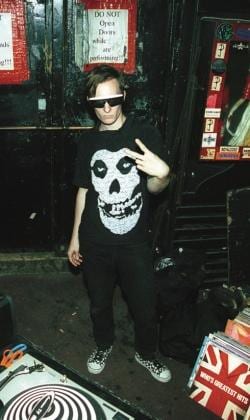
After a two-year struggle with brain cancer, Will Munro passed away early on Friday, May 21.
It seems strange and terrible to write those words. Will was physically omnipresent in this city normally, even in the early stages of his cancer, and he was ubiquitous when the progression of his illness meant he couldn’t be as active as he used to be. Even, perhaps especially, while he was in the hospital, he was always hovering in the air, in people’s thoughts and hearts.
And now he’s gone. His absence is too abrupt, too unfair.
He was a friend, although I was never close with him. Or rather, I was close with him in the way he was close with everyone. That was always one of the more astounding things about Will: even while manically setting up the DJ booth at the Beaver, shifting tables to and fro, picking through records, his greetings were always punctuated with a kiss and a wide smile. Even while flitting back and forth like a hummingbird from one event to another, from DJ gig to art opening to volunteering to whatever else he was organizing, he was still so accessible, so generous with his time and his attention. His perpetual superhuman busyness, far from distracting him from people, brought him closer to them; it sprung from a deep belief in the power of community. That was the engine that drove him, and that is why Toronto, not just queer Toronto, is unthinkable without him.
He gave us space: to talk, to drink, to dance, to fuck. The Vazaleen parties, even as they went from being a monthly night to a twice-a-year event, galvanized queer kids in this city like nothing else. Everyone has a Vazaleen story — drunken nights of furious dancing that lasted until the wee hours of the morning; first pick-ups; fucking on the dancefloor, or in the bathrooms; friends, boyfriends, girlfriends met in the crush of people at the El Mocambo, later at Lee’s Palace.
There was no gap between Will’s art and his life; it all orbited around the necessity of the queer community. Toronto, among other things, is a bastion of self-made culture. He drew inspiration and power from that. The work of General Idea, and the culture of queercore (with its streak of rebellious individualism and its networks of lost young fags and dykes finding each other through zines and mix tapes) were touchstones of his artistic practice.
A clear line can be drawn from his bespoke underwear to his massive screenprints of gay clone leather daddies in ancient Egyptian drag to his performances to his textile and craft work: it’s a glorious manifesto, a celebration of sex, music, dancing, historical lineage and public engagement as the inextricably linked sources of our power and our beauty.
And while we’ll never see the blur of his figure, in creepers and skinny black pants and a military cap, rushing down Queen St anymore, he’s still with us. He’ll never leave us. He’s left too indelible a mark, and not just through his formidable artwork.
I will always associate Lee’s Palace with him; he (and Lynn McNeill) turned the Beaver from just another Queen West café into a neighbourhood pub where his ethos of queer communal life is practised night after night, week after week. And how many other places did he DJ or volunteer at, fundraise for, or turn into a space where we could all get our freak on? Whether we knew it or not, whether we were close with him or not, whether we even knew him or not, he’s touched all of our lives in a profound way.
He was 35.
Facebook group: Honouring the Heart of Will Munro.
 Why you can trust Xtra