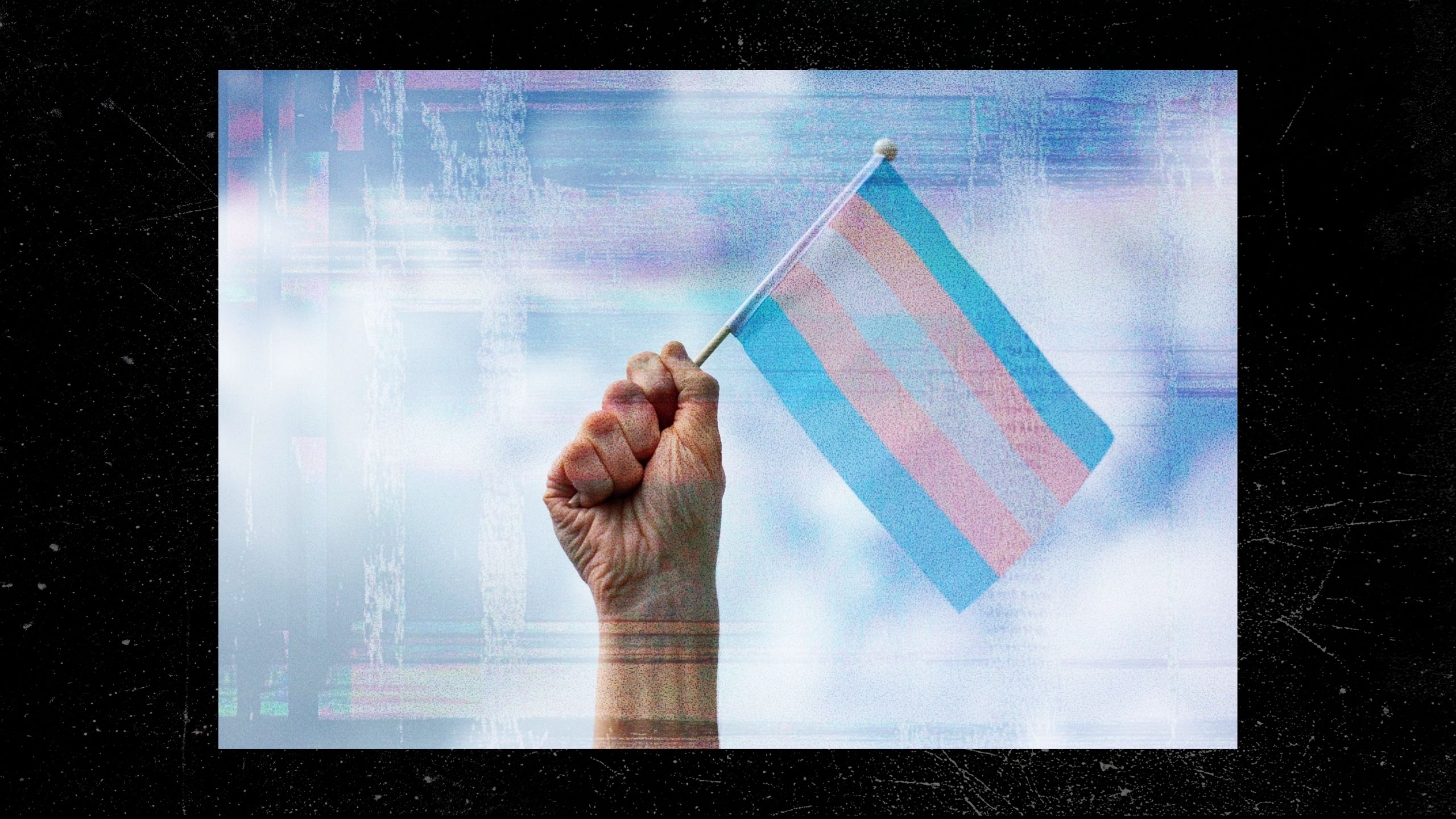
How do you celebrate trans visibility in a world increasingly trying to punish it?
Today is Trans Day of Visibility (TDOV). It’s an annual day meant to mark the largely positive impacts of trans visibility, particularly trans folks who are still alive and thriving, in comparison to the more sombre Trans Day of Remembrance held in November every year.
“The day of remembrance is exactly what it is. It remembers people who died,” activist Rachel Crandall-Crocker, who started TDOV in 2009, said at the time. “This focuses on the living. People have told me they love Remembrance Day, but it really focuses on the negative aspect of it. Isn’t there anything that could focus on the positive aspect of being trans?”
The day has become an occasion to celebrate trans representation milestones and revel in trans joy. It is also often a space for trans people to muse on our own visibility, and ponder the value of being seen in a world that feels increasingly like it would rather we go away.
But as even the most palatable of trans visibility faces legislative and social attacks, we must reconsider how we think about trans visibility.
Last week, Idaho’s legislature passed the most restrictive bathroom bill in America and it now heads to Republican governor Brad Little’s desk for final approval. Under the new legislation, trans people will be banned from “knowingly” using washrooms, locker rooms and change rooms that don’t align with their assigned sex at birth. Violating the law would be a misdemeanour punishable by up to one year in prison, and a second offence within five years would be a felony with up to five years in prison.
In Kansas, another recent law allows people to report trans people using bathrooms that do not match their birth sex and sue for $1,000 in damages. Obviously, enforcing this sort of thing is near impossible, but it’s clear that the more gender nonconforming you are—whether you are actually cis or trans—the more scrutiny you will face under laws like these. Tall women, butch women, racialized women and androgynous folks across the board are now risking jail time, heavy fines and public humiliation by simply going to the washroom.
These policies highlight how attacks on trans visibility impact more than just trans people. Last week, the International Olympic Committee (IOC) announced new participation policies for the Olympics and other IOC events, barring trans women and mandating genetic gender testing for all female competitors. This means thousands of women will be scrutinized and face having their gender debated in the public eye. And history has shown that this will disproportionally impact racialized athletes and athletes from poorer countries at large.
In 2026, it feels like trans visibility puts trans people, our allies and even people completely unconnected to us directly in harm’s way. So how do we as trans people reconcile that with the desperate need for joy and celebration at the heart of TDOV’s origins? How can I post a shirtless selfie with #transjoy on my Instagram every March 31 while knowing that when I go to airports or bathrooms, I have to fear that my transness will be noticed and weaponized against me?
The struggle trans people face in 2026, particularly in those regions where our visibility is being legislated and restricted—or for trans folks in areas where similar policies seem to be on the horizon—is balancing the need for personal safety on the micro level with the vital political tool that trans visibility at large can be.
It feels like empty platitudes, but must be said: the reason that powerful people police our visibility is because they know that it threatens the structures that keep them in power. The reason they are trying to make us hide away and be quiet, or be “respectable” is because they know that seeing trans people will make more trans people.
This is why they censor books or encourage queer and trans people to be ourselves but “not shove it in everyone’s faces”—trans visibility is a vastly powerful organizing tool. Seeing trans people challenge seemingly unchallengeable systems like sex and gender and biology not only means those trans people exist and are thriving, it means other people might start challenging those systems too.
That’s more important than ever in these unprecedented times, as governments wage illegal wars on the other side of the world. As tech billionaires pollute our environment and exploit the working class while making themselves richer. As the rise of AI threatens the very concept of truth and reality. The possibility for change that transness represents is the same possibility that maybe these things can change and maybe the world can be better.
To see and experience the broad spectrum that transness presents is to see what is possible for ourselves as human beings. Witnessing that in practice benefits everyone. Trans people showcase how malleable sex and biology is. We highlight how you can change your reality for the better if you choose. We present the possibility of a better life. And that extends beyond literal transness.
If you can change your sex, why can’t you change your economic status? If you can become a man, perhaps masculinity isn’t as exclusive as many cis men act like it is. If you can decide you aren’t a man or a woman at all, what does that mean for the binary society is built upon?
That freedom to choose a better reality is a threat to many—like the right-wing legislators behind these laws—who would prefer that gender stay rigid and bodies stay unchangeable. Many of these legislators or powerful people have built their power on the presumption. Trans visibility—particularly visibility of the messy, complicated, gender-fuckery of transness—makes the world a better and more open place. And we have to keep fighting for it, even when that fight feels next to impossible.
Many trans people are in situations where they must choose invisibility in order to survive. That doesn’t make visibility any less important at large—if anything, the stakes are higher.
What often goes unspoken within queer and trans communities is that for many of us, visibility—or invisibility, for that matter—comes easier than others. Trans people are not just masculine t-boys with perfect top-surgery scars you can barely see, or glamorous women with high voices and breast implants. If we were, Republicans would likely have a great deal fewer problems with us.
Not every trans person can choose invisibility or respectability, and not all want to. The tall girl with the deep voice and facial hair deserves trans visibility just as much as someone who can comfortably pass every day. As does the furry who uses it/its pronouns, or the fat Black gender-queer baddie sex worker. The autistic enby with a walker. The transmasc poly babe with blue hair and five partners.
The onus is on those of us who can pass easily through the world to uplift, support and make more visible our gender-fucking siblings. As difficult as it feels right now, transness overall cannot be reduced to what is safe and palatable. We cannot run from our own visibility or retreat into respectability on the whole.
On this Trans Day of Visibility, I see and celebrate my community for all that it is, and the possibility of a better world we present. As many of our siblings are less visible for their own safety, that means the rest of us must get louder where we are and call out the bullshit for what it is. We cannot apologize or compromise on the vast glory that trans visibility is, and the hope for a better world that it can help usher in.

 Why you can trust Xtra