Pride Toronto has had a rough 2025.
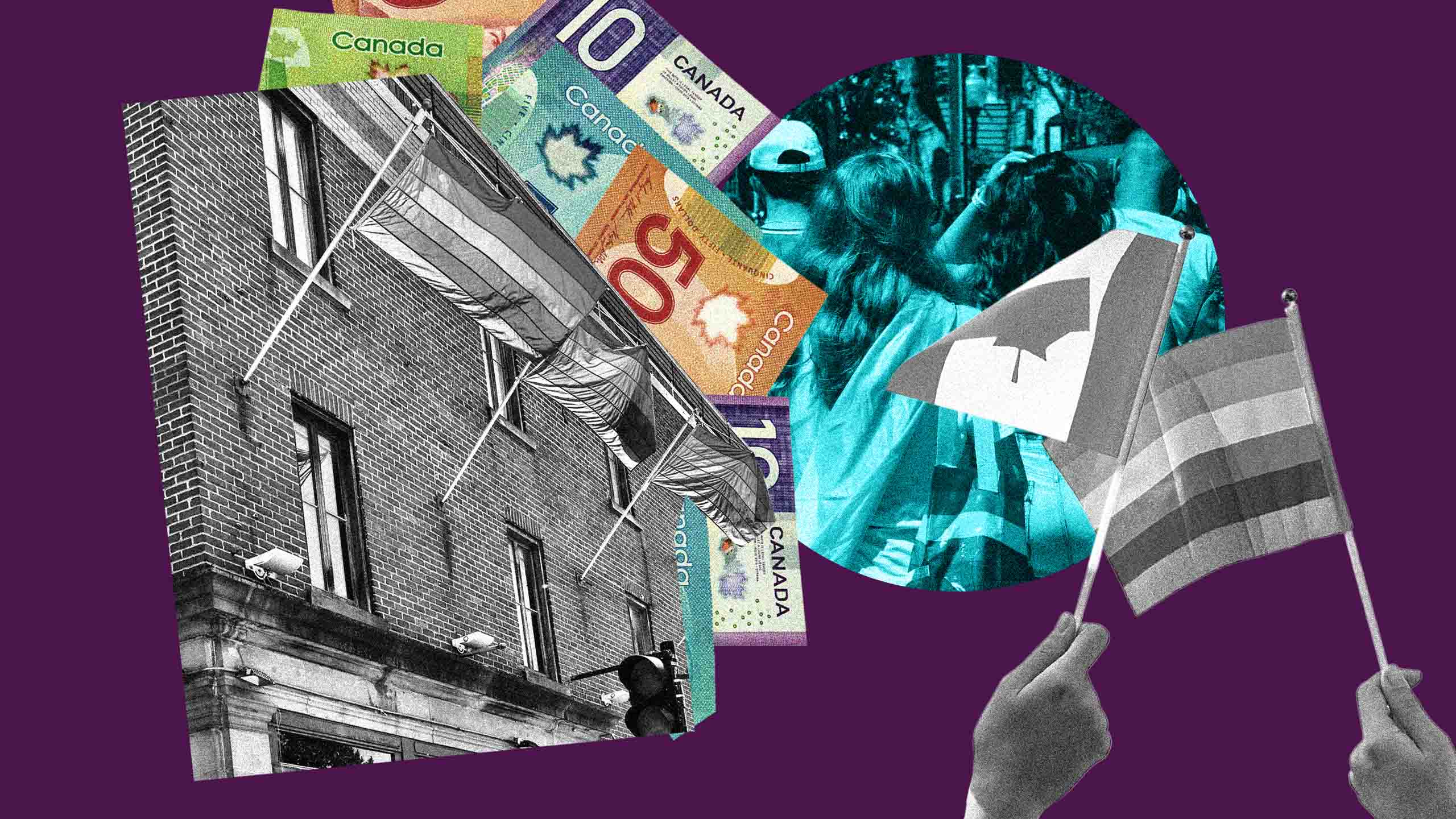
At the start of the year a handful of major sponsors—including Nissan, Adidas and Clorox—all pulled their funding. As the June festival approached, Home Depot and Google joined the ranks of those no longer contributing to Toronto Pride.
“We have a shortfall of close to a million,” Kojo Modeste, Pride Toronto’s executive director, tells Xtra. Putting that loss into perspective, 2024’s Pride Toronto festival saw more than $5 million in sponsor support—nearly 65 percent of their $8 million budget.
Though many of these companies have released statements justifying their about-face as routine reallocations of community support, Modeste sees a direct line to Donald Trump’s presidency in America. He points to Nissan as an example.
“When your CEO in the U.S. is saying we are moving away from diversity, equity and inclusion, the writing is on the wall,” he says, referencing a letter shared by Nissan two months before they pulled their Pride funding, saying they’d be rolling back DEI initiatives.
Other sponsors withdrawing came as more of a shock. For instance, Home Depot’s co-founder Bernie Marcus was a well-publicized Trump supporter and donor. Because of this, Modeste questioned if the corporation’s Canadian division shared his politics.
“I had a conversation with Home Depot three-plus years ago around Trump specifically, and my question to them was this: How are you different from what we’ve seen in the U.S.? And I was told that ‘we are different, we do business differently.’” It’s that switch-up that feels like a betrayal, says Modeste.
“Despite planning for a reduction in festival spending, Halifax Pride’s partners have stayed with them”
The ripple effect of Trump’s presidency is something many queer non-profits feared. “We were bracing for it at the beginning of the year; I think every Pride expected to go through that,” says Fiona Kerr, executive director of Halifax Pride.
Fortunately, smaller Prides like Halifax’s are much less dependent on corporate dollars. In 2024, only a quarter of Halifax Pride’s nearly $600,000 budget came from sponsors.
Yet despite planning for a reduction in festival spending, Halifax Pride’s partners have stayed with them. “A lot of our sponsors are local or regional, and so they aren’t doing business in the U.S. or they don’t have U.S. counterparts who are influencing them,” Kerr says.
Critics of Toronto Pride suggest that losing corporate dollars isn’t necessarily a bad thing, as it allows the festival to return to its roots as a more informal gathering or protest. Yet Modeste says that approach ignores the reality of what Pride Toronto is today—a massive gathering of an estimated three million people.
“We are one of the largest festivals in Canada, and as the LGBTQ2S+ community in Toronto grows, we’re going to have to create more space,” he says, pointing to the rising costs of everything from sanitation and water stations to fencing and security as justification for the large budget. “In 2021, we paid $67,000 for security. Now, for a festival our size, we pay $260,000-plus.”
“Still, to this day, we’re being asked by some sponsors, ‘Are you doing okay? If you’re not doing okay, maybe we could pitch in a bit more.’”
The good news is that Canadian businesses are coming to the table. Simon Gamache, executive director of Fierté Montréal or Montreal Pride, says that because American and multinational firms are putting pressure on DEI initiatives, Canadian businesses are stepping forward to prove their values.
“Most of them said, ‘You know what, this is the year to be present, this is a year to support you because of everything that’s happening,’” says Gamache of Montreal Pride corporate sponsors. “Still, to this day, we’re being asked by some sponsors, ‘Are you doing okay? If you’re not doing okay, maybe we could pitch in a bit more.’”
As for Pride Toronto, last Wednesday they announced new sponsors including No Frills, Shoppers Drug Mart and the Ballroom Bowl—all Canadian companies. The City of Toronto also raised its funding by 35 percent to $350,000 this year (though still far short of the almost million the comparably sized Montreal Pride gets from the City of Montreal).
What makes Modeste most optimistic, however, is the supportive response from individual people. More than 175 single donors have given over $10,000 to the festival—many inspired by the news of corporate flip-flopping.
“Canadians have really shown up for the work that we do,” says Modeste. Still, Pride Toronto won’t soon forget corporate betrayals—going as far as saying they will reject future donations from businesses that walked, unless they show authentic contrition and learning.
“Your house is on fire and your neighbours turn their backs. You rebuild your house and they want to be the first ones to come in? I’m sorry, I would not allow it.”

 Why you can trust Xtra