“It’s Republican Coachella,” conservative influencer Xaviaer DuRousseau told New York magazine in January 2025, “and Donald Trump is our Beyoncé.”
The piece in which DuRousseau appears, entitled “The Cruel Kids’ Table,” was the cover story of the magazine that month; it announced to the world that the “post-woke” “vibe shift” had finally arrived, and that young Republicans were—could it be??—cool now. The new, hip right contained “gays of all stripes,” according to writer Brock Colyar, and “many are hot.” This alone ought to be enough to ensure “cultural domination.”
Colyar’s piece was a culmination of a long strand of trend pieces. The “vibe shift”—which, trend experts assured us, would bring on an era where “the culture-war topic no longer seems quite as interesting,” and “younger people are less interested in things like quote-unquote cancel culture”—was announced back in 2022. The MAGA debutantes and tradcaths of Dimes Square were profiled by the New York Times and Vanity Fair that same year. Lana Del Rey started attending a megachurch. Post-wokeness even infected Brat Summer; Charli XCX’s “Mean Girls” was (I’m sorry you have to hear this) about Red Scare podcast host, Dimes Square mascot and Steve Bannon superfan Dasha Nekrasova.
Flash forward 11 months, and the post-woke moment seems to have fizzled (maybe because it was led by people named Xaviaer Du Rousseau who said things like “it’s Republican Coachella and Donald Trump is our Beyoncé”). Regardless, this was how we opened the year: with the announcement that Donald Trump had a mandate, that culture had shifted, that identity politics was a losing battle, that woke was dead and that it was, for all these reasons, not only safe, but trendy to hate queers and minorities again.
In the wake of that announcement, every single public figure with a bit of hidden bigotry felt free to show their entire ass. Queer people and their allies have spent a year figuring out who our friends are—and we’ve learned that there are fewer of them than we’d hoped.
There was nothing to distinguish “post-woke” from any other brand of far-right politics except the youngish age of its participants and the fact that they spoke in the edgy, “ironically” unironic fascism of online message boards. Many, due to their age, had once espoused leftist politics, a stance they abandoned the moment it conflicted with being assholes: Colyar’s article mentions, in passing, a Biden voter who turned Republican because “I hate having to watch what I say” around the “trannies” at his liberal arts school, and a Bernie Sanders supporter who now hangs out with white nationalists because “he wanted the freedom to say ‘faggot’ and ‘retarded.’”
Yet these were the tastemakers to whom pop culture was expected to cater. It was instructive, and depressing, to see who complied.
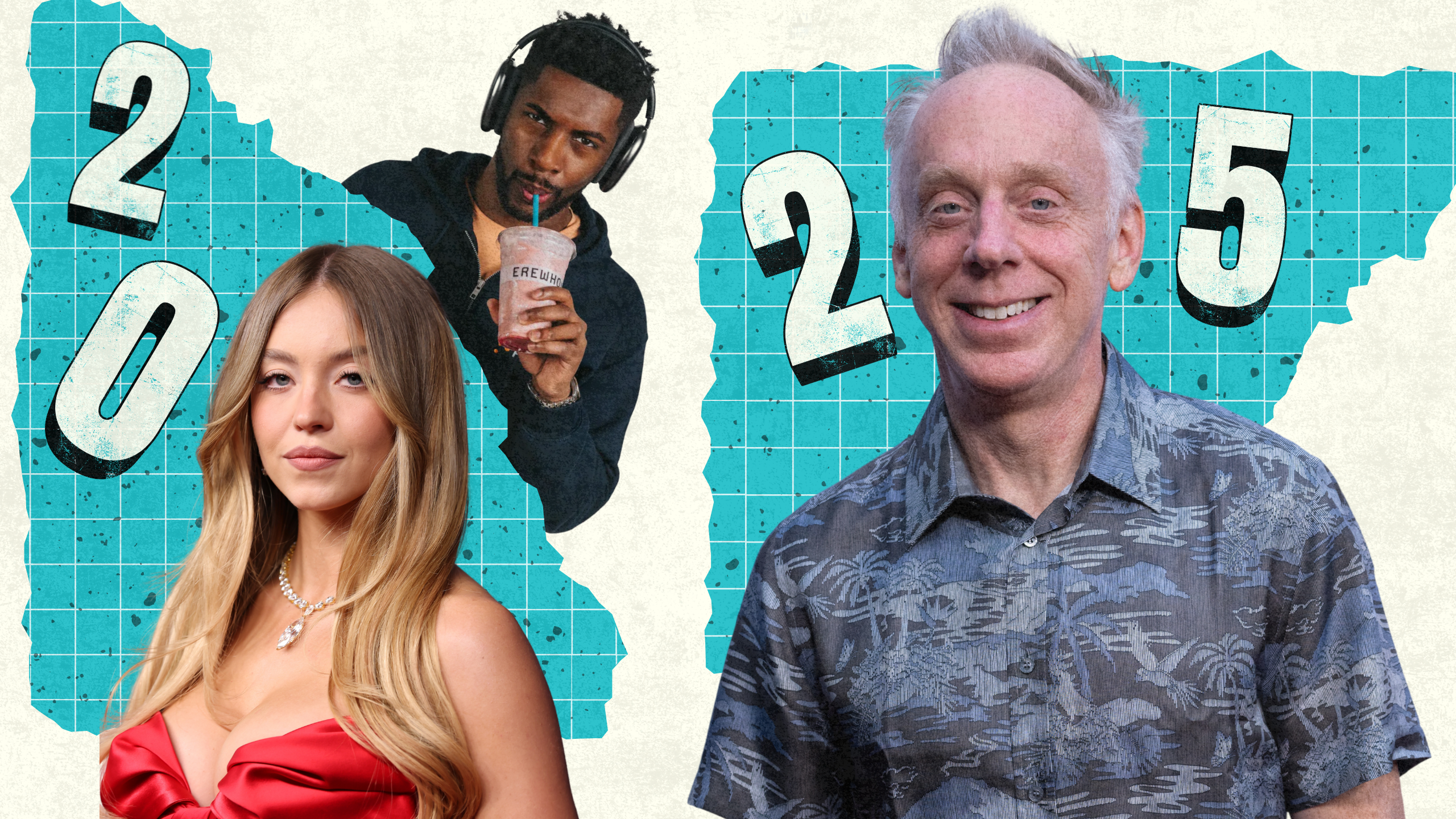
By March 2025, beloved bisexual White Lotus showrunner Mike White had cut a plotline about a trans child from the show while keeping a long, transphobic monologue delivered by Sam Rockwell; he was hailed by anti-trans pundit Helen Lewis as having created “the first great ‘post-woke’ art” and went on to defend said art on Andrew “Bell Curve” Sullivan’s podcast. It girl Sydney Sweeney—herself a White Lotus alum, whose character was (I’m so sorry) also inspired by the Red Scare hosts—reportedly registered as a Republican and made a bizarrely eugenicist ad for American Eagle jeans. Olivia Nuzzi, a star in the East Coast media scene, who had long professed her affection for right-wing figures like Ann Coulter, was fired from New York magazine after a baffling yet reportedly passionate love affair with Robert F. Kennedy Jr.; by September, Vanity Fair had hired her as its West Coast editor, a more prestigious position than the one she had lost.
@xtramagazine Is advocating for trans people a recipe for campaign disaster for Democrats? Zohran Mamdani just proved that might not be the case. While the final count will be released next week, Mamdani, a democratic socialist endorsed by the likes of Bernie Sanders and Alexandria Ocasio Cortez, is poised to capture to Democratic mayoral nomination in New York City, besting disgraced former New York governor Andrew Cuomo. And the 33-year-old Assembly member from Queens did so with a campaign that was explicitly supportive of trans people. We’ve seen a pile of op-eds and analysis since the 2024 presidential election arguing that Democrats should not talk about trans issues if they hope to win back America. Even representative Sarah McBride, the first openly trans member of congress, argued for appeasement. And just this week, Evan Low, the leader of the LGBTQ+ Victory Fund—the largest PAC dedicated to electing LGBTQ2S+ people to office—said that Democrats “are running to serve the people, not to distract on issues that divide.” This has been a common talking point since Kamala Harris lost to Donald Trump, with the latter running an extensive and expensive ad campaign—casting Harris’s support of trans and non-binary people in a negative light. But Mamdani’s recent triumph in the New York City mayoral primary might suggest another way. He included specific platform points dedicated to LGBTQ2S+ issues including a promise of $65 million to trans healthcare, spoke at a trans town hall, and pledged to make New York City a sanctuary city for queer and trans people. Mamdani’s surprise primary victory, and potential triumph in the mayoral race in November, could be proof that a Democrat can win without abandoning LGBTQ2S+ people. 🏳️⚧️🗳️ #zohranmamdani #newyorkcity #lgbtqnews #uspolitics #trans #democrats #unitedstates #news ♬ original sound – Xtra Magazine Advertisement
Meanwhile, companies were cutting bait right and left, in response to the Trump administration’s attack on corporate DEI. State Street, the investment firm that commissioned the “Fearless Girl” statue on Wall Street, retracted its policy for hiring more women; Target, after rolling back its Pride collection in 2024, also ended its policies for racial diversity. Some quietly retracted their diversity commitments when no one was looking, but others celebrated the shift: Anson Frericks, an Anheuser-Busch executive, went on the record with Fox News to condemn the company’s previous work with trans influencer Dylan Mulvaney. “They just were not an authentic partnership at all,” Frericks said. “They were catering to a lot of those special interests.”
Whether Frericks’s statements were intended to cater to a new set of “special interests”—specifically, the ones with red baseball caps, horrible opinions about trans women and a tendency to watch Fox News—is perhaps too obvious to be worth belaboring.
So this was “post-woke,” the vibe shift made manifest, and it sucked. The fact that being a callous bully scans as “cool” is familiar to any queer who’s survived high school; the fact that bigotry exercises cultural power is familiar to any marginalized person, period. We’ve all heard enough about “rainbow capitalism” to know that corporations make fickle allies. None of this was new, precisely, but it was remarkably devoid of subtlety or shame.
The problem with being an edgelord is that it’s a schtick with only one joke—hey, that vulnerable person seems like they’d be hurt if I said something terrible; let’s say it—and the joke gets old.
Then it ended. The White Lotus season received tepid reviews, and Mike White spent more time feuding with crew members and complaining about audience reactions than ushering in the new post-woke era. Sydney Sweeney starred in three box office bombs in as many months, which was apparently enough to make her apologize for the jeans ad; Olivia Nuzzi lost her job at Vanity Fair less than three months after her hiring was announced. In the cruelest twist of all, Dasha Nekrasova was cut from a movie and dropped by her Hollywood agent after news broke that she had hosted white nationalist Nick Fuentes on Red Scare; this was shocking at least in part because it suggests her agent didn’t actually know who Dasha Nekrasova was, and was under the impression they had signed someone else.
It turned out, at the end of the day, that nobody actually wanted to spend time with a bunch of bullies. The problem with being an edgelord is that it’s a schtick with only one joke—hey, that vulnerable person seems like they’d be hurt if I said something terrible; let’s say it—and the joke gets old.
The backlash to “post-woke” was at least partially because it lost its edge; whatever “subversive” or “transgressive” charge their bigotry had under the Biden administration disappeared once their agenda was being enacted by the world’s most powerful people. But it also came about because, deep down, human beings long for kindness, and feel an instinctive revulsion toward people who use cruelty and intimidation as their only method for navigating the world. The man who probably did the most to end “post-woke,” human charisma fountain Zohran Mamdani, was refreshing at least in part because he was, like, actually really nice.
But we know who joined in, when “post-woke” was king; we know which forms of bigotry they were hiding, or (worse) which they were willing to fake for relevance and approval. There’s another vibe shift coming—there always is— and the people who sold out in 2025 won’t be welcome to join it. We’re not going to forget what happened, or who our friends were. When the tide turns, some formerly very “cool” people are going to be left out in the cold.

 Why you can trust Xtra