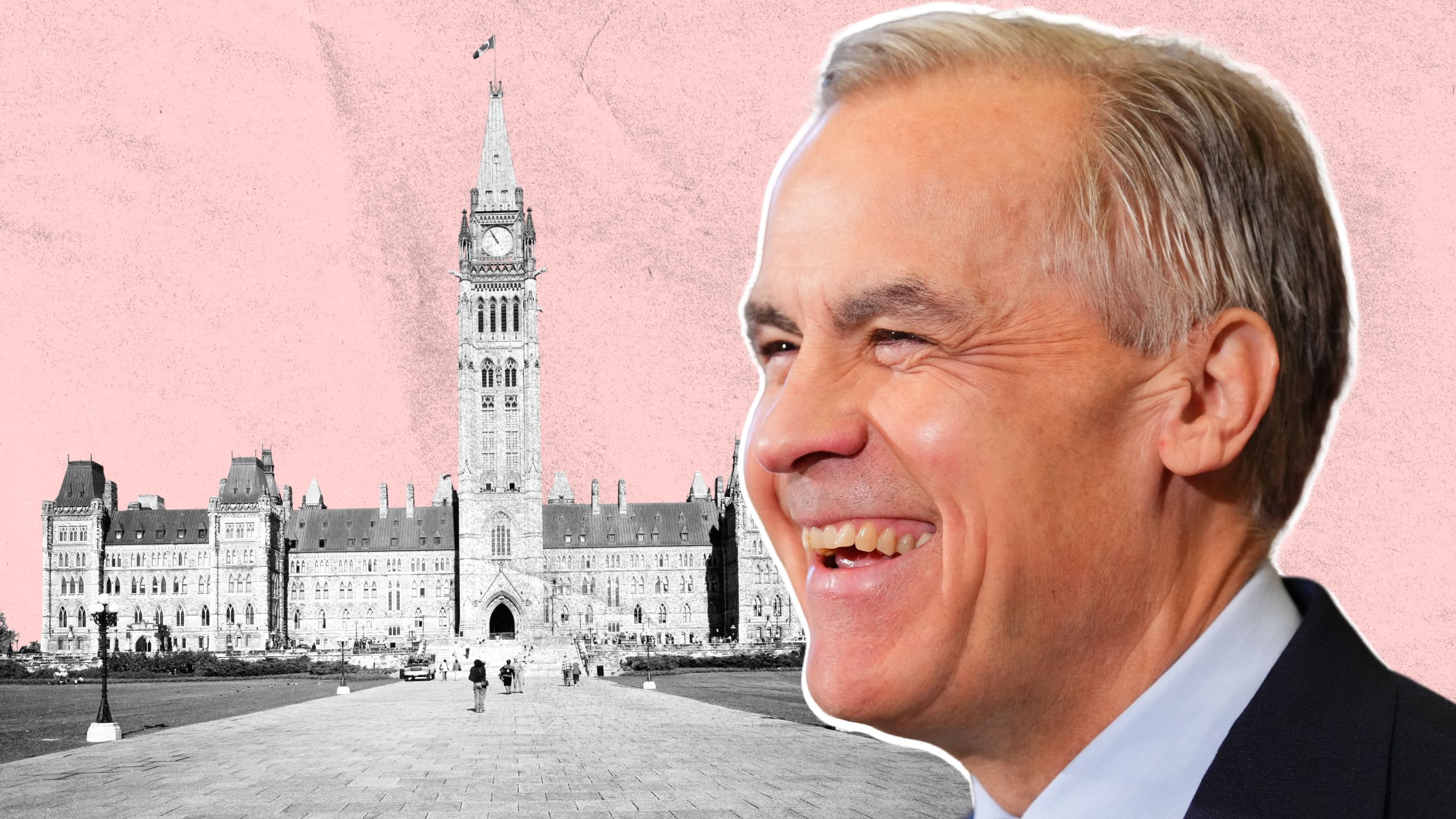
Following the three byelections on Monday night, and in the wake of five MPs crossing the floor to the Liberal ranks, Prime Minister Mark Carney has secured a parliamentary majority for his government. This ensures that he has enough votes to guarantee stability for the next three years or so, until the next “fixed” election date (not that these dates are ever really fixed). But what is this going to mean for how Carney will govern going forward, particularly for LGBTQ2S+ people?
The most obvious way that this will change things will be that once the majority becomes official in three or four weeks, when the three new MPs are sworn in, Carney will be able to move a motion that can change the composition of committees in the House of Commons. Committees are where the bulk of work happens, but also where so much of the obstruction of the past two Parliaments has happened. In a minority Parliament, the opposition MPs have effective control over the committees, and have used it to block government legislation for years. There’s a reason why very few non-money bills have passed over the past two Parliaments, and it’s because of the bottlenecks created by unrelenting procedural warfare. Even during the supply-and-confidence agreement with the NDP between 2022 and 2024, the NDP would only play ball on certain pieces of legislation, so much of it languished on the Order Paper—things like updating privacy laws for the current digital era, cybersecurity, online harms and even citizenship law changes that were mandated by court decisions all got held up by stupid gamesmanship.
But herein lies part of trouble with Carney. In the past year, we’ve seen a troubling pattern in the legislation he has brought forward, whether it’s with his budget measures or his desire to look tough on crime, and he will have more tools to be able to bully it through with little resistance in the House of Commons. While there will be some senators who push back, not enough will vote against any legislation to make the government think twice. For example, his major projects legislation was one big Henry VIII clause—a legislative tool that delegates significant authority to the political executive without parliamentary oversight.
His first major “border security” bill was a sprawling piece of legislation that allowed for everything from added police surveillance to anti-asylum claimant measures, and when he faced opposition to that giant bill, Carney split the bill. The anti-asylum claimant legislation has now passed and the government is set to wipe out 30,000 asylum claims without due process or procedural fairness. The other portion is currently being debated—a new lawful-access regime that would allow police or CSIS to mandate things like encryption back doors into telecom equipment or messaging services with very low standards to get judicial authorization to do so.
There have also been a lot of concerns about Carney’s tough-on-crime legislation, which could actually exacerbate court delays rather than solve them. These are measures that have dubious constitutionality that Carney has been pushing for because they play well with the public, and because they respond to criticism of Justin Trudeau’s government, particularly around claims around crime rates, even though the problems with policing or supposed issues with bail rest with the fact that provinces underfund their court systems—and that’s something Carney won’t talk about. In fact, any conversation he has with premiers is all about how well they’re co-operating instead of holding them to account for their failures (which they blame on the federal government, naturally).
@xtramagazine Mark Carney’s Liberal government says they want to ban social media use for minors under the age of 16. And if they go through with it, it could have huge impacts on queer and trans people across Canada. At their convention last weekend, Liberal Party members passed a policy resolution that calls for a law similar to one introduced in Australia last year that would set a minimum age of 16 for creating social media accounts in Canada, and puts the onus on social media platforms to police who can create accounts. The idea behind the policy is well intentioned: party members said they want to protect kids online from all of the harms and garbage that social media platforms present—and let’s be real, they present a lot of harms to young people. And the policy has widespread public support—75 percent of Canadians polled by Angus Reid said they supported a social media ban for users under the age of 16. An open letter to the prime minister in support of the ban was also signed by groups including the Canadian Medical Association, the B.C. Pediatric Society and the Ontario Psychiatric Association. But the policy could pose new problems for trans people accessing information online. We break down how the process of age verification comes with a lot of caveats for LGBTQ2S+ Canadians. #lgbtqnews #cdnpoli #ageverification #canada #canadanews ♬ original sound – Xtra Magazine Advertisement
When it comes to queer and trans issues, I suspect that Carney is going to continue to do the absolute minimum—carrying on with some of the funding for things like security for Pride festivals without necessarily addressing their broader fiscal concerns, but doing little else, in spite of constant platitudes by members of the government about how much our communities mean to them and to Canada. There have already been concerns about lapsing funding for a lot of grants and contributions in the Women and Gender Equality portfolio, and given the magnitude of the cuts across government, I don’t expect this to get much better, even if this is a portfolio he claims he wants to protect. I also have grave concerns that we’re going to see some kind of age-verification legislation, either for social media (which is very, very bad, especially for trans people), or to try and keep youth away from online porn, if that Senate bill makes it to the Commons, which it almost certainly will within the next few months.
So much of this inevitably boils down to the kind of Liberal Party that Carney is leading, which has morphed from one that had a defined moral mandate, which former Trudeau speechwriter Colin Horgan called “exuding a form of dogmatic progressivism that eventually, for some, bordered on exclusionary,” to one that is a “more corporate vision. There may still be lines in the sand as to what the party can tolerate, but they are variable and shifting, drawn as the situation dictates.” Carney insists they are still the party of the Charter, but it’s a harder line to believe given all of the bills on the Order Paper that push those limits.
This is partly where the issue of those floor-crossings come into play, most especially exemplified by Marilyn Gladu, who was a very firm Maple-MAGA, Trump-loving Conservative, who was called out for her opposition to vaccine mandates, as well as the anti-conversion therapy legislation (which she later claimed was because of freedom of expression issues and not supposed “conversion therapy” itself, which she says she has always opposed). It is with this kind of floor-crossing that one is forced to wonder if perhaps the “big tent” of the Liberals has become too big, that there are MPs you shouldn’t accept into your ranks, and that Gladu is one of them. To quote Andrew Coyne, “There’s big tents, and then there’s just a circus.”
Carney has been trying very hard to brand himself and the party as being “beyond politics,” that they are simply about pragmatism and doing what needs to be done to Build Canada Strong™ and not get caught up in divisive point-scoring, but at what cost? It’s hard to insist that you’re a party of Charter values when you rush to secure “strategic partnerships” with forced-labour countries like China and Qatar. If the government’s ethos is increasingly mercenary, it’s not all that reassuring for groups that could find themselves coming under government fire the moment it becomes convenient for them to do so—something we are seeing all too much of these days. That’s why this new majority era will demand vigilance, because it’s hard to trust in a leader whose values shift to whatever is most convenient in the moment.

 Why you can trust Xtra