As a journalist and a gay person, I’m pretty sensitive to how the mainstream media covers queer people. We’ve been in a heinous double bind over the past several years: hypervisible in both the good way and the bad way, living in a surreal reality where we have trans people as the faces of major ad campaigns at the same time that our driver’s licences are being revoked in some states and our basic healthcare has gone from being questioned to outright denied. It’s pretty weird!
In this climate, I take my job as a queer journalist editing and writing about queer issues very seriously, and discernment is an important part of that job. In the queer newsrooms I’m in and in conversations with the editors I work with, two of the most important questions we regularly ask are, “Why are we reporting on this story? What do we have to add?”
Which is to say, I can tell when those questions weren’t asked, and when queer and trans people weren’t playing a meaningful role in determining how they and their communities are covered. We’ve seen it (and called it out) at outlets like the New York Times again and again. I think it’s important to do that, because we know that how we are covered in the mainstream press has the power to influence both public opinion and policy.
@xtramagazine The New York Times often writes about trans issues—but they rarely quote actual trans people in their coverage. That’s according to a new analysis by Assigned Media, which tracked news coverage of trans issues across 10 U.S. publications between January and April 2026 Assigned Media identified 214 stories from the New York Times that contained either the words “trans,” “transgender,” “gender identity,” “gender ideology” or “biological sex” during that time window. For comparison, Assigned Media found 130 stories in those same parameters by the Associated Press and 110 by the Washington Post. It’s important to note that those numbers correlate to a wide range of coverage areas: including news articles, op-eds, culture pieces and other stories that might briefly mention one of the target keywords. When it comes to stories specifically about trans issues, the NYT published 60 news stories focused on trans people, compared to 51 by the Associated Press and 25 by the Washington Post. Assigned Media was able to compare one metric across the board: how often actual trans people were quoted in stories about trans issues. The NYT came in last with just 20 percent of its news stories about the trans community quoting a trans person or representative of a trans organization. And many of the other mainstream news outlets didn’t do much better, with NBC News and the AP just ahead of them at 29 percent. This report follows a similar one from the Trans Journalists Association last year, which tracked news coverage of trans issues during Trump’s first 100 days. Their analysis found that only 30 percent of stories about Trump’s executive orders defining gender as biological sex quoted a single trans person. But not every outlet did as poorly as the NYT in Assigned Media’s findings. Fifty percent of NPR’s stories about trans issues featured at least one quote from a trans person, while independent outlet The 19th outperformed the rest with 70 percent. The New York Times has consistently been criticized for inaccurate reporting on trans issues that has had real ramifications on the rights of trans people in the U.S., so these numbers may not be too surprising. But this report helps to quantify how the newspaper disproportionately covers trans issues without trans perspectives. #lgbtqnews #mediaanalysis #transgender #assignedmedia #lgbtq ♬ original sound – Xtra Magazine
It’s questions like these around coverage and visibility that immediately come to mind when I think about the recent Boston Globe article about the Western Massachusetts lesbian bar masking drama.
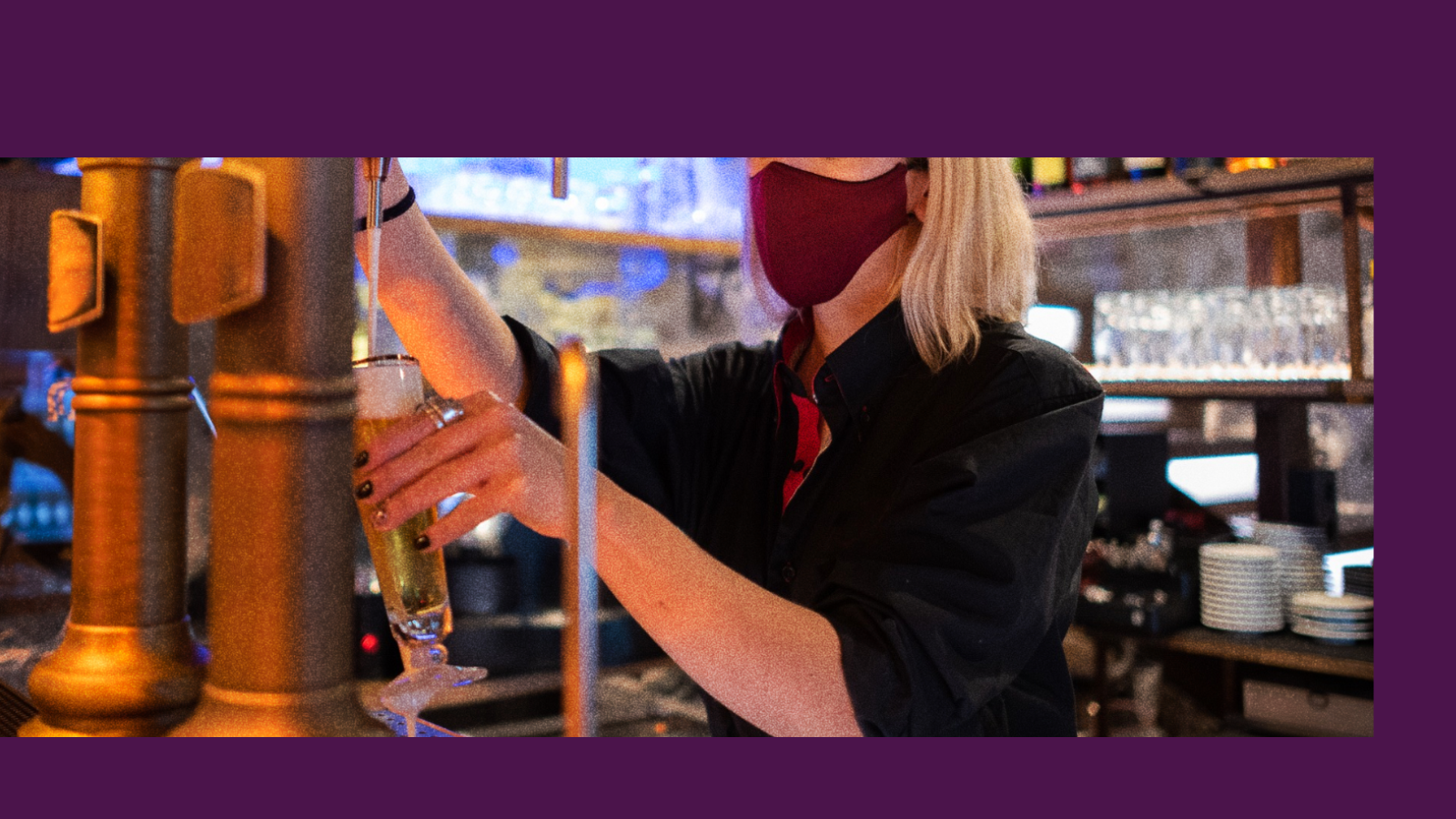
For those of you who are not up to date on the discourse at hand, the feature, released Tuesday, centres around a lesbian bar in Greenfield, Massachusetts, that had been requiring patrons to wear KN-95 masks. After experiencing some financial struggles, the bar decided to open up one “mask optional” night per week (in a somewhat flippantly worded announcement)—resulting in a vitriolic Instagram backlash. The story has all the classic components of a modern-day queer-discourse tale that I might gossip about with my roommates around the breakfast table or in the group chat: unpaid labour, Instagram story shade, someone going to clown school. But unlike the gossip that graces my breakfast table, this story blew up big time—like, New York Post big, “Ted Cruz was tweeting about it” big. Apparently it generated 1,000 subscriptions to the Globe in one day—you can’t even pay for that kind of click-through these days.
And all discourse aside, I’m left wondering: What made this a Boston Globe story? In fact, what made it a news story at all, instead of just a piece of local gossip that circulates on a handful of Instagram stories and eventually dies out when we move on to the next scandal?
Written the way it is and appearing in a major U.S. city’s paper of record, I find the story’s framing almost voyeuristic in a way that borders on homophobic: ultimately, editors who pitch or assign stories like this one do it because they know it’s juicy and it’s going to blow up. And when that blowing up amounts to a bunch of social media users—sometimes powerful people—making fun of a small group of marginalized people, that is bullying. The past half decade or so has shown us that for queer people in particular visibility does not equal power.
I’m not trying to scold anyone who laughed reading the story—I did too! I just want to ask: What does a piece like this, which implicitly places gay people and mask-wearers as the butt of the joke, in a major paper, do for conversations about those communities? I don’t think it’s anything good.
Six years after the COVID-19 pandemic’s onset, stories about people who choose to still mask are a lightning rod. If I were to venture a guess, I think it’s partly because we’re all still really traumatized from how poorly the U.S. handled COVID—a disease that both laid bare and really worsened a lot of inequalities in this country and around the world. Disabled people, who were already being failed by our country’s screwed-up medical systems, were failed even further. This string of disasters has brought us to the present moment, where people who mask are often othered and treated poorly, and can (understandably) feel deeply alienated from a world and media that continues to choose to ignore both the lasting effects of the COVID virus, and the fact that it is an ongoing mass disabling event.
Discourse around COVID precautions and masking has something for everyone across the political spectrum: right-wingers and leftists alike can come together and agree when it comes to making fun of disabled people. And among queer people, as a friend of mine pointed out, it lends itself to an attitude of “Well, at least I’m not like that kind of person.”
I keep returning to the final line of the story, where one of the bar’s owners reflects that conflict is one of the costs of being in community. If we take that tenet seriously—and I think we will have to, if we want to survive the climate and political disasters to come—we journalists can’t keep falling into the trap of writing these easy rage-bait type pieces. More often than not they just lead to internet-bullying campaigns and pit already-marginalized people against one another, and that only serves the powerful.
And at the end of the day, some things should just stay in the group chat.

 Why you can trust Xtra