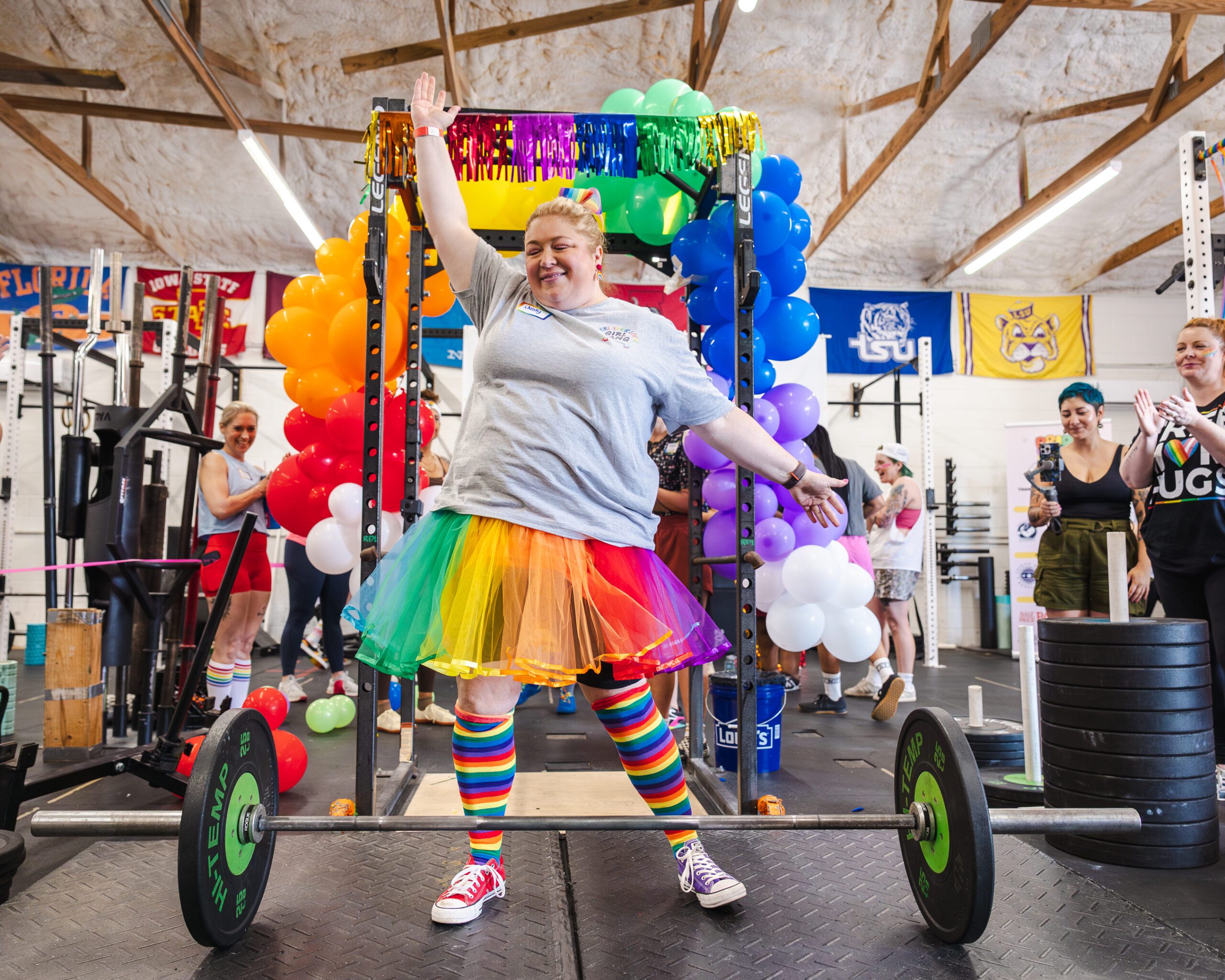
To say I’m not an athlete would be the understatement of the century. I’ve historically viewed exercise as a punishment to be avoided at all costs, and yet here I am, hands gloved and mouth dry, preparing to lift the barbell equivalent of my own body weight in front of a cheering crowd. Behind me, there’s a Palestine flag and a trans flag taped to the gym’s charcoal wood-panelled wall. My heart is pumping, probably thanks to the two pink lemonades I chugged without realizing they were actually energy drinks. As Chappell Roan’s voice over the speaker is temporarily muted, I squat deep into a sumo deadlift stance and pause with terror, despite deafening cheers of encouragement. I surprise even myself by shakily muscling up the barbell, marking my heaviest lift in three years.
I’m lifting for the first time in public as part of the second Sheffield Pride Deadlift Party, a gloriously queer take on the traditional powerlifting meet. Unlike traditional lifting meets, there are no weight or gender categories; instead, drag kings vamp across the gym floor and flex their muscles. There’s a raffle table packed with donated prizes, as the party is also a fundraiser—today, we’re raising much-needed cash for the trans-led charity Not A Phase, whose Misfits program subsidizes trans-only fitness classes across the U.K.
These events date back to 2017, when members of the Women’s Strength Coalition hosted Pull for Pride powerlifting meets in several cities across the U.S. With the events, organizers aimed to create space for trans powerlifters, and to raise cash for LGBTQ2S+ organizations in the wake of Trump’s election. Since then, trainers have been putting their own spin on this blueprint. In 2021, Rain City Fit co-founder Le Carr created what is now Seattle’s annual Pride Deadlift Party, a mash-up of a powerlifting competition and a raucous block party, with drag acts aplenty. Carr knew the demand was there; for years, they had hosted informal meets and established a close-knit community of queer powerlifters. But even Carr was shocked when all 200 tickets sold out at the inaugural event.
A Pride Deadlift Party is always “pure magic,” says Carr. “It’s open to everyone, from first-timers who’ve never touched a barbell to seasoned lifters pulling over 700 pounds.” Forget stretched-out, standard-issue singlets; here, competitors come decked out in glitter, leather, rainbow tutus and, occasionally, eight-inch stilettos. “They’re not safety-approved, but they’re iconic nonetheless,” Carr laughs. There are live DJs, drag performances, food vendors, arts and crafts areas, as well as cultural showcases by UTOPIA Washington, a grassroots organization advocating for queer and trans Pacific Islanders. Better yet, it’s a fundraiser—in just four years, the Seattle events alone have raised more than $200,000 for local LGBTQ2S+ organizations.
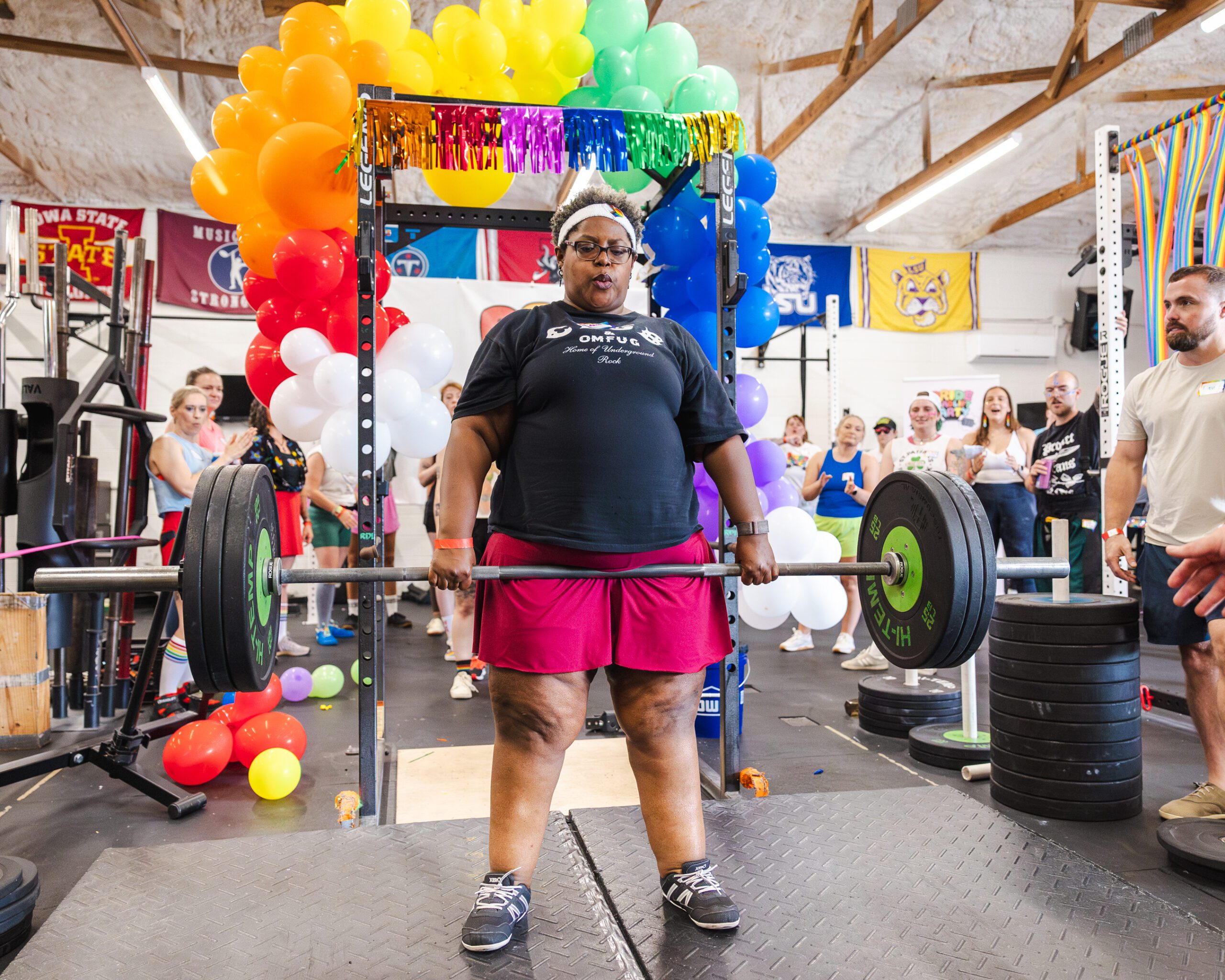
A participant at Nashville’s Pride Deadlift Party on June 7, 2025. Credit: Dakota Elliott Photography (@dak.elliott.photos)
These annual extravaganzas are joyous, but they’re also vital in a climate that is hostile towards trans athletes, at all levels of sport. Trans youth are being barred from playing on the school sports teams that match their identity, with “transgender sports bans” sweeping the U.S. since 2021. Last month, the Minnesota Supreme Court largely sided with trans powerlifter JayCee Cooper after she had sued USA Powerlifting for discrimination after the organization barred her from competing as a woman, but the organization is still quite restrictive when it comes to trans participation. Pride Deadlift Parties are one of the few places where trans powerlifters can actually take part in meets, and show up without fear of being misgendered on the platform.
There’s a reason these events tend to centre the humble deadlift, a cornerstone of old-school powerlifting. “Even if you’ve not done much lifting before, a deadlift is kind of intuitive,” says Pennie Varvarides, the personal trainer behind Sheffield’s Pride Deadlift Party, the first in the U.K. “Even if you’re not that strong, everyone can deadlift something; it’s just picking something up, and you do that all the time! Plus, it looks really cool and dramatic on stage.”
Varvarides tells me they’re on a mission to “get gays in the gym.” It only takes a scroll through Grindr to see that plenty of cis white gay guys already have rippling, six-pack abs, but there are also well-documented streaks of fatphobia and racism in what’s become a mainstream gay fitness culture. Varvarides aims to broaden this demographic, opening up the gym landscape to queer people, people of colour and trans and non-binary people—but “there’s a lot of baggage that comes with queer adults entering fitness spaces,” they explain. It might stem from being bullied in school, or the fear of needing to navigate gendered changing rooms. “I’ve trained trans girls who literally haven’t been to a gym in ten years because they’ve been so scared,” they lament.
More than ever, it’s being recognized that the worlds of health and wellness are political, and increasingly, they skew very right-wing. In extreme cases, neo-Nazis have scoured online gym groups for potential recruits, and local meditation groups have devolved into breeding grounds for anti-vax conspiracy theories. In response, leftist fitness fans are mobilizing. The r/swoletariat subreddit currently has more than 30,000 members, giving a dedicated home to the tongue-in-cheek term favoured by marginalized people reclaiming a culture that pushes them out. Sure, you’ll find Lenin quotes and meme-worthy captions, but you’ll also find a surprisingly wholesome community of people just trying to take care of each other when the state won’t.
In this context, the importance of queer strength events can’t be understated. “Gyms are getting politically active, and for good reason,” says Barb, an organizer of Nashville’s Pride Deadlift Party who prefers to go by first name only. Barb organized the inaugural Nashville Pride Deadlift Party at the Music City Muscle Gym in 2023, raising thousands for Trans Aid Nashville and the Oasis Center, an organization that helps local youth. Supported by a newly expanded team, this year’s event secured over a dozen sponsors and beat its fundraising goal of $10,000, this time for Trans Aid Nashville and Nashville Launch Pad, which supports unhoused LGBTQ2S+ young adults.
As well as being much-needed fundraisers, these events, and the inclusive gyms behind them, build queer communities outside of nightclubs. “Many queer people, myself included, feel that the only third spaces available are centred around nightlife, and drinking,” says Barb. “That doesn’t leave many opportunities for folks who choose not to do that.” This ethos is spreading far and wide: Barb name-checks Richmond’s Barbells Not Bans, East Atlanta’s Rainbow Deadlift Showdown and Minneapolis’s Drop Deadlift Gorgeous as just a few other examples.
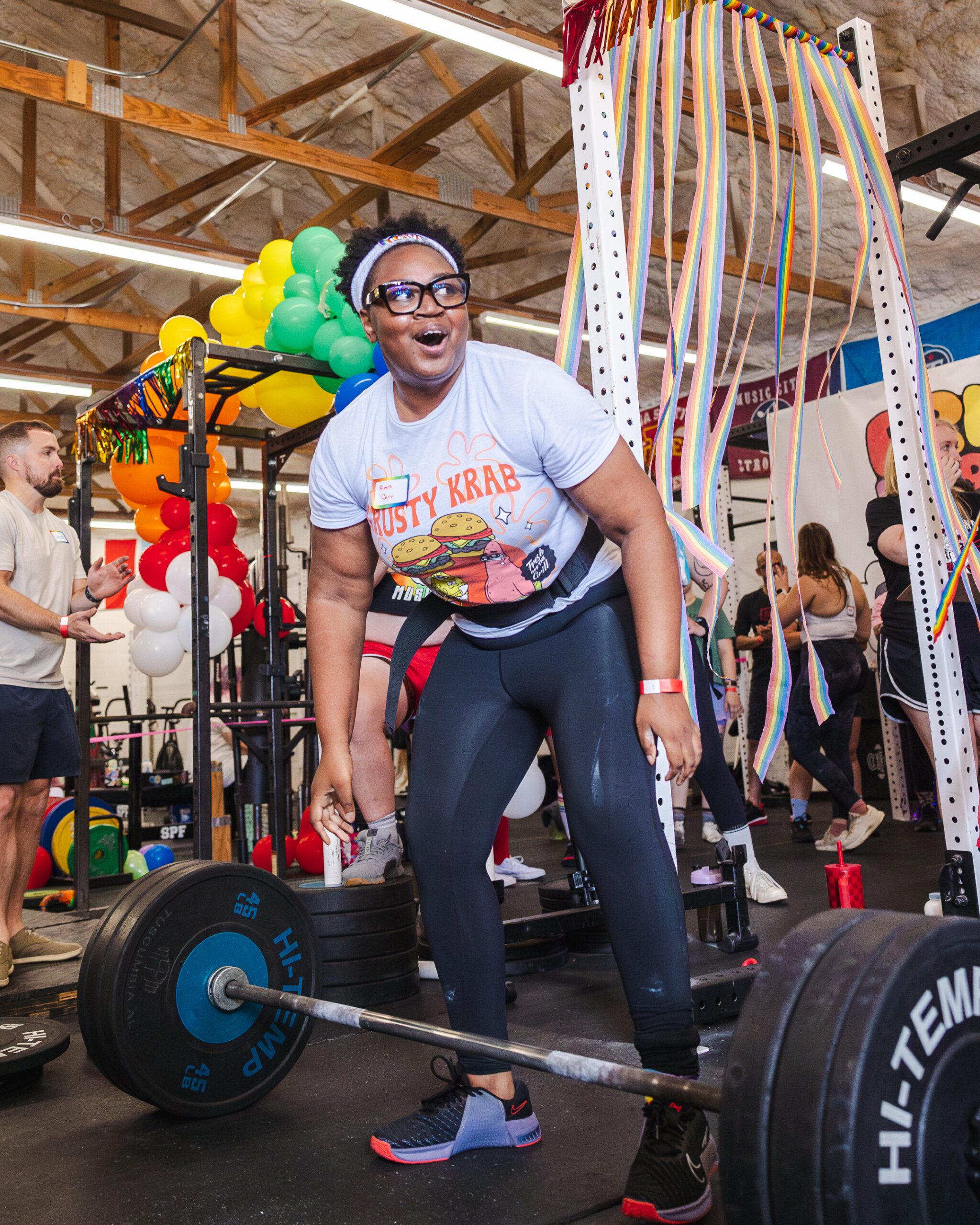
A participant at Nashville’s Pride Deadlift Party on June 7, 2025. Credit: Dakota Elliott Photography (@dak.elliott.photos)
The swoletariat is growing; queer trainers are building networks and sharing knowledge and resources to fuel this revolution. Ahead of the first Sheffield Pride Deadlift Party in 2024, Varvarides got in touch with Carr to ask for advice. They were blown away by Carr’s kindness. “Not only did they give me a blueprint for how to do it,” says Varvarides, “they even paid for loads of things, because I didn’t have any money.” The party raised thousands of dollars for Lesbian Asylum Support Sheffield, an organization supporting queer asylum seekers. “Because they’re such a small organization, that money lasted them the whole year,” they add.
Better still, Carr gathered a group of their powerlifting friends for a long pilgrimage across the Atlantic, to take part in Sheffield’s first Pride Deadlift Party. Carr describes the day as an “unforgettable core memory,” adding, “Watching people lift, cheer and support each other reminded me that no matter the distance, our communities just want to create spaces where everyone can show up as themselves, lift proudly and feel seen.”
As trans rights are rolled back worldwide, it can feel impossible to stay healthy in a world that tries to stamp us out. But “healthy” doesn’t just mean sit-ups or gym memberships; it means moving our bodies and fighting to take care of each other however we can. “The stronger and fitter you are, the easier it is to move through the world,” says Varvarides, “so I want queer people getting strong as hell, being fit, flexible and confident in their bodies. I just want us to take up more space,” they shrug, smiling. “That is my gay agenda!”
 Why you can trust Xtra