Credit: Out On Screen
Over the last year and largely through the work of new president Raúl Castro’s daughter, Mariela Castro, Cuba has made remarkable progress in tackling homophobia and promoting queer rights on the island.
However, German filmmaker Christian Liffers’ debut documentary Dos Patrias (Two Homelands: Cuba and the Night) offers a timely reminder of the struggles Cuban queers have had under the communist regime, and the continuing social pressures that keep them marginalized in Cuban society.
Dos Patrias follows six Cubans as they narrate how being queer has affected the opportunities they have and the choices they’ve made.
Each story is bookended with a reading from Cuban poet Reinaldo Arenas, who was exiled under the communist regime for being gay, and the plaintive acoustic guitar of street musician Michael Espinosa Rodriguez. It’s a clever conceit that reflects both the local and global artistic expressions of Cuban identity that Dos Patrias captures so well.
While the opening story offers little that’s unexpected, the later monologues offer more nuanced and intimate glimpses into Cuban life.
An older man, who recounts how he was denied admission to university because he was gay, can simultaneously point to the progress Cuban society has made on queer rights in 20 years. But he is at his most affecting when he describes the loneliness he feels at not having a partner at his age.
A photographer who specializes in male nudes points to the additional scrutiny and censorship his work faces because of his sexuality, and yet it’s understood that his sexuality is also a gift that has shaped his artistic sensibilities.
One man’s story of being caught on video at a gay party by state police, who then reported him to his parents, is heartbreaking. But his story and several others offer counterpoints to the stereotype of the cast-out homo son.
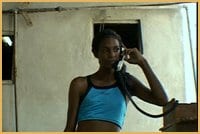
Most affecting is the final story about black transsexual Isabel. While she is certainly the most marginalized character spotlighted in the film, her defiance and flirtatious prowling about the secluded gay meeting spot, the Malecon, is an inspiration.
Her final story about how she learned to find beauty, love, and acceptance through the words of her aunt are a confounding blend of uplift and tragedy that will hit deep in the pit of your stomach and stay with you long after you’ve left the theatre.
Inescapable throughout the film is the impression that these people’s struggles are exacerbated by the island’s extreme poverty and isolation. They disbelieve rumours of places in the world where gays live openly and in safety. Some find they have to beg or sell their sex in order to make ends meet —and still have money left over for the fiestas.
It’s a damning yet subtle condemnation of US foreign policy that has done much to keep the island from prosperity.
Interestingly, the protagonists each display a fierce nationalism and bristle at the suggestion that they should emigrate. They cry out that they are part of the revolution too. They want life to be better for everyone in Cuba.
A slight warning. Some of the subtitles are difficult to read and poorly translated. In some early scenes, they mar the storytelling quite a bit.
Made on a shoestring budget and without official authorization, the film is remarkable for its beautiful images and intimate access to an often overlooked population.
It is a strong and provocative debut, and a treat to see at this year’s festival.

 Why you can trust Xtra