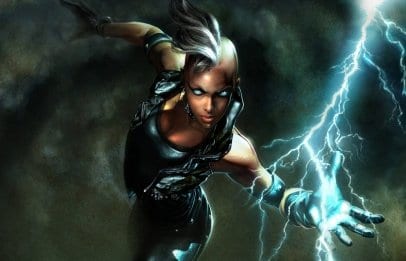

Maybe it’s the punklike mohawk or the leather, or maybe it’s her awesome and sexy ability to control weather, but I’ve always assumed Marvel’s X-Men superhero Storm was queer.
I’ve always thought of Storm, arguably the most visible African-American superhero in comic book history, as something of an LGBT icon.
When I heard the news that her latest Marvel series, Storm, is possibly on the chopping block after other kickass female titles like She-Hulk and Elektra were ended prematurely — inspiring the #SaveStorm hashtag and social media campaign among fans of the series — I’ve been left to wonder about her assumed place as a queer character.
Like other superheroes of the franchise, Ororo Munroe, aka Storm, has made a number of appearances in different manifestations of X-Men.
An excellent essay by author J Skyler, titled “LGBT Visibility: Weathering the Storm,” discusses stereotypical representations of LGBT and black role models in recent North American history and increased marginalization, especially where the two communities meet.
“Aside from the intersections across her axes of oppression, the heart of Storm’s connection to LGBT people of color is the nature of her mutant power,” Skyler explains, going on to explore the implications of Storm’s power and representation in the X-Men universe.
A recent Reddit thread blatantly asks, “Is Storm bisexual? Or is she biromantic?” and the pursuing discussion seems to come to the conclusion that her queerness is implied but mostly never really explored.
In any case, I haven’t been following Storm’s latest series, but I plan to check it out. As Comic Book Resources assistant editor Brett White writes, “To everyone invested in female leads, minority representation, badass characters, accessible super hero comics and comics that leave you feeling good, ‘Storm’ is the exact series you’ve been looking for. I’m actually surprised that I have to stump this hard for a Storm solo series. She’s the rare example of a culturally significant superhero that has also achieved mainstream popularity.”
Whether she’s a queer character or an LGBT icon, Ororo Munroe is certainly a badass character. Here’s hoping she can weather the storm.

 Why you can trust Xtra