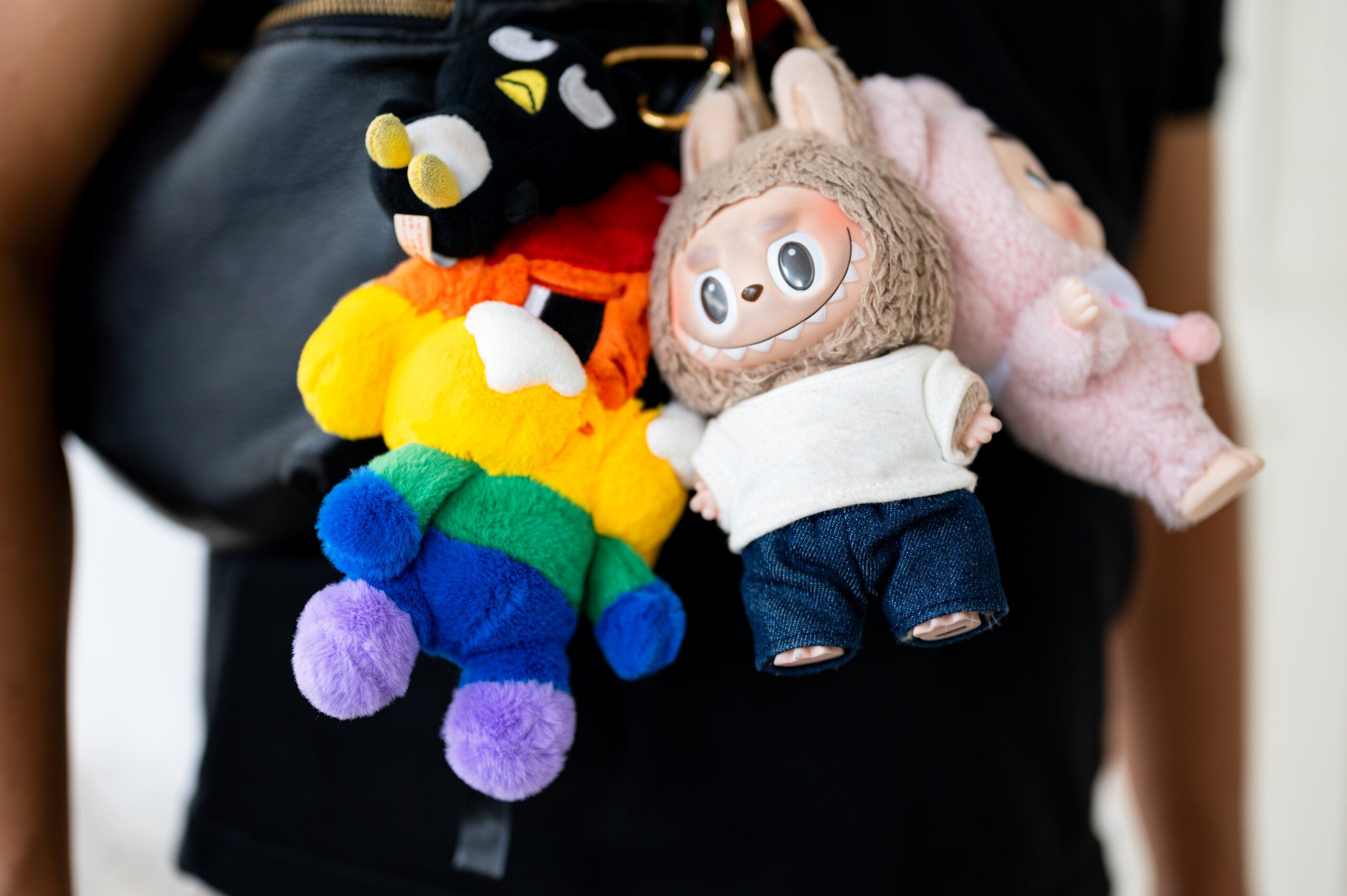
Is Labubu a gay icon?

The Pop Mart blind box doll fits into a long history of the gay obsession

Is Labubu a gay icon? If you’ve been on the internet recently, you’ve likely seen the Pop Mart phenomenon Labubu. She’s fuzzy, she’s slightly scary-looking and she’s been selling out in seconds—even with her high price tag.

But interestingly, she’s also fostered a devoted fan base of queer people. People are dressing like Labubu at Pride parades, queer tattoo artists are giving them custom ink and there’s even a very thorough tutorial on how to give a Labubu a BBL, if that’s something you’re into. And celebs like Rihanna, Lisa, Dua Lipa and even Bethenny Frankel have been seen accessorizing with the dolls. 

We break why and how this strange little monster has become so beloved by the gays.

Cody Corrall is Xtra's Social Video Producer. Their work has appeared in BuzzFeed News, TechCrunch, the Chicago Reader, CINE-FILE, Thrillist, Paste Magazine, and other places on the world wide web. He lives in Chicago and speaks English.

Senior editor Mel Woods is an English-speaking Vancouver-based writer, editor and audio producer and a former associate editor with HuffPost Canada. A proud prairie queer and ranch dressing expert, their work has also appeared in Vice, Slate, the Tyee, the CBC, the Globe and Mail and the Walrus.

Read More About:
Video, Culture, Video, Fashion, Celebrity

Keep Reading

Bentley Robles

Bentley Robles wants a brotherhood of gay pop stars

The yellow-haired singer talks rising stardom, Zara Larsson and dating while gay-famous
Vivek Shraya being kissed by a man

Vivek Shraya is hot, blond and hitting the dance floor

The Toronto multi-hyphenate’s new album, “VIVICA,” shirks respectability politics for a sensual, high-gloss exploration of queer and trans desire
Morphine Love Dion, Dawn and Morgan McMichaels

‘RuPaul’s Drag Race All Stars 11’ plays it safe for the first bracket—until the very last minute

Already, we see the consequences of only two queens moving forward from each bracket to the semifinals
The cover of Alice Stoehr's Again, Harder. The book has black letters on a lilac background. In the middle of the cover is a red rectangle with a black line drawing of it. The drawing is of two figures entangled; they have human bodies but animal heads. The same image serves as the background behind the image of the book cover.

‘Again, Harder’ captures being part of an in crowd made up of those on the outskirts

Being trans can be a vital way to connect. Author Alice Stoehr illustrates how it can also be the extent of connection
Advertisement