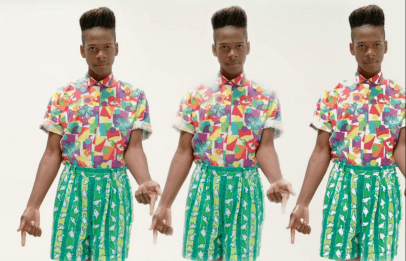
The voice is the first thing you notice. Shamir’s arresting tenor easily pitches higher than Prince or Michael Jackson at maximum falsetto, only richer and never forced. It’s tempting to search for a comparison — does Shamir sound like Sylvester? Sade? Billie Holiday? — but the truth is Shamir just sounds like Shamir.
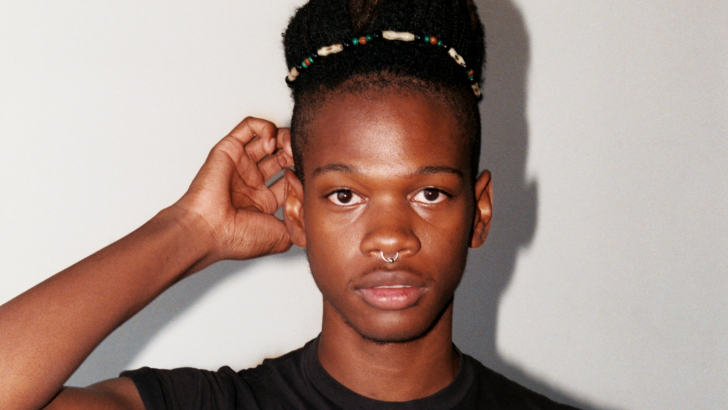
The next thing you notice is the music itself. Flitting from hip hop to house, to disco, to straight-up pop, Shamir’s style is both familiar and impossible to categorize. “It’s a bit hard to describe what I’m going for,” Shamir tells Daily Xtra. “But generally I just say that it’s hip-hop music because pretty much I just wanna make relatable music. But as far as sound, you know, I borrow from everything.”
The cowbell-backed “Hi, hi, howdy, howdy, hi, hi” that kicks off “On the Regular” (the first single from Shamir’s debut LP Ratchet), is the perfect welcome into his world. It’s a sing-songy hip hop track so cheery and playful it could almost come from an episode of Yo Gabba Gabba! And despite its twee trappings, it contains some classic rap braggadocio: “Ever since I was eight, I was attached to the mic/ Wanted a guitar before I wanted a bike.” And unlike many a rapper’s boast, this one’s true.
“I’ve been releasing stuff as Shamir for maybe like two years,” says the 20-year-old Las Vegas native. “But I’ve been making music pretty much all my life. I started singing at eight, got my first guitar at nine, and it pretty much hasn’t left my hands since.”
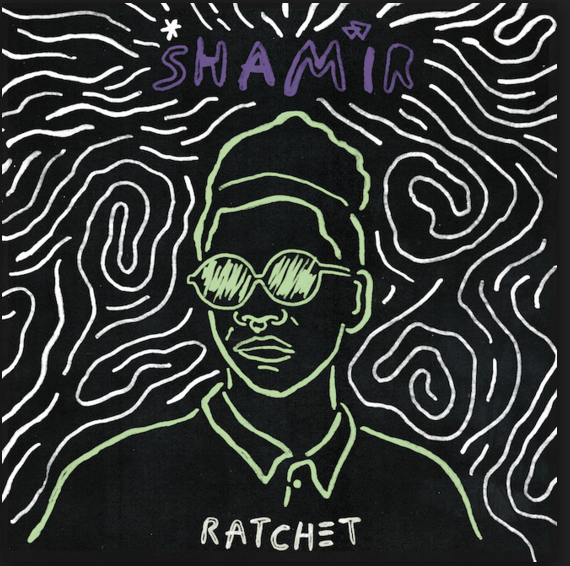
After capturing attention with his calling card EP Northtown, Ratchet’s 10 tracks cement Shamir’s reputation as a major new talent. From croony, haunting opener “Vegas,” to party pleasers like funkified “Make a Scene” and disco-ish “Call it Off,” to soulful ballad “Darker,” Shamir has carved out a niche that’s playful, unmistakably queer, and a lot gosh-darn sweeter than you might expect from an album called Ratchet. “In a weird way, it’s me kinda representing my home,” Shamir says. “I just wanted to make a record called Ratchet because ‘Ratchet! You’re ratchet!’ — that’s what me and my friends back home call each other. So it’s a kind of shout-out.”
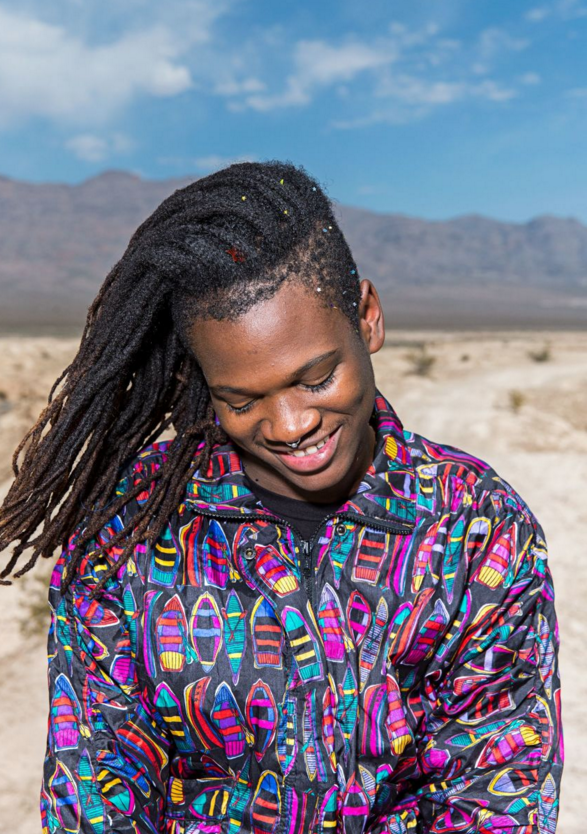
We’ve seen everyone from Bowie to Gaga to Grace Jones play with androgyny and gender ambiguity, but for Shamir, it’s more than a costume. The singer identifies as queer and does not identify as either male or female. For an artist whose output includes (but is not limited to) hip hop, it’s a pretty complicated identity to hold. While recent years have seen queer artists Cakes Da Killa, Angel Haze, Le1f, and Mykki Blanco gain traction, there’s a pervasive old-school mentality that “queer hip hop” is an oxymoron.
“I think where a lot of those artists are at right now is aggressively queer and in your face,” Shamir says. “Which is definitely what we need starting off. But eventually, we kinda just have to have not necessarily a queer hip hop artist, but a hip hop artist who just happens to be queer.”
(Shamir
Friday, Nov 20, 2015
The Mod Club, 722 College St, Toronto
shamir326.tumblr.com)
 Why you can trust Xtra