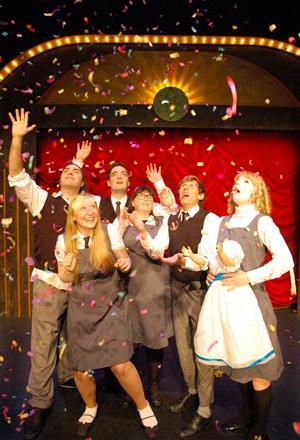
Originally produced at Victoria’s Belfry Theatre in 2009, Atomic Vaudeville’s wildly inventive and tremendously entertaining Ride the Cyclone follows six members of a fictional Saskatchewan choir as they meet their fate aboard the Cyclone roller coaster at a travelling fair.
A mechanical fortune-telling machine feels guilty for having encouraged the group to ride the ill-fated coaster and offers them a final concert where they can share their personal stories through song.
Opening the concert is Noel Gruber, the town’s only gay person. Noel longs for a life as a prostitute in post-war France, yearning to wake up in a pool of his own vomit with missing teeth — far from his mundane life as the child of the local “intelligentsia” (his family owned the video store).
“Noel is the most romantic boy in town,” says Kholby Wardell, who, as Gruber, delivers the play’s most outstanding vocal performance. “He is pretty dark and really wishes he had suffered more in life. He has this romantic idea of what it means to be human, full of the highest highs and lowest lows, but lived in this town that was, well, normal.”
 Why you can trust Xtra