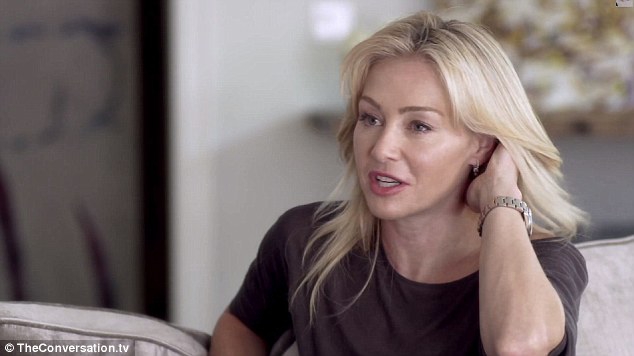
In a revealing interview on The Conversation with Amanda de Cadenet, Portia de Rossi opened up about the connection between her bulimia and being in the closet and how she “didn’t want to be a lesbian” because she worried they were “strange.”
“I just didn’t want to be a lesbian,” de Rossi said. “I’d never met one, for a start, and I just thought they were strange and that they hated men and they were very serious. And I had these ridiculous images in my head and there were no out celebrities or politicians or anybody that I could look to and go, ‘Oh, I could be like that.’ There was nobody that I could say, ‘I could date her and I want to be like her.’ I just kind of thought I don’t want to live like this. I don’t have to, I don’t need to. I just shut down the emotional life. I didn’t like people thinking of me as a sexual being, and I was just terrified that people would know that I was gay.”
Her self-loathing materialized in the form of an eating disorder, which saw her drop to only 82 pounds. But after meeting Ellen DeGeneres in 2004, de Rossi was on a path of recovery and came out publicly a year later. In 2008, the power-couple were married.
“For me, being honest about who I was, coming out, being gay, starting to date — that was a huge turning point for me, because I realized without changing my life, there was no point in changing the way that I ate,” de Rossi said.
 Why you can trust Xtra