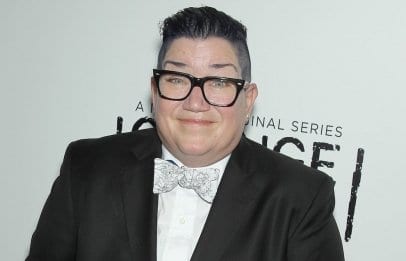

Lea DeLaria, who stars as Big Boo on Orange Is the New Black, was the first openly gay comic to appear on late-night television, when in 1993 she proudly boasted on The Arsenio Hall Show, “I’m a biiiiiiig dyke! Yes, I am. Yes, I am. I’m a big one! Yes, I am. And that’s okay.”
In the years following her declaration, she faced an onslaught of homophobia. In an interview with BuzzFeed, DeLaria reminisces about an incident in 1998. “I was in a cab,” she says, “and I couldn’t get by and these cops were sitting there and I went, ‘My meter’s running!’ And they go, ‘Well, you’re gonna have to be patient, aren’t you, you dyke bitch?’ At that time, I had all these people wanting my autograph and wanting to take a picture with me and here, I have a New York cop calling me a ‘dyke bitch.’”
But her pioneering coming out was not in vain. DeLaria has noticed a complete reversal from the negativity she once faced for being a “big dyke.” These days, Big Boo is getting nothing but love.
“This is what’s different: Now, I’m not getting any negativity. In fact, teenage boys come up to me on the street and want to get their pictures taken with me, want to give me a hug, tell me that Big Boo’s their favorite character,” DeLaria says. “That means a lot to me. Because I’m winning the hearts and minds of people that are young and are going to grow up and control the world. I live in Bushwick. I get off the M line, I’m walking down Stockholm Street, and this 17-year-old kid hanging out, shirt off, with his bike in the middle of summer screams, ‘Yo! Whoa! Wait! You’re Big Boo! You’re Big Boo!’ He’s a 17-year-old Puerto Rican guy and he wants to get his picture taken with me,” she continued, thumbs pointed inward toward her Blondie T-shirt. “That’s different to me. That’s amazing to me. That’s a huge change. It also happens with 17-year-old girls, which is amazing as well. And on the other end of the spectrum, I have 40-, 50-, 60-, 70-year-old men, who are usually very ‘I’ll-let-my-wife-do-all-the-talking’ kind of guys, who want to get their pictures with me, want to shake my hand, want to talk to me about the show. That’s an amazing thing. Because their minds have been made up and were made up a long time ago.”
 Why you can trust Xtra