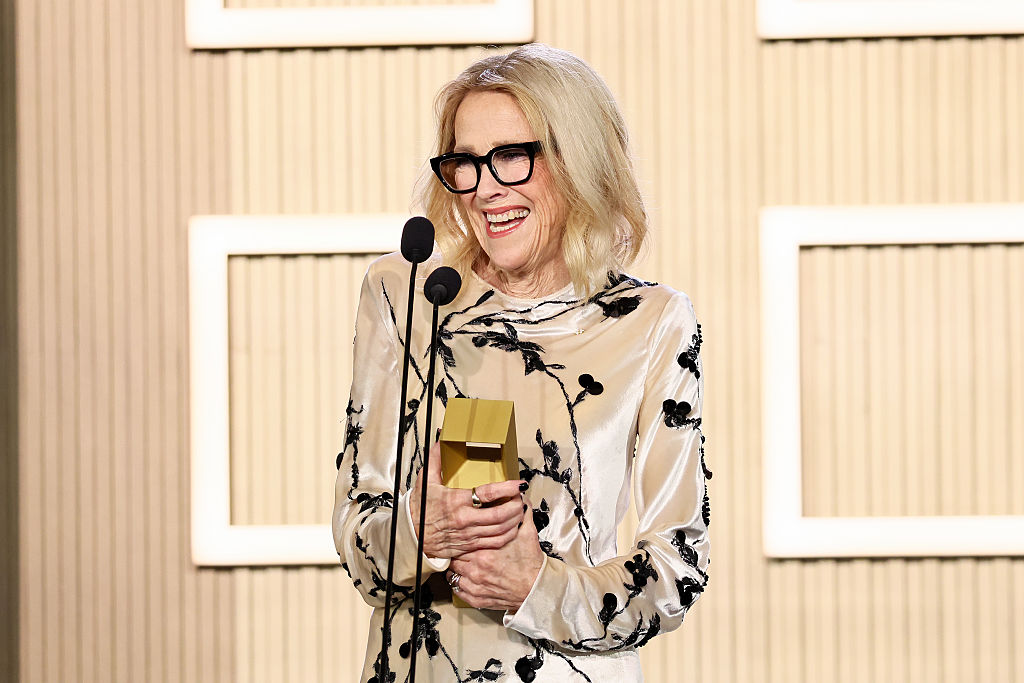
To say the passing of Canadian comedy titan Catherine O’Hara set off a groundswell of mourning this past week is far from an understatement. Almost from the moment news of the actor’s death at 71 broke on Jan. 30, the internet has been flooded with formal and informal social media eulogies, red carpet photos, fan art, interview quotes and clips of the star from over the course of her lengthy career.
O’Hara has been everywhere. There she is as a fresh-faced kid in suburban Toronto, the child of a large Irish-Catholic family, relatable via her humble Canadian working-class beginnings! Or as a nervy young comedienne cutting her way through the misogynistic red tape of 1970s sketch comedy. Or as a quirky VHS fixture of millennial childhoods via the loopy performances of Delia Deetz in Beetlejuice or Kate McCallister in Home Alone. Or in her late-career renaissance, first as Moira Rose on the CBC juggernaut Schitt’s Creek or in recent prestige projects like Apple’s The Studio or HBO’s The Last of Us.
The grief has been palpable, collective and at a scale rarely seen for public figures anymore— perhaps the biggest celebrity death to resonate across all areas of my own life since Prince or David Bowie in 2016, but probably somewhat more akin to the outright devastation that followed the loss of Robin Williams in 2014 or Chadwick Boseman in 2020. Moira-themed enchiladas! A Home Alone tweet from Chicago’s O’Hare Airport. A Best in Show career-reel tribute at the Westminster Dog Show!
While O’Hara’s singular talents and (by all accounts) genial manner are more than deserving of recognition, why has this celebrity death hit so hard for so many, particularly among the LGBTQ2S+ community? We know that Schitt’s was celebrated for queer inclusion, and while O’Hara was an ally, she didn’t build a brand around the community the way other actors have. So, what specifically about O’Hara set off this widespread mourning, this collective experience?
Of course, the topic of grief itself is trending. In the social media slot machine that is TikTok, the most buzzworthy topic of therapy influencers has been grief, often as it relates to the loss of the lives we all lead prior to the competing threats of artificial intelligence, authoritarianism and the post-COVID splintering of the social contract. And O’Hara was certainly synonymous with the COVID-19 pandemic via Schitt’s, with her performance as Moira often cited as one of the few memorable pleasures of an era—that for many people—was stressful and isolating. The series’ dysfunctional-but-loving family, holed up in a less-than-glamorous motel, offered up a humorous analogue to what so many were forced to do during the lockdowns. Moira’s delusional vamping and need to cling to a past of luxury felt a bit like all of us clinging to all that we took for granted before the world changed.
@cbcq One of the many times Catherine O’Hara made us laugh. 💛 #catherineohara ♬ original sound – Q with Tom Power
But in drawing a line through O’Hara’s performances, something else becomes apparent. Yes, there was the high camp, and the designer fashions—hallmarks of any queer icon worth their weight in salt. But there was also a tendency to play mothers who started off as icy and remote and who gradually came to acknowledge the inherent “specialness” of their kids. In Tim Burton’s Beetlejuice, Delia starts the film viewing stepdaughter Lydia (Winona Ryder) as a gothy weirdo and an inconvenience to her larger artistic aims—only to gradually see Lydia’s point of view and embrace her undead friends and quirky style. And in Christopher Columbus’s Home Alone, the busy, independent Kate takes her youngest son Kevin (Macaulay Culkin) for granted—so much so that she forgets him when she goes on vacation—and is then forced to cross the country to reunite with him. By the film’s end, she sees his value, and promises to never forget about him again. (But then does exactly that in the derivative Home Alone 2: Lost in New York. The less said about that film the better. )
And as many have discussed, the grand narrative of Schitt’s was the notion that stripping away wealth from the Rose family allowed them to see the value of each other, a nifty flip on the Keeping Up with the Kardashians style of foregrounding wealth over family. The finale (spoiler alert) had a be-gowned Moira preside over David (Dan Levy) and his partner Patrick (Noah Reid)’s wedding and deliver a speech on how the difficult journey of the series allowed them to all grow closer, an acknowledgment of family and community and a declaration of love for her children that also cleanly connected with the character’s need to be the centre of attention.
In a grand sense, O’Hara perfected the ability to play inflexible characters capable of change and emotional growth, which offered generations of queer folks with a form of parental wish fulfillment. For so many of us who had to grapple with forms of abandonment or (in some cases) abuse, the idea that we could witness an absentee parent grow to not only acknowledge their child but embrace their uniqueness gave many queer kids hope. That perhaps the journey of life wasn’t about us having to change ourselves to deserve love but that we were already inherently deserving of it.
O’Hara dying at a time when it feels like inflexibility and conformity are being celebrated—when so many queer folks are experiencing a cultural regression and movement away from an acceptance of difference—is particularly tough. The loss becomes twofold. There is the loss of an incredibly talented artist who entertained us for well over fifty years, but there is also the loss of someone who showed us that emotional growth was possible—that love could exist in any home.
And that is truly devastating.

 Why you can trust Xtra