Best of the web: Bette Davis in The Decorator

Decades before Designing Women and AbFab, The Decorator is just as funny and biting

Site: The Decorator

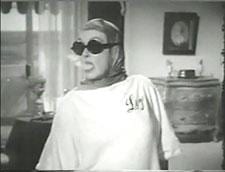
Did you know that Bette Davis made an unaired TV series pilot in 1965 produced by Aaron Spelling and cowritten by Mart Crowley (Boys in the Band)? It was called The Decorator and starred Davis as a talented drinkin’ and smokin’ interior designer who insists on living briefly with her clients. Her exasperated assistant is played (of course) by Mary Wickes. I know… amazing!

Davis is a hoot. When she flies into the living room in a white muumuu, headscarf and sunglasses, arms stretched out and announces dryly: “Do you think my type is coming back?” well, it’s just so extraordinarily über-gay-squared. Practically a quarter of a century before Designing Women and AbFab, The Decorator is just as funny and biting. Why this never aired or became a series is beyond me.

Read More About:
Culture, Arts, Canada

Keep Reading

Bentley Robles

Bentley Robles wants a brotherhood of gay pop stars

The yellow-haired singer talks rising stardom, Zara Larsson and dating while gay-famous
Vivek Shraya being kissed by a man

Vivek Shraya is hot, blond and hitting the dance floor

The Toronto multi-hyphenate’s new album, “VIVICA,” shirks respectability politics for a sensual, high-gloss exploration of queer and trans desire
Morphine Love Dion, Dawn and Morgan McMichaels

‘RuPaul’s Drag Race All Stars 11’ plays it safe for the first bracket—until the very last minute

Already, we see the consequences of only two queens moving forward from each bracket to the semifinals
The cover of Alice Stoehr's Again, Harder. The book has black letters on a lilac background. In the middle of the cover is a red rectangle with a black line drawing of it. The drawing is of two figures entangled; they have human bodies but animal heads. The same image serves as the background behind the image of the book cover.

‘Again, Harder’ captures being part of an in crowd made up of those on the outskirts

Being trans can be a vital way to connect. Author Alice Stoehr illustrates how it can also be the extent of connection
Advertisement