In June 1957, bodybuilding magazine Strength & Health published a notorious letter —“Let Me Tell You a Fairy Tale”—written by then editor Harry B. Paschall, who decried the “menace of homosexual magazines.”
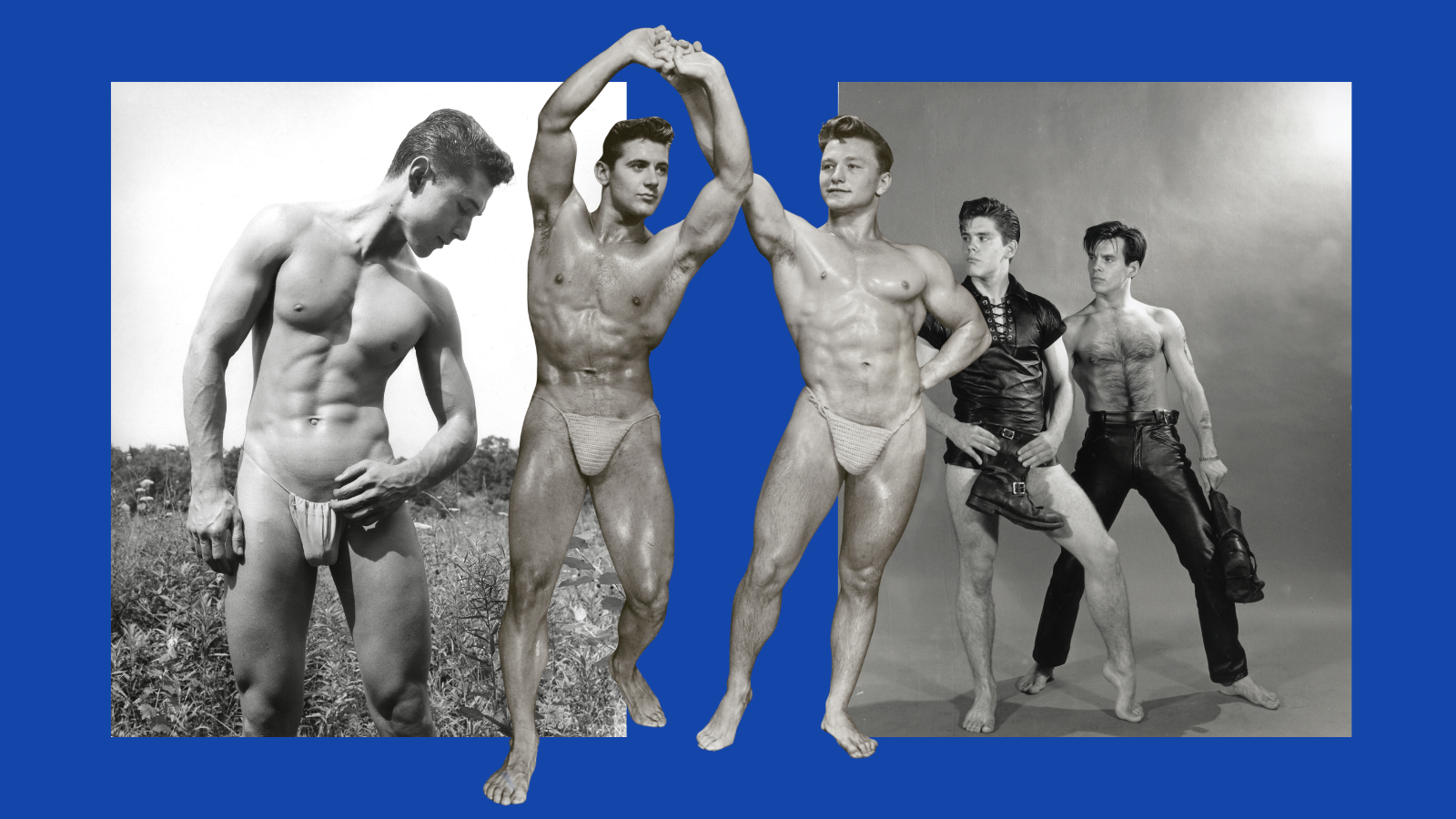
Paschall’s own magazine didn’t look so different from these “homosexual magazines.” Throughout the 1950s, U.S. newsstands brimmed with images of hulking, oiled-up men posing in tiny pouches, professional muscle bros often clad in little more than a smile. The covers of these, apparently entirely heterosexual, “bodybuilding” magazines attracted the attention of the League of Decency, a Chicago-based Catholic organization whose members campaigned for the magazines to be banned. Strength & Health was amongst the titles removed from shelves, which sent Paschall into his homophobic meltdown. In contrast to his “wholesome” magazine, he argued, “dirty little books”—“physique magazines,” which were aimed squarely at gay audiences—were courting perverts. “These are the people who are killing a clean and wholesome sport,” Paschall huffed, before advocating, unsuccessfully, for the bodybuilders photographed in their “dirty” pages to be barred from competitions.
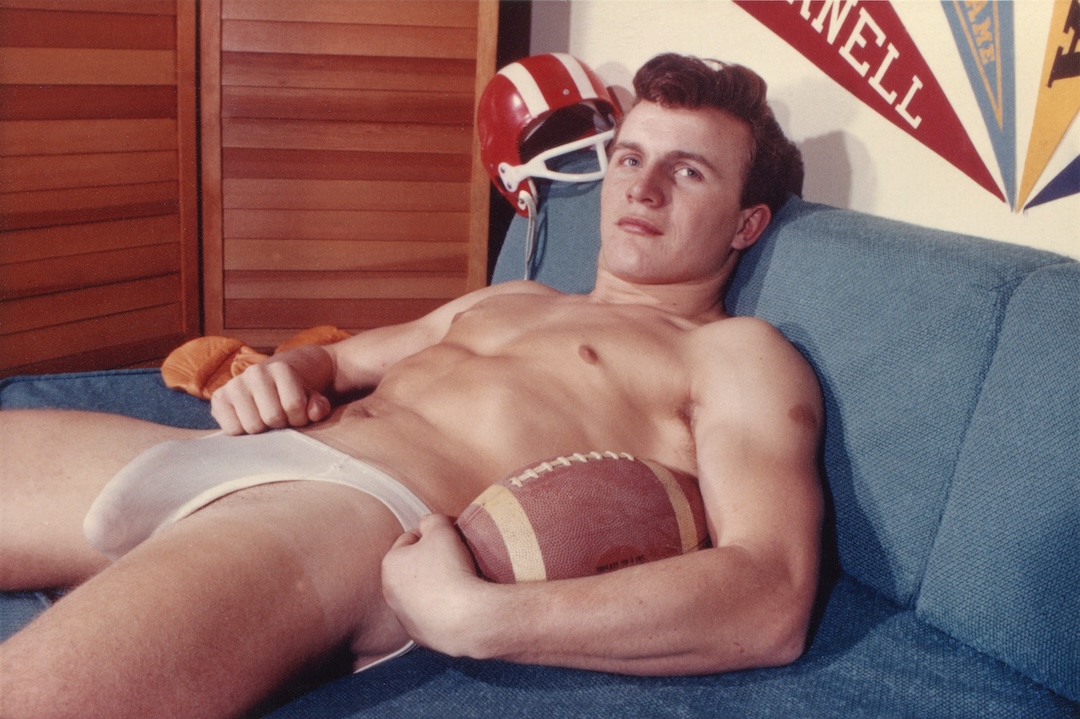
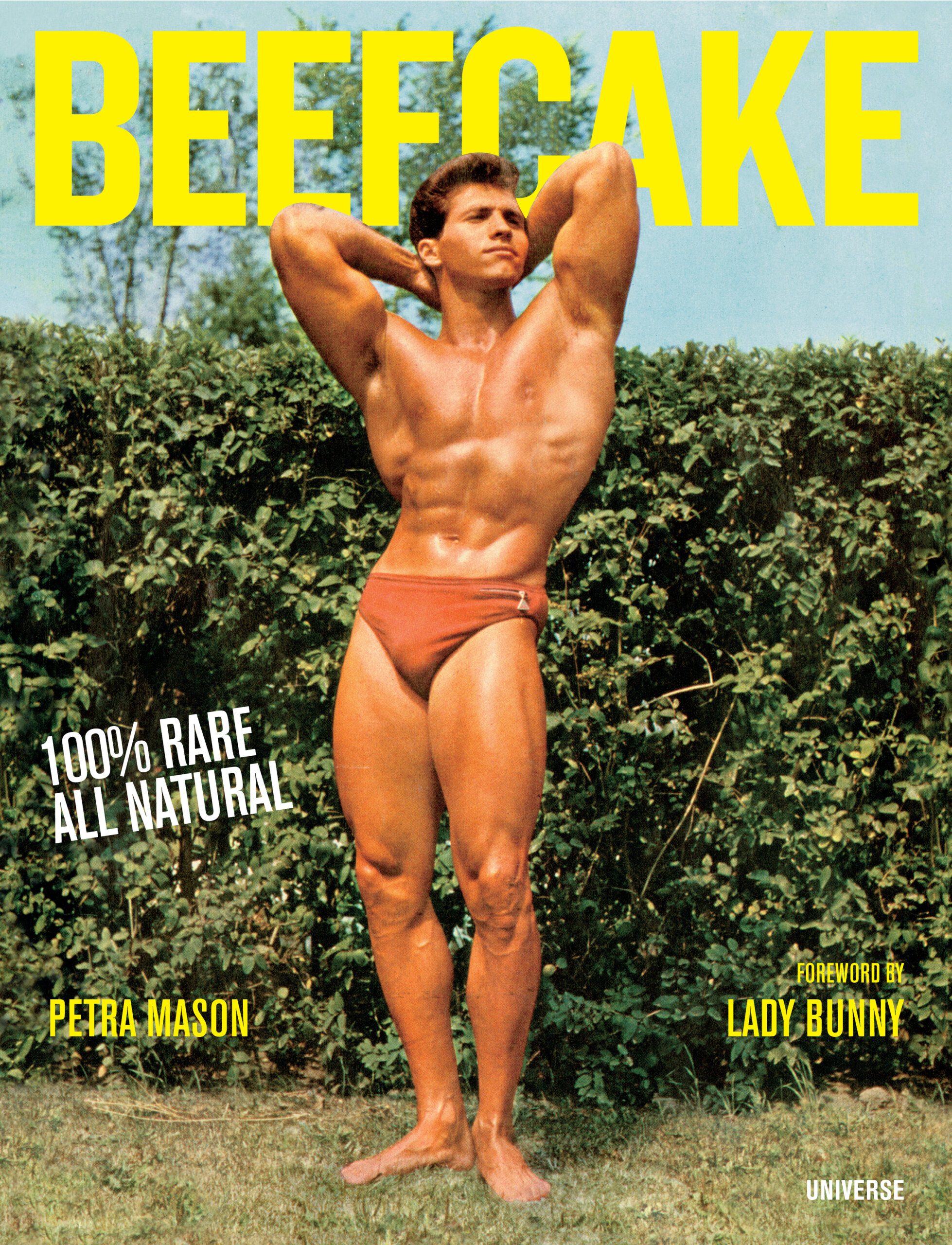
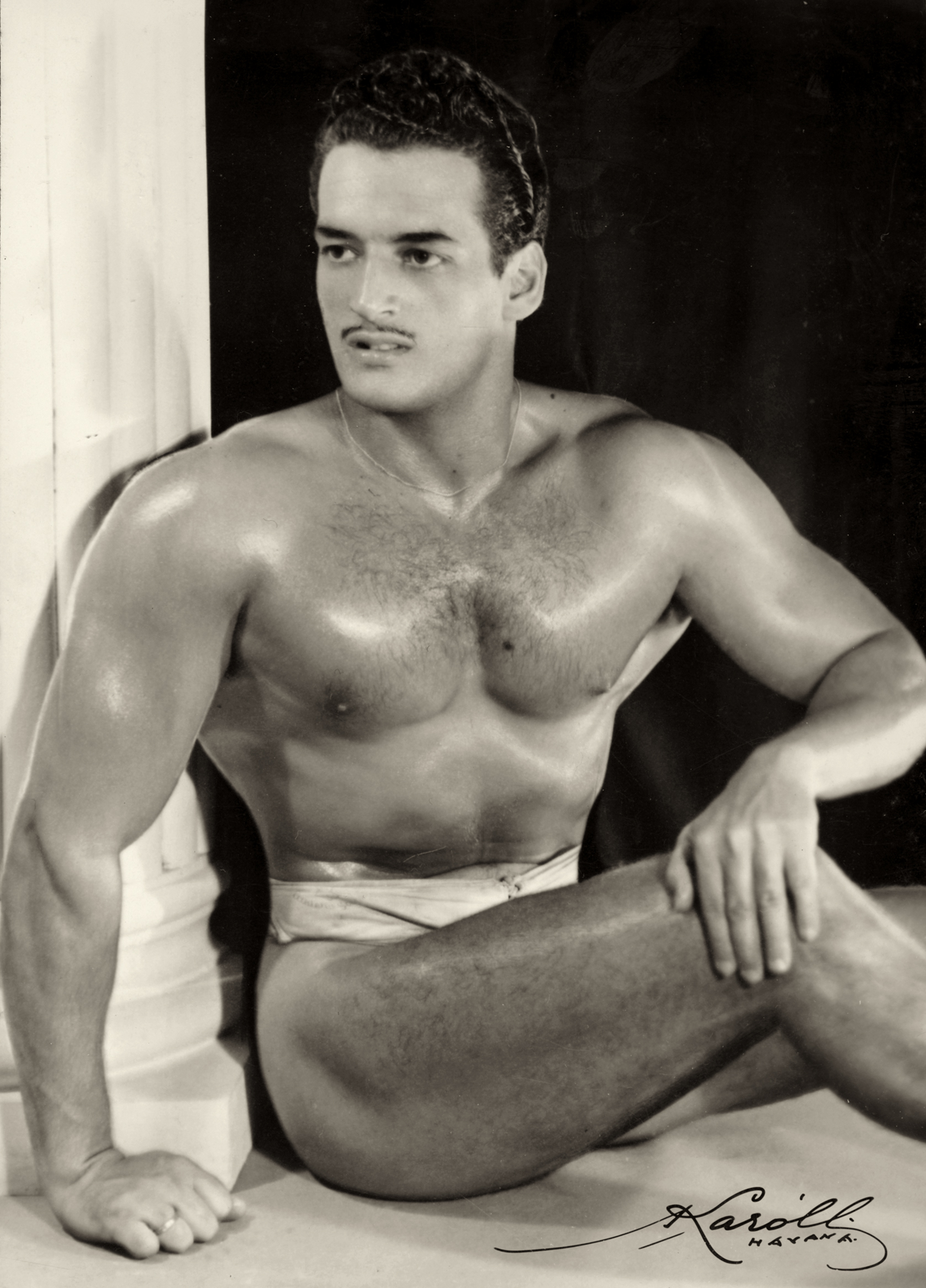
The ’50s marked the heyday of so-called “physique” or “beefcake” magazines, some of the horniest documents in queer history. Photographers like Bob Mizer, founder of the iconic Physique Pictorial, published thousands of pages of nearly naked male bodies. Flick through the pages and you could expect to see homoerotic poses featuring sailors and cowboys, bulges straining through skimpy briefs and an occasional sprinkling of oiled-up grappling. The beefcake phenomenon wasn’t unique to the U.S. In Montreal, famed photographer Alan B. Stone turned his lens on Canada’s sexiest men, selling his beefcake prints via mail order. His risqué images were advertised in the back pages of publications like Physique Pictorial; naturally, they arrived in discreet packaging. In a world before mainstream videos of hardcore gay porn, these magazines obviously made their way into many a suburban gay spank bank, but they offered more than just eye candy.
Credit: Courtesy of Rizzoli
Historian David K. Johnson chronicled the impact of this overlooked queer history in his 2019 book Buying Gay: How Physique Entrepreneurs Sparked a Movement. “I had a sense that [physique magazine] readers felt empowered by these magazines because they were mass-produced,” he tells Xtra. “That meant there were thousands of other men out there doing the same thing.” Readers could find one another through letters sections—where they could sometimes find the models too. In Grecian Guild Pictorial, Johnson says, there would be a “Grecian of the Month” pin-up pictured next to his name and street address. “It wasn’t a formal system, but it became clear to me that the biggest commodity they were selling—in addition to the images—was this access to other people. It was basically analogue social media.”
Early gay rights movements like the Mattachine Society and Daughters of Bilitis had raised the visibility of LGBTQ2S+ communities, but there were barely any opportunities in the 1950s for gay networks to form, especially in rural areas. In 1959, physique magazine VIM was bought by new owners who decided to specifically court a gay audience. As an attempt to rectify this lack of connection, they established what was essentially a gay pen pal network: the Adonis Male Club. In Buying Gay, Johnson writes of the initiative’s immediate success; within months, there were more than 600 members spread across the U.S. Ranging in age from 18 to 62, their members were truck drivers and college students, high school teachers and bank auditors—some of whom had likely never spoken to another gay man in their life. At the peak of its popularity, there were plans for the Adonis Male Club to offer a monthly newsletter, a members’ yearbook and annual summer camps. Instead, more than 50 members were indicted on charges of conspiracy to send obscene materials through the mail, caught in the crossfire of Postmaster General Arthur Summerfield’s “war on smut.” Founders Jack and Nirvana Zuideveld were both sentenced to a year in federal prison.
These magazines were clandestine by necessity, so few copies have survived. Anyone caught buying them could be outed to their families and smeared as sexual deviants, so many were likely destroyed by panicked husbands. Rare editions can sell for hundreds of dollars online, and tracking down original copies can pose a challenge for intrepid collectors. Cultural historian Petra Mason went on the hunt for material back in 2015, publishing the results in a glossy, high-camp book: Beefcake: 100% Rare, All Natural, part of a trilogy celebrating the history of pin-up photography. It’s a tongue-in-cheek ode to beefcakes, packed with “innuendo overload,” Mason tells Xtra.
Credit: Courtesy of Rizzoli
Finding and crediting the images was a “nightmare,” Mason recalls, describing this period of gay history as one “shrouded in secrecy.” Some photographers quietly donated their collections to institutions, keeping a low profile to avoid family judgment. “One New York collector had an enormous amount [of images] purchased during the AIDS era at Christopher Street Market,” Mason continues, whereas other collections were “discovered under beds by families.” “I had so many mad interactions,” she adds, “including a fight with a member of the band DEVO, countless dealings with fastidious collectors from Hudson Valley to Iowa and the very organized Leather Archives & Museum in Chicago—the OGs!”
“The biggest commodity they were selling—in addition to the images—was this access to other people. It was basically analogue social media”
Public scandals and court cases against the magazines and their readers mounted throughout the ’50s and ’60s, as the early seeds of the gay liberation movement began to blossom. In 1967, perhaps the best known of these obscenity trials, the DSI Obscenity Trial, unfolded in Minneapolis. Lloyd Spinar and Conrad Germain were the co-founders of DSI (Directory Services, Inc.), an ever-growing database of gay businesses in the U.S. Established in 1963, the initial idea was akin to a sort of humble city recommendations guide, but demand snowballed to the extent that they began publishing books and magazines—naturally, of the beefcake variety. The trial transcripts proved a potent source of information for Johnson, as well as statistical proof of physique magazines’ popularity. “Witnesses would come forward to give subscription information,” he explains, “and for each publication, you were talking tens of thousands of subscribers.”
Credit: Courtesy of Rizzoli
Spinar and Germain were eventually acquitted. In a landmark court decision, the judge ruled that the salacious cover images were not obscene, and that gay customers should be free to enjoy them in the same way straight guys pored over Playboy.
Ironically, the legal victory ended the triumphant reign of physique magazines by ushering in a new era of hardcore gay porn, plenty of which featured similarly chiselled, Adonis-like guys. Porno provocateurs like Tom of Finland later looked to this sweaty, muscled blueprint of hypermasculinity and jacked it up even further; his subversive pin-ups boasted gigantic dicks and kinky, macho costumes.
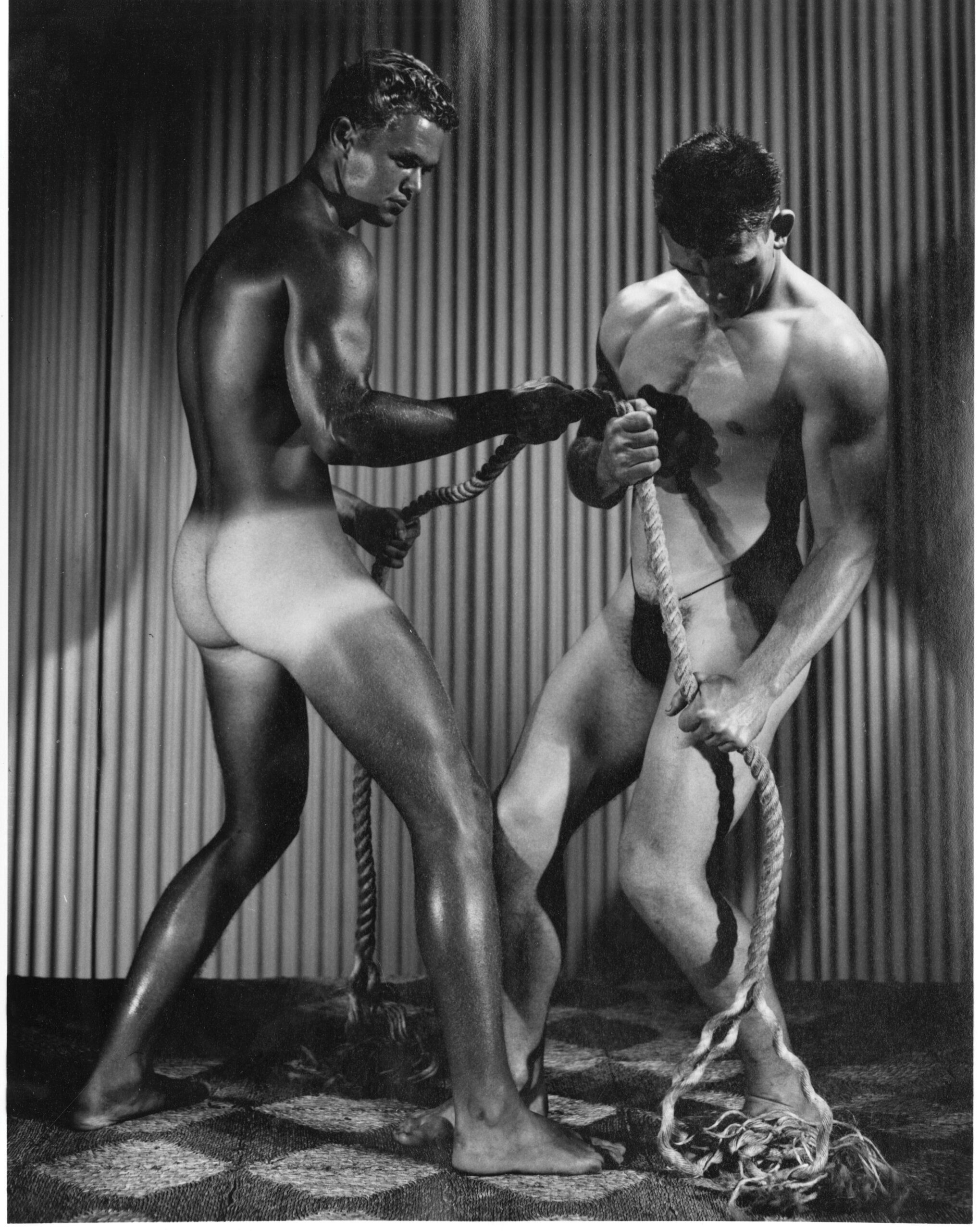
Viewed retrospectively through the lens of today’s queer politics, it’s easy to critique the “classical” aesthetics of these beefcake magazines, and to see how their ideals still impact beauty standards today. Photographers and editors prized guys who were masculine, toned, muscular, but not too muscular—in fact, Johnson explains, bodybuilding magazine editors actually judged the physique models as “undernourished”—and were, almost exclusively, white. Decades later, the blueprint has hardly changed.
Credit: Courtesy of Rizzoli
But context is key. Homophobia is—and always has been—rooted in misogyny; gay men at the time were villainized as campy and feminine, weak and degenerate, subjected to smear campaigns that forced them into reclusion. We’re slowly reclaiming these stereotypes and wearing our differences with pride, but beefcake magazines emerged in an era where the scant depictions of gay men were as drag queens or perverts on trial. Johnson describes the masc aesthetics of these magazines as “a statement that they could be gay and masculine at the same time.” Especially in the case of publications like Grecian Guild Pictorial, the curation of these magazines was also rooted in classical Western beauty standards, the men in the photographs preened to look statuesque.
Johnson argues that the most important legacy of these risqué magazines lies in the birth of the gay liberation movement. At the surface level, the magazines are just sexy images of hot guys in posing straps, but those sexy images raked in millions—as DSI co-founder Germain admitted in court—for gay entrepreneurs. Consumers weren’t just horny guys looking for eye candy, they were often gay men who had no sense of community until they signed up to pen pal networks. Physique magazines were politicized, and in response, gay men had no choice but to get organized, to lawyer up, to fight back—and, eventually, to win.

 Why you can trust Xtra