Picture it: it’s 5 a.m. in Brooklyn. You lost your friends hours ago, somewhere in the tangled mass of bodies filling the dance floor of whatever basement/warehouse/club you’re in. The night is winding down, and the DJs are packing up. Sound systems are getting dismantled and packed away in trucks to be ferried home till the next rave. Stealing out of the club, you dig your wired headphones out of your pocket and slip them in your ears. What do you hear? What do you choose as your last dance, the soundtrack to your walk home from the club, into that in-between space between morning and night?
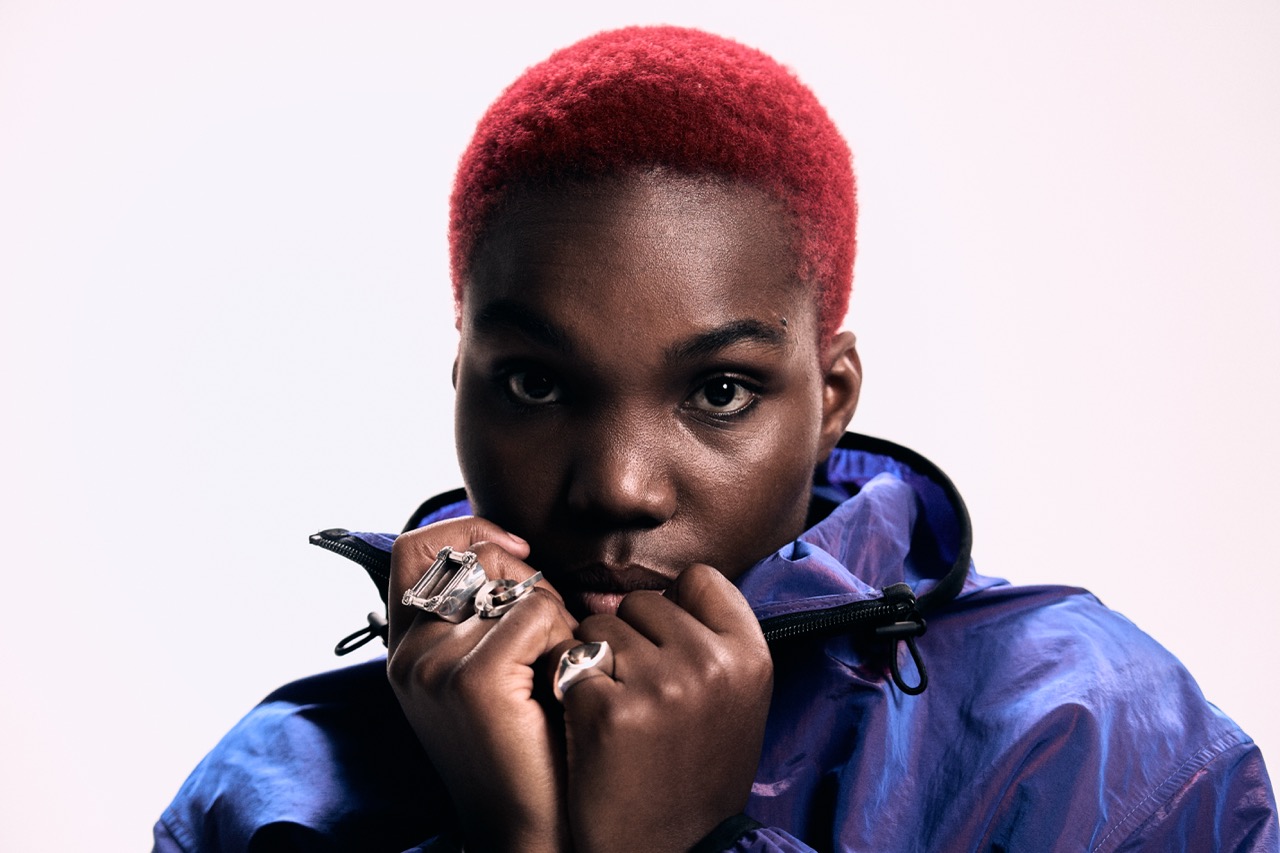
On her new album Ambiguous Desire, Arlo Parks is writing music for those moments. Inspired by time spent dancing in New York City clubs like Nowadays, Basement and Bossa Nova Civic Club with her friends, Parks builds a new soundscape informed by her roots in bedroom pop but alchemized into a sound that makes you want to move. “There’s this strand of disco, born in the gay clubs in the late ’70s and early ’80s,” she tells Xtra. “It’s called ‘morning music’—it’s the slower, emotional grooves and synth pop and new wave music that is the trademark of the great DJs who bring the 5 a.m. dancers down from the night and soften them in a way where they’re able to then go back into the world.”
Morning music is just one of the many rabbit holes Parks went down in the process of writing and recording her new album. Talking to Parks made me appreciate just how much thought and experimentation goes into the soundtrack for my nights out. Her research for Ambiguous Desire, which is as informed by studious reading and listening at home as her own nights out on the town, took her on a journey through different corners of club history. “Paradise Garage, the Loft, Studio 54 in New York … mid-2000s post-dubstep, James Blake, Joy Orbison,” she recites her list of inspirations, which she’d dive deep into for production ideas.
Dance music, she knows well, is as much history and science as it is art—a dance floor reflects the sounds and lives of all who’ve stepped on it before. It takes knowledge and skill to craft the perfect sound for the moment, that beat that makes you forget the sweat and the ache and lets you just float.
“As a DJ, that’s what I’m going for—it’s more about curation and introducing people to new songs, and choosing the right song for the moment rather than necessarily trying to have some mad Ibiza chops.” Parks likes to dance to minimal techno, but she also loves old divas and dance classics—Shep Pettibone remixes of 80’s songs, Madonna, Chic, Donna Summer, Prince and Diana Ross.
Tapping into this history means coming face to face with what we’ve lost as queer people living in an increasingly restrictive time—particularly for those in the U.K., where Parks grew up, or in her current home of the U.S., where anti-LGBTQ2S+ policies have profoundly impacted life for queer and trans people. Between a rise in anti-queer sentiment and ongoing gentrification in major U.S. cities like New York that has narrowed the space for underground raves and parties, it can feel like places where queer people can express themselves are dwindling.
What does it mean, then, to party when it feels like the world is on fire? Ambiguous Desire taps into a long tradition of the party as a site of community and way to navigate a world in collapse. Parks cites writer and theorist McKenzie Wark’s 2023 book Raving, which examines this framework through a blend of theory and memoir, as one source of inspiration, particularly on her song “Jetta.” “I was really inspired by the way that [Wark] was talking about that build of tension on the way into the space,” she says, describing the rhythm and ritual of packing your bag, getting in the car with your friends, every little moment leading toward entering what Wark calls the “rave continuum”: “a time that exists outside of every other time.”
In press materials, Parks says that Ambiguous Desire is the result of her trying to “have more fun” in making an album. It’s an understandable impulse for a songwriter whose breakout album dealt with vulnerable themes like mental health and queerness. But far from steering clear of those themes, embracing fun in the creation process allowed her to approach them from a different angle, one informed by the process of slowing down and allowing herself to play.
“I was really intentional about taking more time, giving myself the space to spend a week just practising piano and finding fun new shapes, or spend a weekend out with my friends meeting new people and having conversations, going to museums, galleries, absorbing art,” she says. “And I think that it really shows in the music—it came from this place of spontaneity and adventure and trusting my gut.”
In turn, trusting her gut gave birth to a new sound, one that allowed her to take bigger risks when it came to working on the album’s production with her producer (and friend) Baird. “The moments where I’m taking more risks production-wise, or the moments where in the music you can sense that I’m talking to these characters, and there’s all this history and these conversations, I think you can really tell that it came from that place of wanting to be more playful and out in the world.”
The result is still vulnerable: not so much an emotional banger, “crying in the club”-type beat, but more of an introspective moment in the midst of joyful chaos. A track like the propulsive yet laid-back “Heaven” takes you to that moment when you’re on the dance floor surrounded by people, even friends, but still feel alone—not in a way that makes you sad, but rather the kind of moment that makes you realize you’ll never truly be able to experience what it’s like to be someone else, and that’s okay. The yearning you feel in that moment, and the inability to articulate it too—that’s the ambiguous desire, says Parks.
“So much of the record is trying to apply language to these things that are ephemeral and difficult to put into words, whether that’s chemistry, or déjà vu or full-circle or kismet or serendipity,” she says. “I wrote this phrase down in my journal a long time ago, which was ‘desire as an engine.’ It was this sense that we’re so driven by what we want, by the people we want, by what we’re running away from, what we want to forgive in ourselves and in others.”
Desire’s engine is a powerful tool, and the risks it drives us to take can change our lives. Above all else, Parks hopes that Ambiguous Desire reaches people in these moments of transition. “I want it to be a companion to people who are at this moment where they’re about to take a risk, or try and make a dream come true or are coming into themselves in some way or another,” she says. “I hope that it’s something that brings people courage, and also allows them to have a sense of release and relief.”

 Why you can trust Xtra