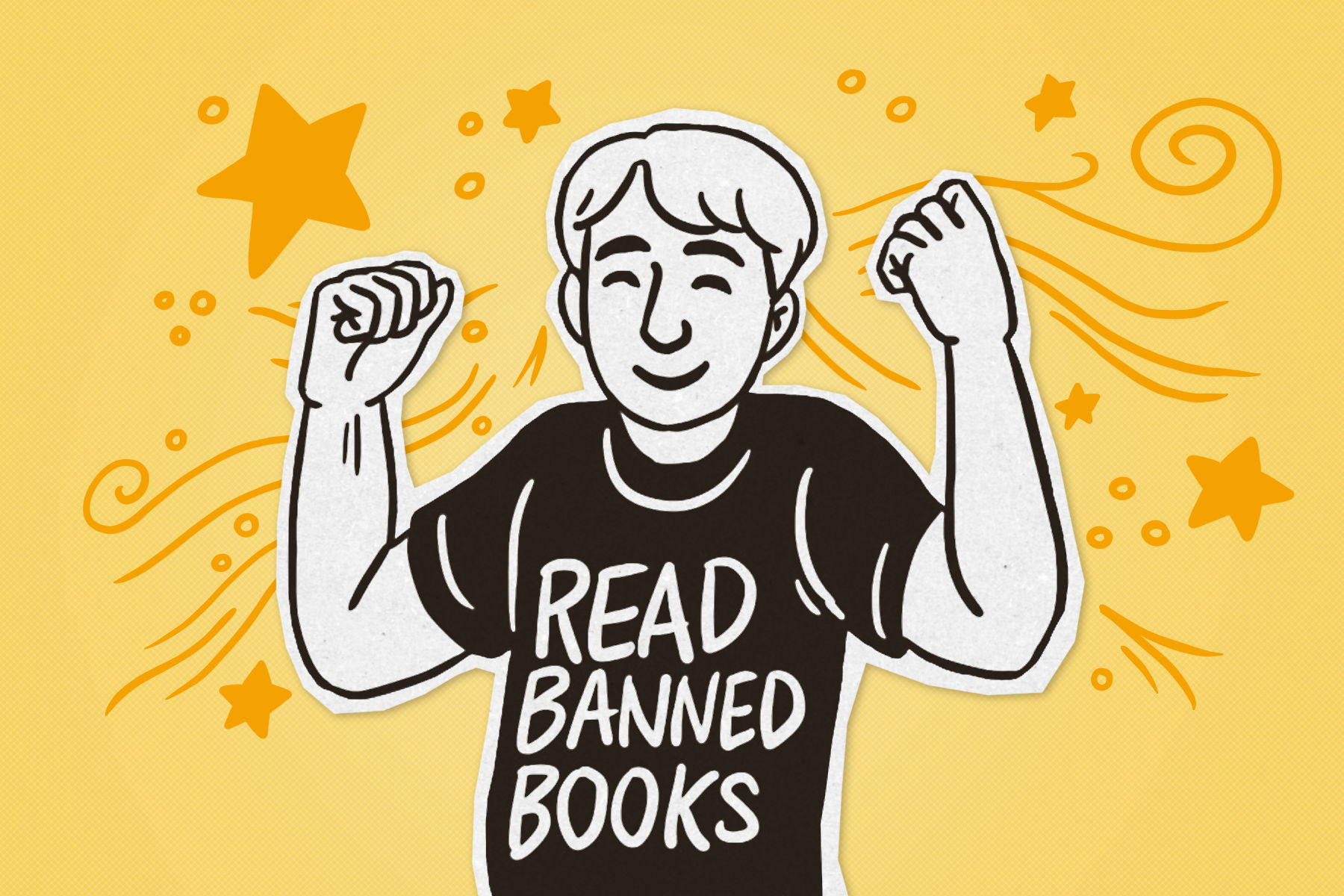
When I set out toward a career in comics, I had no idea that I would have to become an expert in free speech laws, the legal definition of obscenity and the historical patterns of government censorship in order to speak about and defend my own work. I am a cartoonist. Part of what drew me to this path was an equal love of writing and drawing, and part of it was the desire to work from home in my pajamas all day while listening to podcasts. I’ve always wanted my work to find readers, but I did not anticipate spending half a decade publicly speaking on how queer and BIPOC authors are consistently the focus of censorship, on the escalation of book bans into attacks on public library funding and public education and on the links between book challenges and the rise of fascism.
My first full-length book, Gender Queer: A Memoir, a comic about coming out as queer, trans, non-binary and asexual, was published in 2019. It received an immediate wave of support from librarians, teachers and readers, and I was very honoured when it won two major awards from the American Library Association (ALA). Then the book-banners found it. My personal story, written as a love letter to my family, became the most banned book in the United States for three years in a row, as reported by the ALA.
The first challenges to my work came from conservative parents who often admitted at school board or library meetings that they hadn’t even read my book before they decided it should be removed from the library shelves. But over the past few years, book challenges in the U.S. have overwhelmingly shifted from the campaign of a few angry parents to government officials. This spring, ALA reported that in 2025 “92 percent of all book challenges were initiated by pressure groups, government officials and decision makers, up from 72 percent in 2024.”
I believe the fact that my book is a comic is absolutely one of the reasons it has been so heavily challenged. Images carry power. We are often impacted more viscerally by words and images together than by words alone. In both the U.S. and Canada, a huge number of the most challenged books are graphic novels and illustrated picture books. While comics might be especially vulnerable to challenges, they are also extremely well suited to fighting back against censorship. I was delighted when Xtra approached me to curate and edit a group of comics about censorship, focusing especially on challenges to LGBTQ2S+ stories and histories.
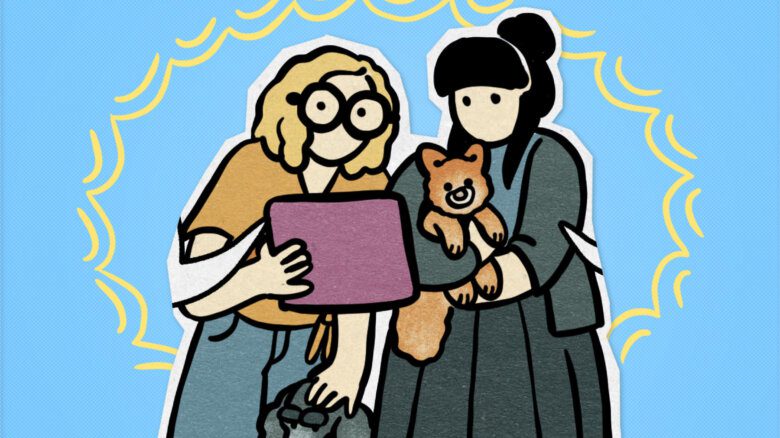
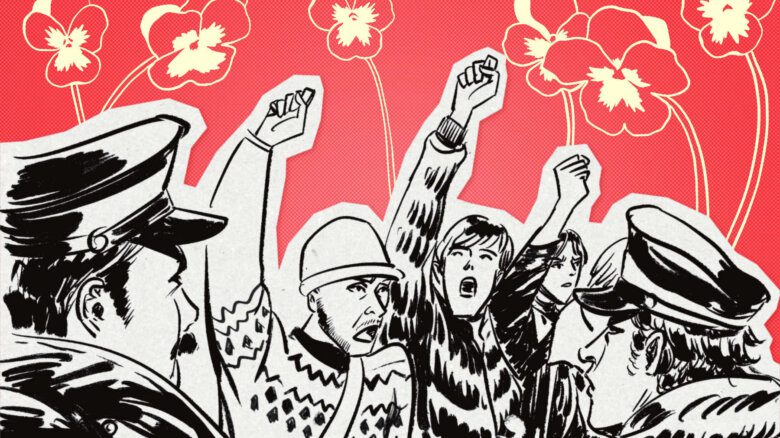
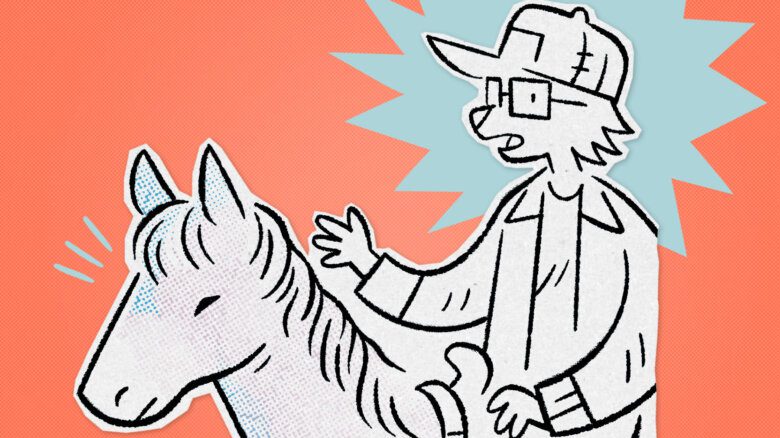
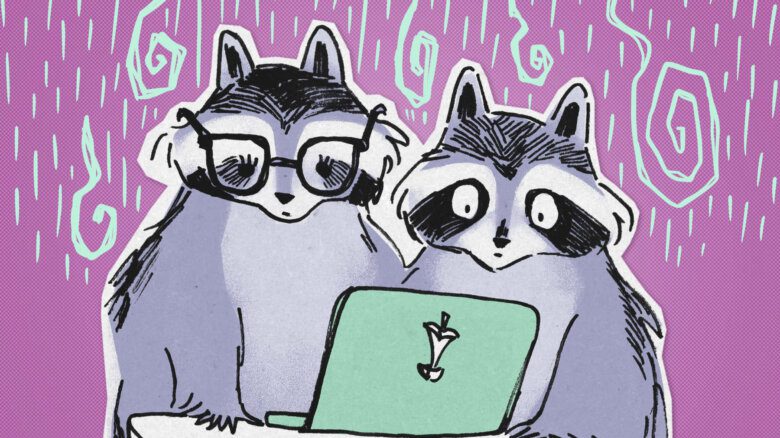
In this series, we have two long-time webcomic creators reflect on the changing landscape of posting erotic queer work online, as many platforms have bent to pressure from payment processors to change their terms of service and ban topics such as artist nudity and overt sexuality. We have the story of the author and illustrator of a Pride-themed picture book whose challenge in a single Maryland school district escalated all the way to the United States Supreme Court. A librarian from San Francisco celebrates what books mean to her queer middle-school students. A cartoonist interviews queer elders on the stifling of information on queer health and community before the rise of the internet. And a comic direct from the ground in Calgary covers trans artists and educators in Alberta living fearlessly in the midst of the most extreme examples of Canadian attacks on public libraries, public education and workers’ rights.
As I write this essay, the Alberta government is proposing amendments to the Libraries Act that would give the provincial government near total control over all Alberta public libraries, pushing aside the expertise of the municipal and regional library boards and professional library staff. If Bill 28 is passed, it would allow the minister of Municipal Affairs “to override any decision or policy of a municipal or regional library board.” The current government has clearly indicated what it would do with this new power: restrict books it deems sexually explicit, which are overwhelmingly queer comic books and YA novels for teens. The four books that have repeatedly been held up by the Alberta government as examples of what they would like to restrict are Flamer by Mike Curato, Fun Home by Alison Bechdel, Blankets by Craig Thompson and my book, Gender Queer. Three of these four books are queer, and all are graphic novels.
In the U.S., we are currently fighting a federal-level book-banning bill, H.R. 7661, misleadingly named the Stop the Sexualization of Children Act, which threatens to cut federal funding to all public schools in the country that offer programing or literature that includes references to gender dysphoria or “transgenderism” [sic]. If passed, this bill will probably lead to every book I have ever published being removed from every public school in the country, as well as thousands of other books with trans or gender-questioning characters, a huge loss to students who deserve to see the expansiveness of human experience represented in their education. After H.R. 7661 was introduced, three other very similar bills—H.R. 2616, H.R. 8705 and S 4925—were added, all of them aiming to censor what books and programs are available in all U.S. public schools. As well as targeting queer and trans stories, these bills would also remove books that include what they call “discriminatory equity ideology.”
When governments across North America aim to remove queer and trans books from libraries and schools, their larger goal is to limit the ability of LGBTQ2S+ people to exist in public. Over and over, I have watched as communities that pass book bans then go on to restrict trans rights—including banning trans people from using public restrooms, from playing on sports teams, from using their chosen names and pronouns in schools and from accessing healthcare. These same communities attack stories by BIPOC authors, especially books with characters of colour, or which interrogate racism and the history of race in North America. These groups, such as Moms for Liberty in the U.S. and Action4Canada, are trying to redefine all queer stories as pornography and to cut sexual education materials and information on abortion access from public libraries and schools.
These and other conservative groups claim their efforts are meant to “protect children” from unsafe, upsetting or damaging information. But children are not kept safe by being kept in the dark. In fact, the safest place where a young person can encounter difficult information is generally in a book, since books tend to be researched, edited and fact-checked, unlike much information online. Censorship is not a tool of safety, it is a tool of social control.
I did not intend to make speaking on censorship a major theme of my career over the past five years, but this is the climate we are living in now, and I feel passionately that more people need to be aware of the issue of government attacks on books, schools, authors, librarians and libraries. I am very glad to be able to present these stories about censorship, and the fight for free speech, to readers in North America and beyond. I hope reading these comics reminds you of the value of libraries, the joy of reading, the necessity of free expression online and the ways that communities have always come together to share information with each other in difficult times. There are thousands of authors, artists, teachers, librarians, students and readers currently taking a stand against censorship in their schools, counties, states and provinces. I hope that reading these comics might inspire you to join them.
 Why you can trust Xtra