Violence was the central theme of the middle-school sleepovers I shared with my best friend, Brendan. The highlight of our night was seeing who would lose a limb first. We would wrestle between hours-long Call of Duty and Grand Theft Auto binges, drunk off Mountain Dew. At school, we were nice boys with good grades and few friends. We both played alto saxophone in band and led school plays and were well liked by our teachers for our polite dispositions. But on Saturday nights, I would go to Brendan’s house and we’d hide out in his basement and exorcise all the bloodthirst we’d accumulated over the long and endless school week.
On one of these nights, Brendan made a tantalizing suggestion, one that would unexpectedly unmoor my life. “Do you wanna watch Saw?” he asked, quivering a bit. The Saw movies had always seemed unreachably, unspeakably violent to me. They promised an unparalleled experience in gore and mutilation, an unrated bloodletting that only the brave could stomach. (Of course, this was just childlike naïveté—Saw is one of the most successful horror franchises of all time, having grossed over US $1 billion across 10 films). The idea of actually watching one of them seemed taboo to me, and though I was terrified, the thought of watching something I wasn’t supposed to was so exhilarating that I agreed.
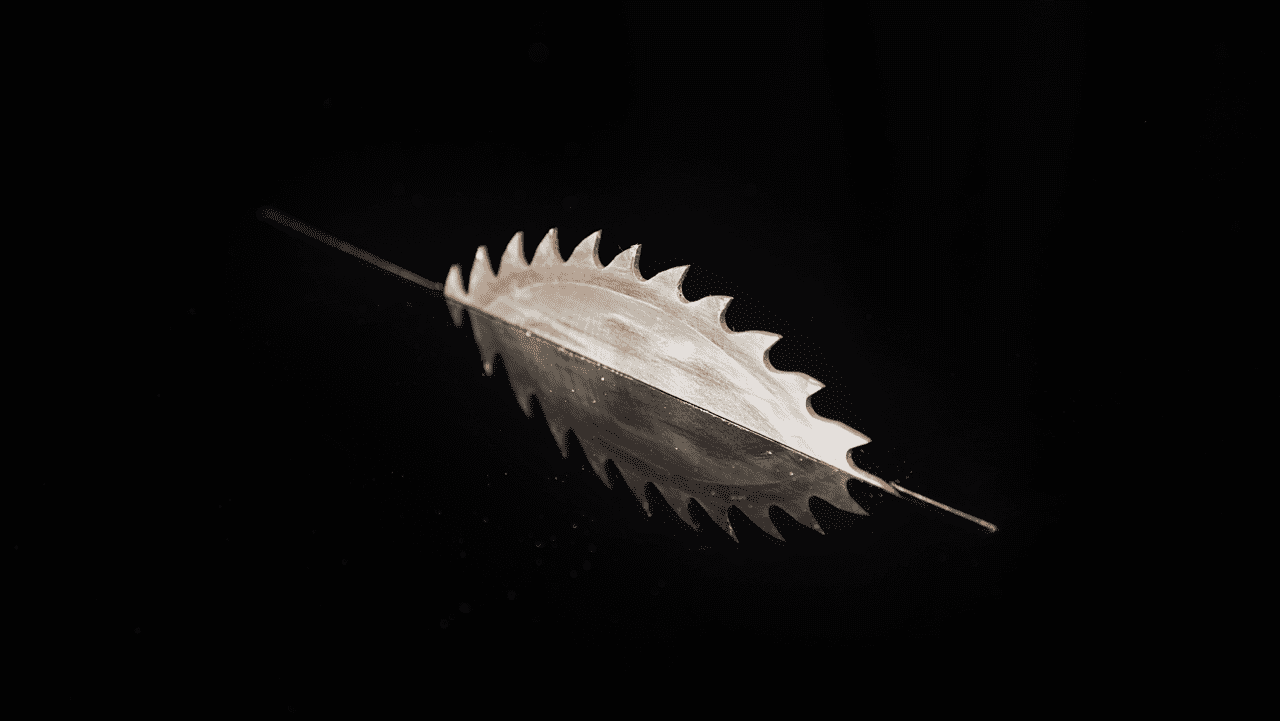
We sat next to each other on that crusty basement couch and put on Saw. Its grimy aesthetic and frenetic editing and masochistic violence made my skin crawl. The Jigsaw killer’s Rube-Goldberg-esque traps and twisted philosophy were novel and beguiling, satisfying tweenage urges that nothing else could. As the film unfolded and terror rose in me, I would steal glances at Brendan’s thighs emerging from his shorts, and find comfort in the knowledge that he was near me. By the time Cary Elwes amputated his leg with a handsaw in the first film’s closing minutes, Brendan and I were hooked.
We became obsessed with the Saw movies. At school, we would exchange hushed whispers about how excited we were to watch the next instalment of the series at that week’s sleepover. It was our depraved little secret, and I relished sharing something so hedonistic with him. It helped me manage the weight of the secret I was keeping about my own hedonistic nature.
As the Saw series progressed, the traps became more elaborate and repulsive, and therefore more fascinating to 12-year-old boys like us, though they shared a common formula. Jigsaw’s imprisoned victims would be informed by the killer that they must play his game, which generally involves a simple choice: inflict an excruciating but survivable wound on yourself, or suffer a cruel and painful death. His victims are chosen because they “don’t appreciate life,” a criteria applied equally to cigarette smokers and child murderers. Their games often symbolize the crime they’ve committed to land themselves in Jigsaw’s lair.
I remember watching Saw VI, still one of my favourites, with Brendan. At the beginning of the film, two moneylenders, a man and a woman, woke up in cages with metal bands affixed to their heads. In each of their cages was a table with various knives. A video of Jigsaw’s puppet informed them that they’d been selected because they’d loaned money to debtors without the means to repay them. As penance, they would have to play his game. The person who removed the most flesh from their body and placed it on a scale within 60 seconds would survive. The other’s headband would drill screws into their brain, killing them.
The timer began and Saw’s thudding, percussive soundtrack kicked in. The man grabbed a knife off his table and started slicing slabs of skin off his belly. The woman fetched her own knife and sawed at her forearm. The camera cut quickly between them, each screaming in agony. The man took an early lead in their bloody match, and as time wore on, the woman, gripped by panic, realized that she was losing and opted for a Hail Mary. She tossed her knife aside and grabbed a machete, chopping viciously at the middle of her arm.
I sat on the couch, caught in the grip of the film, desperate for a release. The woman increased the frequency of her hacking, her eyes wild and ecstatic. With seconds to spare, the lower half of her arm fell away from its body, and she placed it on the scale. Screws needled into her opponent’s brain and she fell to the ground, alive and triumphant. My supreme tension was replaced by supreme satisfaction. And there was Brendan by my side, both of us having experienced a wonderful release, together.
We went to his bedroom after the movie. It must have been almost 4 a.m. In that witching-hour haze, I craved nothing more than to be touched by him. I slept on the bed and he slept on the floor. It was pitch black, and he decided to strike up a conversation. “Who do you have a crush on?” It felt like I was caught in a Saw trap. Suddenly, I had a choice of my own to make. I could tell the truth and release myself of that secret that sapped me of an appreciation of my life. Or I could stay half-dead.
After a pause, I made my choice. “I have a crush on Emily,” I lied, randomly selecting a girl from our grade.
“Oh,” he replied. “Well, I have a crush on Jenna.”
I didn’t reply, and silence fell over the room. Eventually, he said good night, and I fell asleep to the sound of his heavy breathing, wondering if I’d ever be free.
Years passed and Brendan and I drifted apart. In high school, I made new friends, and eventually I came out of the closet. Some of my friends followed suit, and, for the first time, I was enjoying the unique pleasure of having other openly queer friends. Brendan, meanwhile, hurtled toward a career in the military, immersing himself in a masculine paradigm his father had carved out for him.
Though I’d grown, an old anxiety lingered over me. I’d often be gripped with a feeling of dread, possessed by the belief that I was fucking up somehow, that an anvil was about to drop from the sky and cave my head in. Invariably, these thoughts were loudest in bed, and I’d lie sleeplessly, unable to shake the terror away. I tried Ativan and melatonin and meditation but none of it could knock me out.
On one of these nights, I pulled up YouTube on my smartphone. The algorithm suggested a video titled “TOP 10 SAW TRAPS!” It was a compilation of some of the bloodiest scenes from the movies. Watching it conjured up familiar thrills. It brought a strange comfort, but it also exposed me to an intense fear that surpassed whatever had been keeping me up. I might have been anxious, but at least I wasn’t being cremated alive or thrown into a pool full of used syringes. That video ended, and a similar compilation autoplayed afterward. After a few of these videos, my eyelids grew heavy, and I fell asleep.
These compilations became a nightly ritual. Nothing else could soothe me to sleep.
In university, I left the neighbourhood Brendan and I grew up in, and I started Cognitive Behavioural Therapy, which equipped me with the tools I needed to keep the shadows at bay. And, unexpectedly, Brendan hit me up, wanting to hang out. We hadn’t seen each other in years, so I eagerly accepted his invitation.
We walked along a boardwalk in our old suburb for a couple hours. After we caught up, there seemed to be nothing left to talk about, so Brendan started telling me, in graphic detail, about the sex he was having with his girlfriend. I think he was trying to bro down with me; I imagine this is what straight men like to talk about when nobody else is around. Unfortunately for Brendan, I am no bro. The conversation died quickly, and we bid an awkward goodbye, all the formative history and secrets between us reduced to a stiff dap-up. We haven’t hung out since.
As of this writing, I’ve recently returned from a two-week stay in Toronto. It was a frantic and stressful trip. I lived there for six years, but moved to Montreal a couple months ago because Toronto’s electric pace was resurrecting my dormant anxieties. The incessant social pressure of the metropolis did a number on my cortisol levels. Returning to the city after some time away rendered that stress more acute than ever.
Part of the reason why I went back was because this very column was nominated for a Big Journalism Award. It was a genuine honour to be nominated, but it stung, just a bit, to lose.
Following the ceremony, after that hurricane of a trip, I went to the airport to catch my flight home. I got there five hours early, hoping to use the spare time to work on this article, which I’d missed several deadlines for because of how slammed I’d been in Toronto. I had watched the first six Saw movies before my trip to gather material, but I was wired from my time in the city, and that afternoon’s award loss made it difficult to muster the ego I usually summon to write these columns. I felt my brain revert to an older, cloudier version of itself. That familiar feeling of not-enoughness was back. The pressure and exhaustion were getting to me. I couldn’t write a word. Eventually I gave up, called my boyfriend, listened to podcasts and sulked in the lounge. And there I was again, anxious.
Several hours later, I got back to my apartment in Montreal. I decided it might be a good idea to watch the seventh Saw movie, Saw 3D, for inspiration, and thought it might bring some comfort to watch an old favourite by myself. But as I ascended the staircase to my front door, I noticed the lights were on in my house. My friend, who had been cat-sitting for me, was still there.
I steeled myself for social interaction and mourned the solitude I’d been looking forward to. Then we sat on the couch and he told me about the boys he’d been flirting with, regaling me with funny anecdotes of hookups gone wrong. The heavy anvil lifted and I felt lighter as he left, but my deadline was still on my mind, so I opened up my laptop and flicked on Saw 3D. By the time the film’s opening scene reached its bloody conclusion, I’d fallen asleep.

 Why you can trust Xtra