Slotted in the middle of Kill Bill’s four hours of relentless bloodshed and cartoonish dialogue is a quiet scene around a fire. The assassin Beatrix Kiddo sits across from her boss, Bill, who is caressing and occasionally tooting a massive bamboo flute. He begins to tell the tale of Pai Mei, an ancient and impetuous kung fu master, who massacres a temple full of monks with his signature Five Point Exploding Palm Heart Technique. Bill’s tale is replete with verbal flourishes and dramatic pauses, and the tone of his voice is both hypnotic and addictive. Kiddo is about to become a student of Pai Mei’s, so she hangs on Bill’s every word. She looks up at Bill as he speaks, the glimmer of the flame licking her face with light. She is doe-eyed, reverent and smiling, glad to be nestled in the palm of a master storyteller. It’s the only time we see her happy.
Kill Bill only works because Bill is worth killing. The first and most obvious reason why the titular Bill ought to die is made abundantly clear in the film’s first two-hour volume, released in 2003: he has gunned down Kiddo, his pregnant protegé, on the day of her wedding, leaving her comatose and babyless. When, impossibly, she arises, she embarks on an epic spree to eliminate the members of her old squad of killers, culminating in a final showdown with her former master and boss and baby daddy, Bill.
Those first two hours are action-packed, candy-coloured and chock full of exploitation-style violence. There’s kung fu and swordplay and hot women beating each other bloody. Kiddo crosses off half of her kill list, inching her way, corpse by corpse, to Bill. But the film’s second half, originally titled Kill Bill: Vol. 2 and released in 2004, reveals that Bill’s crime against Kiddo was far more personal and treacherous than an isolated act of brutal violence. Those two halves, once divided into individual films, have been collected and are screening in theatres as one marathon experience, titled The Whole Bloody Affair and complete with an intermission and previously excised material. Director and writer Quentin Tarantino famously conceived of Kill Bill as a single film. With a middle finger to those who say people are avoiding cinemas over eroding attention spans, his original vision has finally borne fruit.
Sometimes I feel like Kill Bill was the first and last movie I ever saw. I remember being a little boy at Blockbuster in the mid-2000s, perusing the violent movies I’d never be allowed to rent. I loved to be seduced by DVD covers of men with guns and blood-drenched chainsaws, and it pleased me to sneak them to the corner of the store and surreptitiously drink in the vivid plot descriptions on the backs of the cases. The one that’s stuck most with me is the cover of Kill Bill; Uma Thurman, virile and ferocious, clutching a samurai sword in her signature canary-yellow jumpsuit, the background a matching yellow and sliced by a sleek, black vertical line.
The first time I watched Kill Bill, in high school, my own life was sliced into two periods; the one that had come before Uma Thurman drove a knife through Vivica Fox’s heart in one of the film’s earliest scenes, and the one that came after. I was a pubescent boy hooked on violence: I loved Call of Duty and Saw and I was discovering that I loved Tarantino. I showed all my friends Kill Bill and Pulp Fiction and Django Unchained and mouthed the lines as they came out of the TV in my mom’s basement. They were entertaining and violent and let me safely escape my suburban life and indulge in my most primal desires. I’ve been pursuing the satisfaction of watching Kill Bill for the first time in the movie-watching years that have come since. It’s the time I’ve most felt like Kiddo at the fire, listening to Bill blow air into his flute. I haven’t felt that way since.
In February 2018, a landmark profile written by Maureen Dowd appeared in the New York Times. Titled “This Is Why Uma Thurman Is Angry,” Thurman, through Dowd, details the mental, physical and sexual abuse she endured leading up to the filming of the Kill Bill films, which she and Tarantino had co-created and whose success was predicated on her then-unparalleled star power. The culprits, she said, were Tarantino and the film’s producer Harvey Weinstein.
She first describes a harrowing encounter with Weinstein in a hotel room involving a bathrobe, a sauna and an assault. “He pushed me down,” she says. “He tried to shove himself on me. He tried to expose himself. He did all kinds of unpleasant things.” It brings to mind an early scene in Kill Bill Vol. 1 when it is revealed that a male nurse has been raping Kiddo while she was comatose. (Thurman said in a 2003 interview that the rape scene was “actually much worse” and more “fleshed out” in the script’s original draft.) Hers is one of many damning anecdotes about the now-incarcerated film mogul forcing himself on actresses. They remained intertwined for the multi-year production-distribution cycle that accompanied the two blockbuster films. Harvey Weinstein’s name is eternally attached to the two films most heavily associated with Thurman: Kill Bill and Pulp Fiction.
Thurman’s performance in Kill Bill is the foremost reason why the film endures. She bites every line and exudes the kind of fearsome power Kiddo ought to. She is tasked with portraying a range of emotions, from furious to stoic to ecstatic to devastated. She is at various points of the film pregnant, comatose, paralyzed or shackled to the ground; at others, she is flying through the air with a samurai sword, executing complex martial arts manoeuvres from multiple disciplines and sprinting up stairs with heavy water buckets on her shoulders. The things she is expected to do with her body and have done to her body are exhausting to even begin to think about.
Another shocking revelation from the profile was Thurman’s account of her treatment on the set of Kill Bill. In a scene where Michael Madsen’s character, Bud, immobilizes Kiddo and spits on her face, Thurman said Tarantino was in fact the one to spit on her. The most petrifying anecdote of the profile is one about Tarantino forcing Thurman to drive an open-faced convertible down a dirt road at 65 km/h. Thurman initially refused, but after being convinced by Tarantino that the drive was safe, she got in the car and careened off the road into a palm tree. The crash was captured on tape; it is difficult to watch. She told Dowd the car was a “deathbox” and that the seat wasn’t screwed in correctly. She suffered a concussion and was placed in a neck brace. She said she has permanent knee and neck damage as a result of the crash.
The key scene they shot with that car was Kiddo’s legendary front-seat monologue from the beginning of the original cut of Kill Bill Vol. 2, rendered in black and white, where she recaps her “roaring rampage of revenge” from the first volume. That monologue has been erased from The Whole Bloody Affair.
I hadn’t seen Kill Bill since Dowd’s Times story was published almost eight years ago. But when The Whole Bloody Affair was released in cinemas in December, I felt I owed it to the little kid in me, the one whose course was so irrevocably altered by the film, to see it. I invited one of my high school friends to join me. We’d seen the Kill Bill films together ten times. This would be our final screening.
The Whole Bloody Affair is screening in theatres as Tarantino’s social capital dwindles. The director lives in Tel Aviv, Israel, with his wife, Israeli singer and actress Daniella Pick. Days after the Oct. 7, 2023, Hamas attacks in Israel, Tarantino went on a “surprise solidarity visit” to multiple Israeli Defense Forces bases in the south of the country. Since October 2023, Israel has killed more than 70,000 Palestinians in Gaza, according to the territory’s health ministry. Tarantino made headlines this month for baselessly calling the beloved actor Paul Dano “weak” and “uninteresting.” Meanwhile, the director has said nothing about the Palestinians his home country has killed.
Nevertheless, against my better judgment, I went to see the film at my local cinema. It is more masterful than I remembered. Every frame is more captivating than the last. Its violence is gorgeous, its monologues are tasty and its themes of resilience and retribution feel more resonant with the film’s two halves merged into one and displayed in glorious 70mm film. Kiddo’s suffering feels more pronounced, and her arc toward redemption is more satisfying. It felt like watching it for the first time. At last, that feeling I’d pursued had returned to me. But through the prism of the last decade’s real-life developments, Kill Bill took on an entirely new meaning.
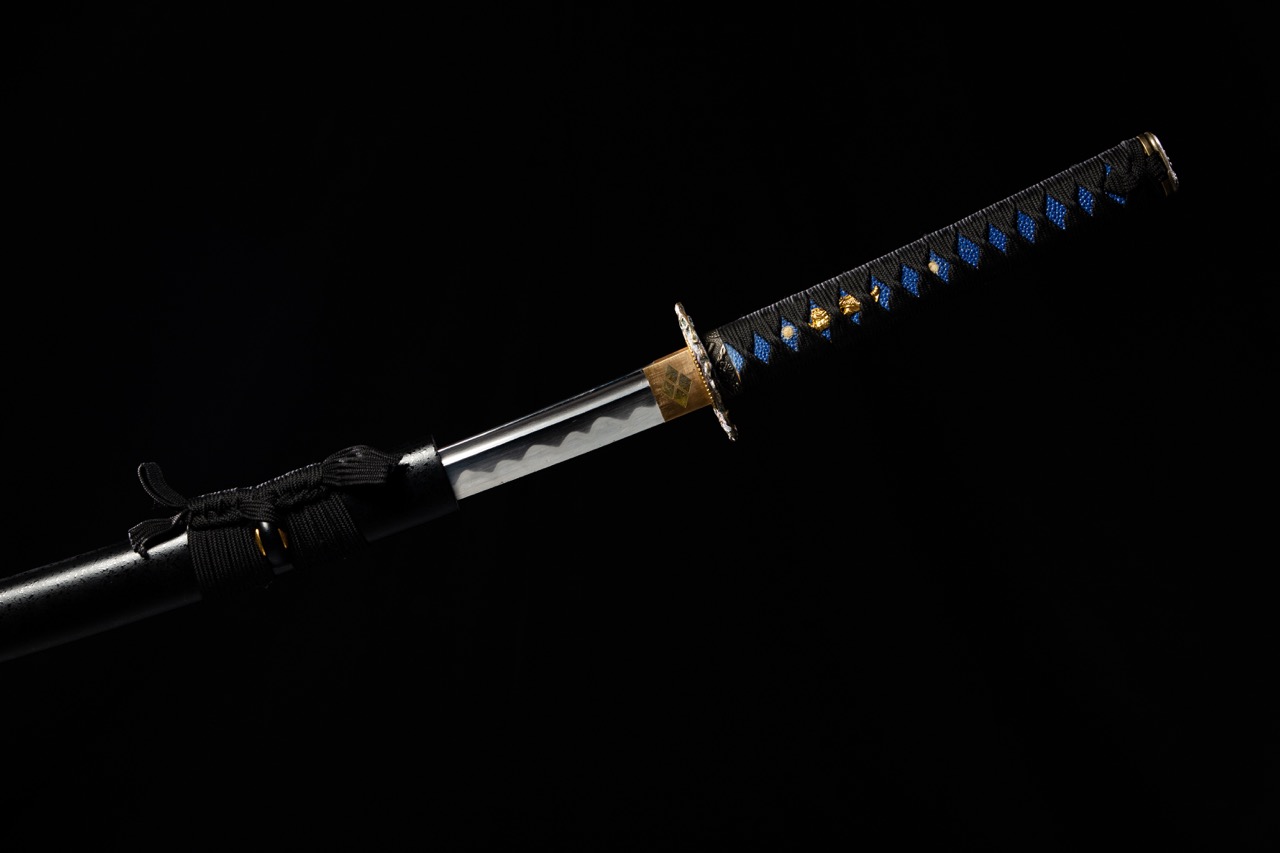
The brawl between Kiddo and Bill, the ultimate climax of the ultimate film, arrives with a shudder instead of a cheer. Following the revelation that Bill has been raising the child he and Kiddo conceived and who she thought was long dead, the two engage in a brief and entirely seated sword match. In a balletic move, Kiddo manages to sheath Bill’s blade and knock his hand away. While he is stunned, she curls her fingers into a beak and plunges them into Bill’s chest. Five times.
Blood dribbles from Bill’s mouth. He gasps a few exasperated breaths. “Pai Mei taught you the Five Point Exploding Palm Heart Technique?” he asks.
“Of course he did,” says Kiddo.
Kiddo kills her master, lover, foe and only equal by turning his own story against him. Bill is not undone by a random act of violence or by an elaborate scheme or even by a sword. Bill’s fatal error was believing that he was above his tall tales. Unfortunately for him, she listened.

 Why you can trust Xtra