Mel Millar remembers the first time they heard about the polyamorous community through the book The Ethical Slut, often considered “the bible of non-monogamy.” The 1997 guide is an intimate exploration of authors Dossie Easton and Janet W. Hardy’s journeys with non-traditional relationship structures, and for Millar, it was a jumping-off point for reckoning with their own experience of polyamory.
“The idea of being in multiple relationships just appealed to me on a visceral level,” Millar says. “Some people meet someone and they can picture a life with just that person, and that never made sense to me, because I would meet another person and picture them staying in my life as well.”
Millar, who currently lives in the South Georgian Bay area of Ontario with their teenager, started immersing themself in the polyamorous community while living in Toronto in their 20s, and have engaged in multiple relationships over the past two decades, continuing long-distance relationships and fostering new ones even after returning to their hometown.
But there’s one thing that Millar says is often on the back of their mind when a relationship with a partner starts to deepen—their awareness that under the Canadian Criminal Code, being in a “marriage-like” relationship with more than one person is illegal, and punishable by up to five years in prison.
“It definitely affects my decisions,” says Millar. “I’ve chosen not to formalize any of my relationships.”
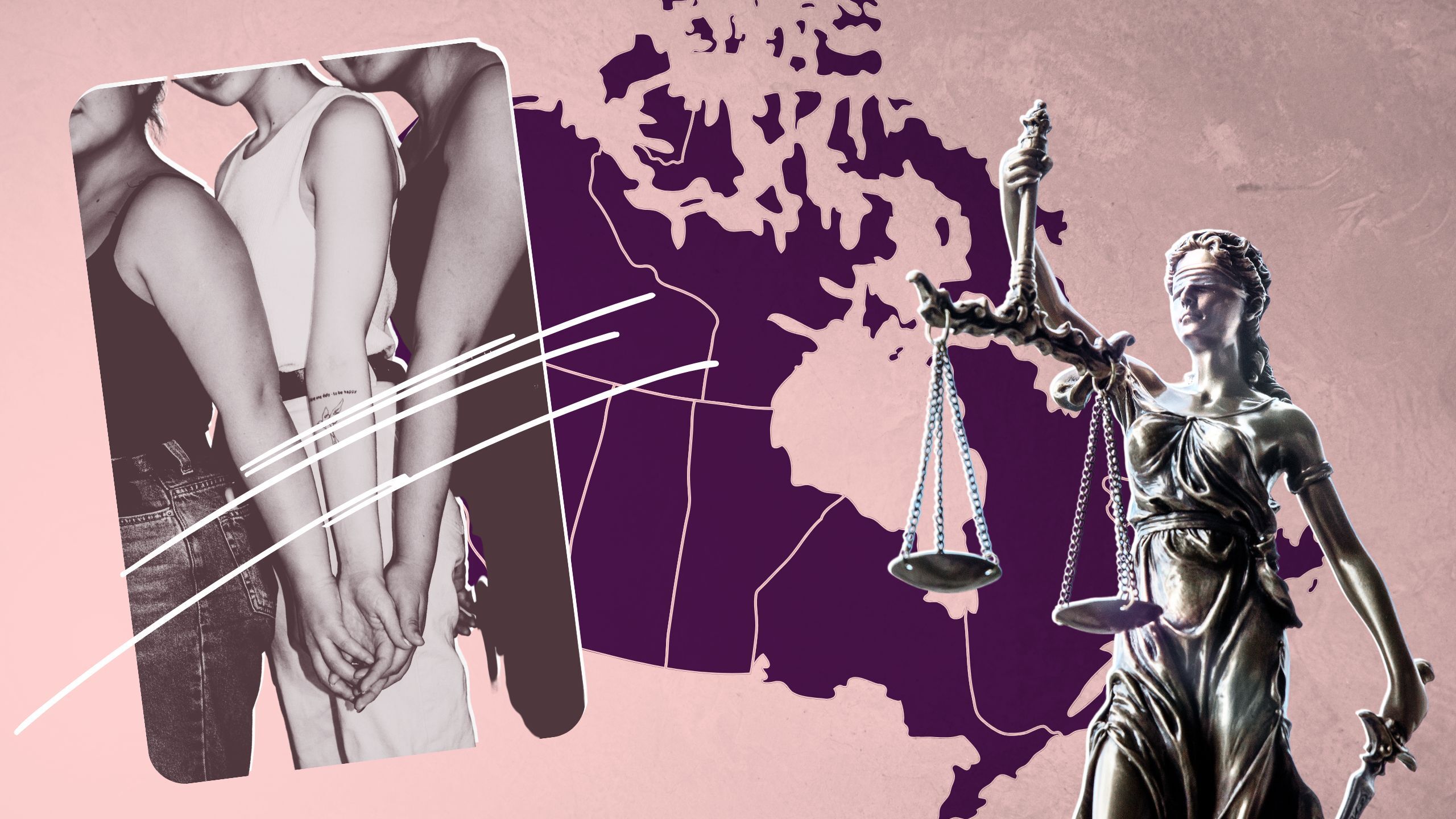
Under Section 293 of the Criminal Code, people are liable to imprisonment of up to five years should they participate in “any form of polygamy,” or “any kind of conjugal union with more than one person at the same time, whether or not it is by law recognized as a binding form of marriage.”
Anyone who “celebrates, assists or is a party to” a ceremony, contract or similar acknowledgement of a polygamous relationship or multi-person conjugal union is also in violation of the code, and is liable to up to five years in prison.
The origins of Section 293 aren’t rooted in modern understandings of polyamory. In fact, the law dates back to the very first version of the Criminal Code, which was enacted in 1892 and incorporated laws against polygamy in response to the practices of early Mormons in Canada.
While the contemporary Section 293 is rarely enacted, one of its most high-profile uses involved Bountiful, a Mormon settlement in the southern interior of British Columbia. Members of the community were found to have transported underage girls to other Mormon leaders in the U.S. for marriage, and the Criminal Code was invoked to protect the children from abuse. Prominent leaders of the community were convicted under Section 293 and given house arrest and probation in 2017.
But while the intention behind Section 293 may have been to prevent abuse against women and children, Toronto-based lawyer Hilary Angrove wonders if the law also has limitations that ultimately harm consenting adult, polyamorous partners, who simply want the same rights afforded to married monogamous couples in marriages.
“There’s other ways of capturing human traffickers and whatever they’re trying to capture [under Section 293], but this affects people in modern times where polyamory is something that is becoming more common, and something that is between consenting adults,” Angrove explains.
The wording of the code creates what Angrove says is a “legal grey area” when it comes to the rights of polyamorous couples. Angrove says that while she hasn’t been seeing polyamorous partnerships criminalized in practice, the law still leaves polyamorous people who wish to have their relationships legally recognized vulnerable.
Ways around the law include cohabitation agreements and setting up businesses together that allow for clear outlines about the division of assets. But even the legality of cohabitation agreements is murky under the wording of the code.
“Personally, I won’t draft a cohabitation agreement for a polyamorous couple,” Angrove says. “[I’d] say ‘I don’t recommend you do it, because then you’re in a legal grey zone of being in a marriage-like relationship with more than one person.’”
She says that multiple times a year, she interacts with people in polyamorous relationships who are seeking out advice for the next steps in their relationship. Some come wanting legal documents like prenups drafted—since polyamorous marriages are illegal, Angrove cannot draft those documents for potential clients.
She works with her clients to provide alternative routes, discussing what assets they’re trying to protect and pass down, though she still sees limitations, including in how pensions can’t be split between multiple people.
@xtramagazine A year after Danielle Smith’s Alberta government first announced it would go after school library books, we’re now seeing what books are actually being pulled from the shelves of Alberta schools. And while more than 170 individual titles have been removed by school districts, these are the 10 most banned books in Alberta school libraries since the new policy was announced. The list includes award-winning literature, critically heralded stories and groundbreaking narratives of queer identity. The Investigative Journalism Foundation has pulled the data on every book flagged for removal from Alberta school libraries across public, separate, Francophone, charter and independent schools. And they shared it with Xtra to help paint a picture of what kinds of books are being pulled from library shelves across the province. #lgbtqnews #alberta #albertanews #bookban #bannedbooks ♬ original sound – Xtra Magazine Advertisement
Millar believes the lack of clear wording to protect consenting polyamorous adults is an oversight within the Criminal Code.
“Sometimes I think that the state needs to get out of the business of codifying people’s legal relationships in ways that are uniform, because that’s just not the reality in the world,” Millar says. “They should recognize what people’s relationships are, without telling them what they have to be.”
Like Millar, Rachel Darling, 28, is also hesitant about the legal risks of one day formalizing relationships with more than one person. Darling, who is based in Hamilton, Ontario, lives with her wife, and while the couple is not currently dating other partners together or separately, they have both previously dated other people, and are open to doing that again in future.
One consideration that weighs particularly heavily on Darling is the potential of having children: she fears how she’d navigate the legalities of having children with someone other than her wife, a prospect she and her partner have discussed. Multiple members of a polycule have been recognized as legal parents in Canada before, with a Newfoundland court ruling that three unmarried adults in a polyamorous relationship could be deemed the legal parents of their child in 2018, and a B.C. judge ruling that a third parent could be added to a child’s birth certificate in a polyamorous partnership in 2021. In that 2021 decision, Justice Sandra Wilkinson wrote that there is a gap in the provincial Family Law Act that leaves a lack of clarity when children are born to polyamorous partners.
But even if more polyamorous partners are bringing their cases to Canadian courts, having children within a “legal grey zone,” as Angrove calls it, can still feel risky. Darling says that it’s something she’d consider carefully when planning her family in the future, particularly if that family includes other individuals than her wife as parents.
“It just feels strange, it’s a constant uncomfortable feeling knowing that who you are or who you love isn’t legal or recognized in a lot of places,” she says. “Why is it such an issue to love and create a safe and supportive environment?”
Darling says that the fact that the Criminal Code prevents polyamorous partners from marrying more than one person creates stigma around the polyamorous community, contributing to the belief that polyamorous relationships are less “legitimate” than monogamous ones.
“I’ve been identifying as polyamorous and in multi-partner relationships since I was 15, and most people in my life only view when I’m in a more monogamous situation as the important, secure and ‘real’ relationships I have. It’s extremely frustrating and dehumanizing,” Darling says.
Millar agrees that allowing polyamorous partners to marry more than one person would help normalize and destigmatize the polyamorous community—but a bigger priority, in their opinion, is making sure the door isn’t left open for action to be taken against polyamorous partners, even if Section 293 of the code is rarely invoked.
“Everyone is realizing that at any point we could be a test case, because someone could decide that our way of raising our kids, our ways of conducting ourselves in public, are an affront to them personally and therefore they’re going to cause legal problems for us,” they say.
Victoria Clowater, a PhD candidate at McMaster University who is studying the legal barriers that polyamorous people face in Canada, agrees. “Whether it was a police force or officer or an elected representative, all it would take is the will to prosecute people for it to become a huge problem,” Clowater says.
As part of their research, Clowater has spoken to polyamorous people across Canada about their experiences navigating the legal system. Often, she finds that people are unaware of the barriers they could face in their future-planning, and information about alternative paths can be difficult to navigate.
In many cases, legal advice can help poly people understand the types of agreements they could access, particularly with regards to potential rights as parents, says Clowater.
“[But] not everyone has access to legal representation, not everyone knows these policies,” Clowater says.
They say that the law effectively leaves polyamorous people behind, and change may only come about via legal challenges, a prohibitively expensive avenue for most Canadians.
“It’s unfortunate that poly people have to do the labour to get it there,” says Clowater, who compared it to their past research on the introduction of X gender markers, which they say came about largely due to the labour of non-binary people themselves.
For Darling, it’s imperative that lawmakers enact changes to protect the polyamorous community, particularly if more Canadians are engaging in polyamorous relationships.
“We’re living in 2026 now. The law needs to be updated to meet us where we are,” she says. “Society is always changing. Normalize loving and having healthy relationships, no matter how they look.”

 Why you can trust Xtra