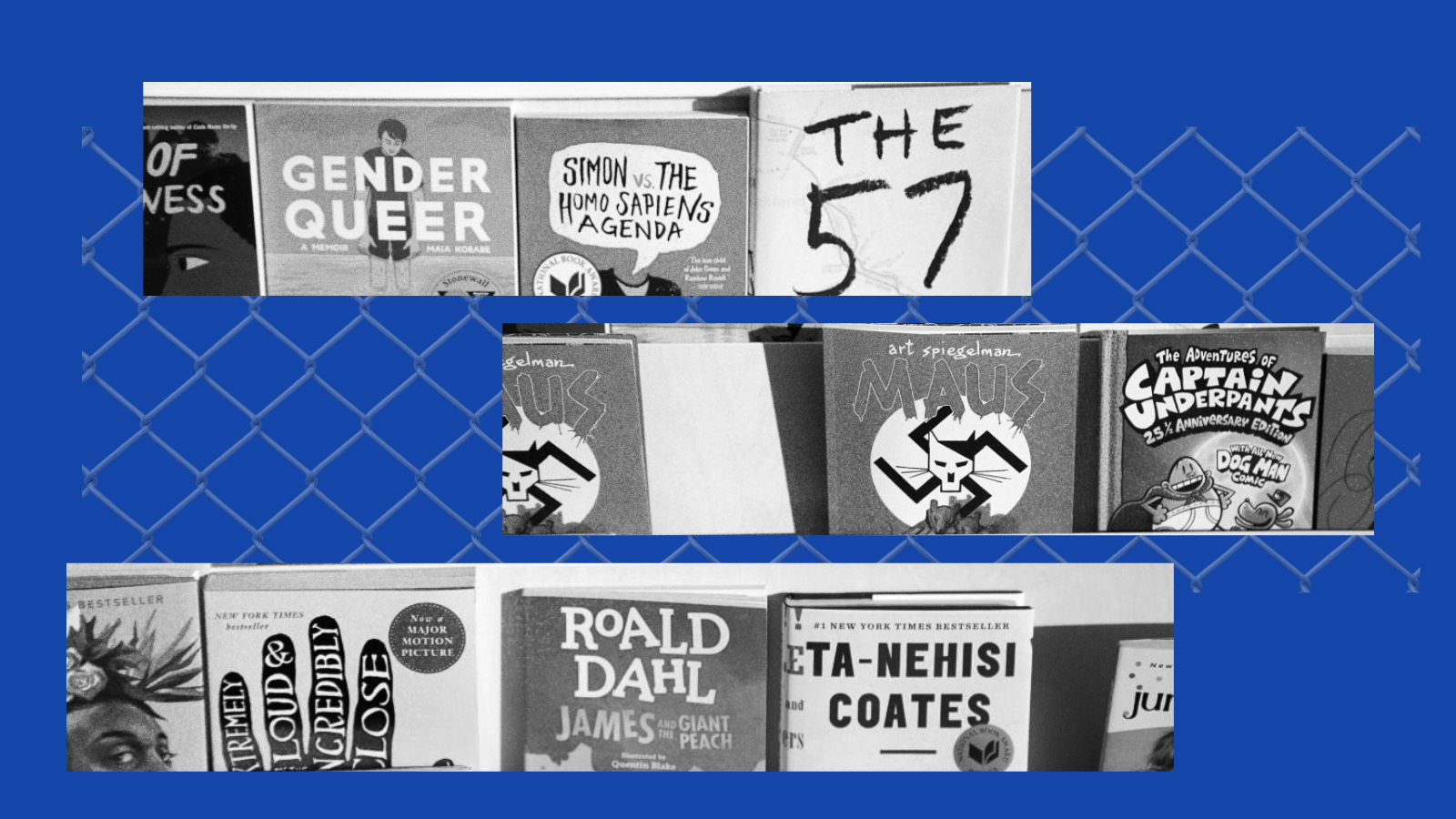
Another year, another American attempt to restrict what kids can read: H.R. 7661, which activists are calling a “nationwide book ban bill,” has advanced out of committee. The bill would prohibit public school libraries from stocking texts that involve “sexually oriented material,” as well as “gender dysphoria or transgenderism.” If schools are found to be keeping those books, their federal funding could be jeopardized.
“Sexually oriented material” is an extremely broad category. The bill makes an exception for science textbooks, the “texts of major world religions” and for “classic works of literature,” as defined by two listicles on the Christian home-schooling website “Compass Classroom,” whose stated mission is to “advance the kingdom of God.”
In effect, though, it’s an effort to ban America’s public school students from accessing information about queer and trans people, says Sam Helmick, president of the American Library Association (ALA).
“H.R. 7661 is not about what is best for children,” Helmick wrote in a statement. “It treats 17-year-olds the same as kindergarteners and could starve schools of support if they happen to have any material that politicians claim is ‘sexually oriented,’ including fine art, dance, history lessons, court cases—and even Virginia’s state flag.” (Virginia’s state flag involves a picture of a woman with one of her breasts exposed.)
“The exception for ‘classical art’ is a smokescreen for discrimination against any form of artistic expression that does not comply with an ideology that denies the stories and personhood of certain groups of people, especially LGBTQ2S+ people,” Helmick added.
This is the latest in a long line of attempts from Republicans over the past few years to control what books young people can or cannot access. Days after President Donald Trump’s inauguration, he declared book banning a “hoax.” Then, a year ago, when a Department of Government Efficiency (DOGE) sweep led to the revocation of dozens of grants across the federal government, those promoting diverse literature were some of the first to be cancelled.
Joe Sanchez, a professor of Library and Information Sciences at Queens College, knows what it’s like for the government to come down against giving kids books. He ran a grant-funded program studying young Black and brown people’s manga-reading habits, only for that grant to be taken away when DOGE deemed it “DEI.”
@xtramagazine The full lists of the books targeted for removal from two Alberta school districts have been published, and both feature a slew of familiar LGBTQ2S+ titles. Last week, journalist Jeremy Appel of the independent newsletter The Orchard published the results of a freedom of information request filed to the Calgary Board of Education and Edmonton Public School Board asking for full lists of which books were removed from school libraries. The call for book removal came after Premier Danielle Smith’s Alberta government introduced new policies last year, mandating what kinds of books can be on the shelves of Alberta schools. Under the policy, school districts are required to ban “any explicit visual depiction of a sexual act” from their school libraries. The policy came about following advocacy from several far-right social conservative groups. We break down what you need to know about the titles spotlighted for removal by Alberta’s two largest school districts. #lgbtqnews #alberta #albertanews #canada #bannedbooks ♬ original sound – Xtra Magazine
The nationwide book ban, Sanchez says, is more of the same. “We are witnessing a moral panic that mistakes representation for harm. The real danger is not exposure to ideas but the systematic removal of texts that help young people understand themselves and others.
“Protecting school libraries means trusting trained educators to make age-appropriate decisions. Broad restrictions risk undermining professional expertise and limiting access to materials that help students develop curiosity, empathy and informed perspectives,” he says.
Last week, the American Library Association released their yearly report on the state of libraries (and, by extension, American book banning) at the school district, county and state levels. They documented 487 attempts to censor over 4,000 specific books at American libraries, schools and universities in 2025—the second-highest number of censorship attempts since the organization began tracking in 2001. Those book bans have occurred across at least 45 states since 2021. Often, these local-level book bans argue that the mere existence of an LGBTQ2S+ character makes a book “sexually explicit,” according to the National Education Association—the graphic novel Gender Queer by Maia Kobabe, for example, has ranked among the most-banned books for several years running. Ninety-two percent of those challenges, the ALA said, are coming from coordinated right-wing groups like Moms for Liberty rather than from individual parents. This national bill, then, is using the same playbook.
The bill hasn’t yet come to a vote. But if it does pass, it would be incredibly difficult to enforce, Helmick of ALA said, “H.R. 7661 would be a catastrophe for states to administer, forcing educators and librarians to remove a large, amorphous collection of materials to keep funding that they’ve depended on for over sixty years.”

 Why you can trust Xtra