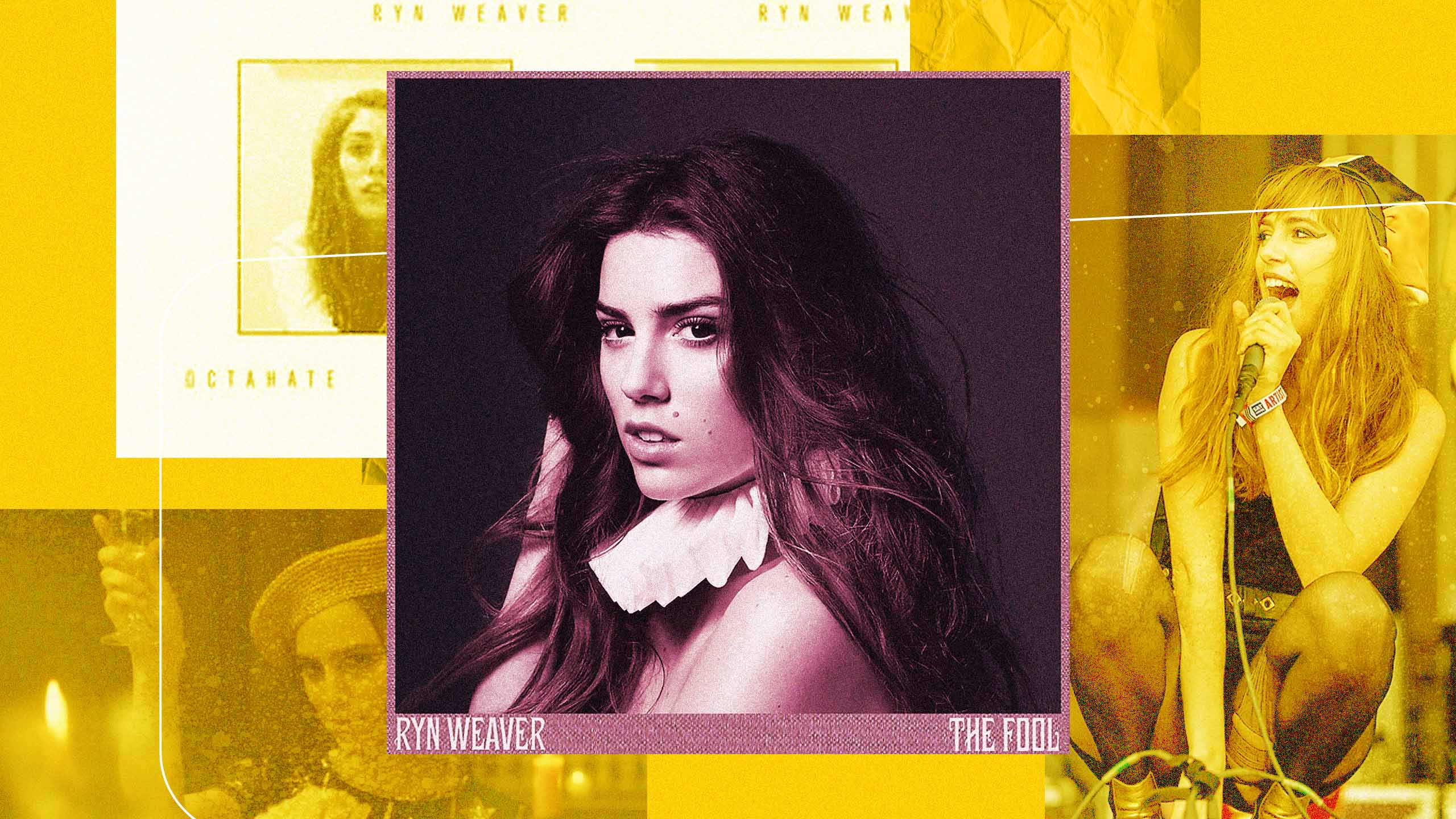
When Ryn Weaver’s first single “OctaHate” was released in 2014, it instantly felt like a hit. With enchanting electro-pop production and biting lyrics co-written by It Girl Charli XCX, the pieces were perfectly placed for Weaver’s ascent to indie-pop stardom. And while “OctaHate” did receive gold certification status in the U.S., and its accompanying album, The Fool, released in June 2015, would go on to peak at #30 on a Billboard album chart, Weaver didn’t become the next big thing, as many music outlets prophesied. But before various label-related holdups and a few broken promises would extend Weaver’s debut era into a decade-long waiting game, The Fool would earn Weaver something more valuable: a dedicated queer fan base.
Through its ethereal production and the unique trill of Weaver’s vocals, The Fool asks its audience to grab hold of Weaver’s hand as she pulls them through a constellation of her imagination and the wild weavings of her failed and longing loves. While often an album about relationships, The Fool’s broader themes dare its listeners to question the value of settling for less than truth and honesty in life and love. There’s a sense of urgency behind Weaver’s pulsating pop that found the then 22-year-old artist pushing for freedom. The result is a litany of broken shackles.
Weaver, who is queer herself, litters The Fool with sentiments that resonate deeply with a queer audience, each of which haven’t aged a day in the last 10 years. On “Free,” she reminisces on her “broken compass” and the undeniable freedom of finding a love that is a comfort rather than a hindrance: “Not a ball and chain, just a ball when we’re together.” “Pierre,” which gained TikTok virality in 2021, is an ode to mismatched love and fleeting youth, and on title track, “The Fool,” Weaver reassesses the nuances of a love she can’t let go of. And the album’s finisher, “New Constellations,” finds Weaver tripping “the gun on cautions that [she’s] been sold,” professing that “it’s hard to believe that it’s wrong to want more than the truest of blue and a love like a roar.” It plays like an anthem for queer audiences, rejecting the notion that anything that inspires music so vibrant and kaleidoscopic could ever deserve any kind of pushback.
The Fool has remained both timeless and engaging in its pop afterlife, feeling closer to the fearlessness of Chappell Roan or the cleverness of Katie Gavin than the brash hollowness of its 2015 contemporaries. So many aspects of Weaver’s debut indicate that she was simply ahead of her time, barrelling into the indie-pop scene before the world was ready to welcome the likes of Charli XCX, Roan and MUNA into the echelons of the mainstream. The twinkling electronic production feels right at home with the pillars of pop music dominating radio waves and TikTok FYPs today, highlighting the brilliant sensibilities and mind behind such an assured debut.
It’s that forward thinking that has allowed Weaver to stay top-of-mind for many queer listeners. Weaver still boasts over 600,000 monthly listeners on Spotify, and every one of her posts on X inevitably receives countless replies checking in and begging “Mother” for new music.
There’s an unbelievable amount of loyalty on display between Weaver and her fan base, one that feels unheard of in a world driven by an insatiable hunger for more content. Across 10 long years, Weaver’s integrity as an artist and performer has propelled her, offering seemingly endless goodwill from her fans for the extended hiatus between her debut and what comes next. That type of loyalty, one that keeps fans flocking to an album that is already a decade old, is a once-in-a-lifetime bond. While other pop stars become nothing more than a flash in the pan, Weaver has managed to cultivate a following that will run away with her anywhere, for any length of time. “Odin St,” Weaver’s comeback single released in conjunction with The Fool’s anniversary, is marked by an edgier production, but is still littered with that familiar trill and the same electric spark that turned heads all those years ago, welcoming fans home to a sound that has aged like fine wine across a storied decade.

 Why you can trust Xtra