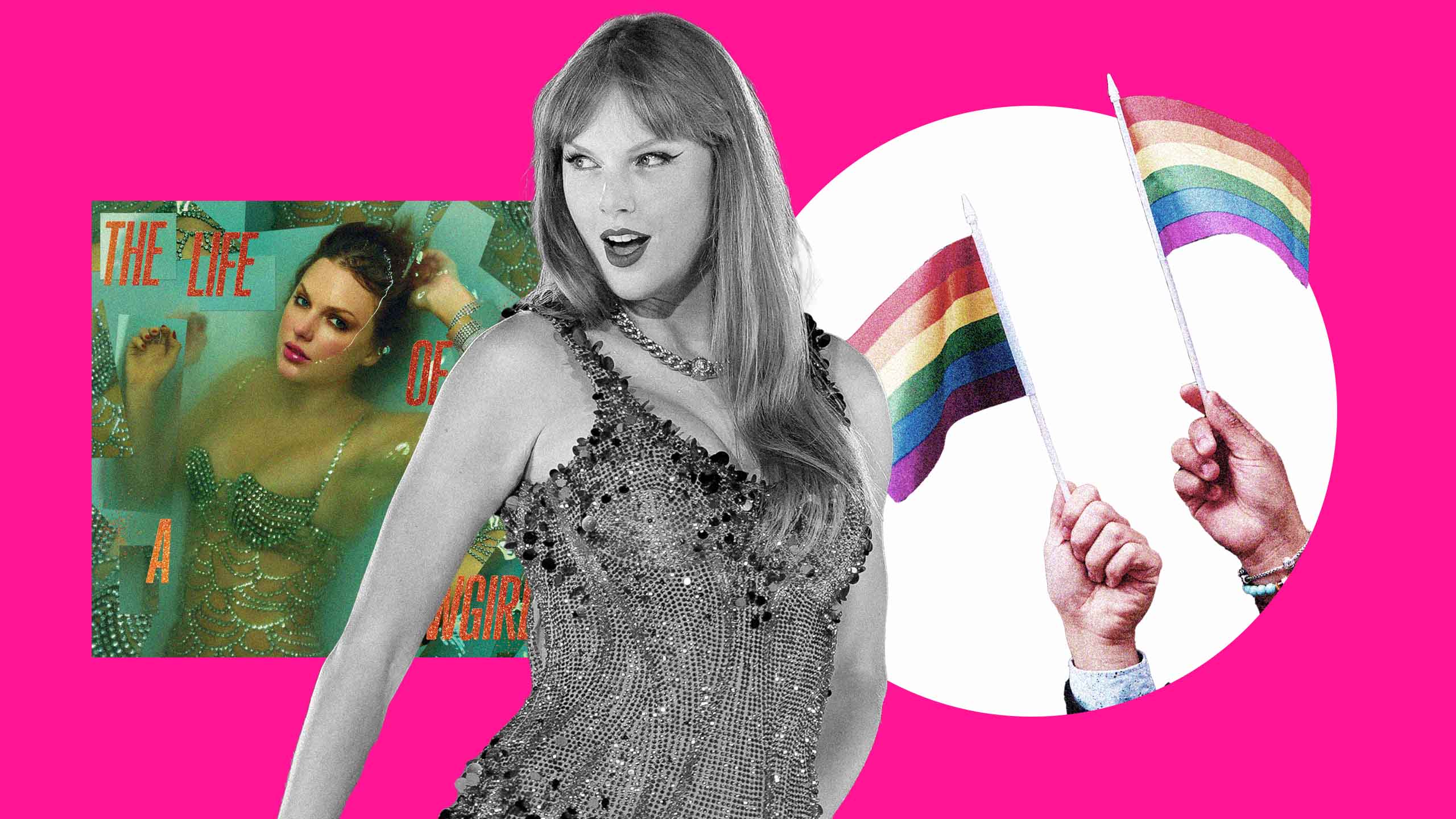
The countdown is on until the release of The Life of a Showgirl, Taylor Swift’s 12th studio album. TS12, as it’s known to Swifties, was announced Aug. 12 during Swift’s first-ever appearance on her then-boyfriend Travis Kelce’s podcast, New Heights, and is coming out on Friday. Two weeks later, Swift and Kelce announced their engagement.
Predictably, Swift’s fans had all kinds of reactions to the news of Tayvis’s engagement. Most were excited. But one segment of fans had a more complicated reaction, one that was watched with morbid glee by a large section of the internet, Swifties and non-Swifties alike: Gaylors.
Gaylors are a subset of Swifties who have created a community around a queer reading of Swift’s lyrics, with some members believing Swift herself is secretly queer. They have long been considered controversial because Swift herself has never said she isn’t straight, and people couldn’t wait to see if Gaylors would melt down. Amid cries that Gaylorism was dead came rubberneckers who parachuted into Gaylor fandom spaces to screenshot people’s posts and then share them with the wider internet. “[R]efreshing the gaylor subreddit like a do [sic]with a team when they lose a playoff game in devastating fashion,” one X user posted in a tweet that garnered tens of thousands of likes and retweets.
The Gaylor subreddit was forced to go private as outsiders mocked its members. The gleeful takedown of the Gaylor community feels like more than just a critique of a fandom culture; it feels homophobic. Mainstream media and outside observers of the community have called Gaylor truthers delusional or compared them to QAnon for buying into a belief that has never been directly supported by Swift’s own comments. The idea that an entire community of queer people can be written off as “crazy” plays into one of the oldest homophobic tropes in the book, from when homosexuality was still considered a mental illness.
To be clear, Taylor Swift being engaged to a man doesn’t mean she’s unequivocally straight; bisexual people exist, of course. And Swift has never publicly indicated that she is queer. But to assume that Gaylorism is strictly about a belief that Swift is gay is to misunderstand the community completely. Gaylorism is a spectrum and there are absolutely people at one end who engage in conspiracy-level analysis of Swift’s public image. But at the other end of the spectrum are people who are doing something that is no different than most English majors learn to do—a critical queer reading of Swift’s lyrics and persona. Even Harvard University’s class on Swift included queer readings of her songs.
The way the Gaylor community has been harassed and mocked by Swifties and non-Swifties alike in the aftermath of her engagement is ugly. It feels like, even within the queer community itself, people are taking pleasure in proving a group of queer people wrong about something that has given them meaning and helped them feel seen. LGBTQ2S+ folks are at heightened risk of harassment in general, including online. The Gaylor community is included in that; one study by the social media firm Graphika showed that the Gaylor subculture is the most harassed and doxxed among any other subset of the Swiftie fan base. Critiques of Gaylors also seem to forget about the power dynamics at play; Swift is the most successful pop musician in the world. She employs a team of people to manage her brand, and she is a billionaire. Meanwhile, the people who participate in Gaylor spaces are often young queer people looking for somewhere to belong.
In the summer of 2023, I went to a weekend-long retreat for Gaylors, where I spent several days immersed in their world. What I took away from that time was that, while there are segments of the Gaylor community that are toxic and extreme (that’s true of virtually any community), the majority of these people felt drawn to these spaces because they were places where they could find a community of like-minded and supportive folks in their own corners of the internet.
Even if that’s true, where do Gaylors go from here as we enter Swift’s Life of a Showgirl era? While there are some who will continue to speculate on whether Swift and Kelce are entering into a lavender marriage, the majority will likely continue to do what they’ve always done—deep-dive analysis of Swift’s lyrics, looking for queer symbolism and meaning in her work, finding ways to connect to the material that feels true to their own emotional experiences.
The hallmark of good art is that people can relate to it across identity, experience and genre. That queer people can see their own journeys in Swift’s lyrics—which are full of longing, forbidden love and feeling like an outsider—speaks to her skill as a storyteller and songwriter whose work can bridge cultural divides. There is room for everyone in Swift’s fandom, and Gaylors have found a corner for themselves just like so many other Swifties have. They deserve to have those little spaces to talk amongst themselves without being mocked or put on display for the rest of the internet to ogle.
Perhaps Life of a Showgirl can usher in a new era not just for Swift but for her fans too. And that means leaving Gaylors alone to their subreddits and private Discord servers. The theories they post in their chat rooms can’t hurt Swift, who has more societal power than Gaylors could ever dream of even collectively possessing, but when members of their communities are ridiculed, it hurts the LGBTQ2S+ community as a whole.

 Why you can trust Xtra