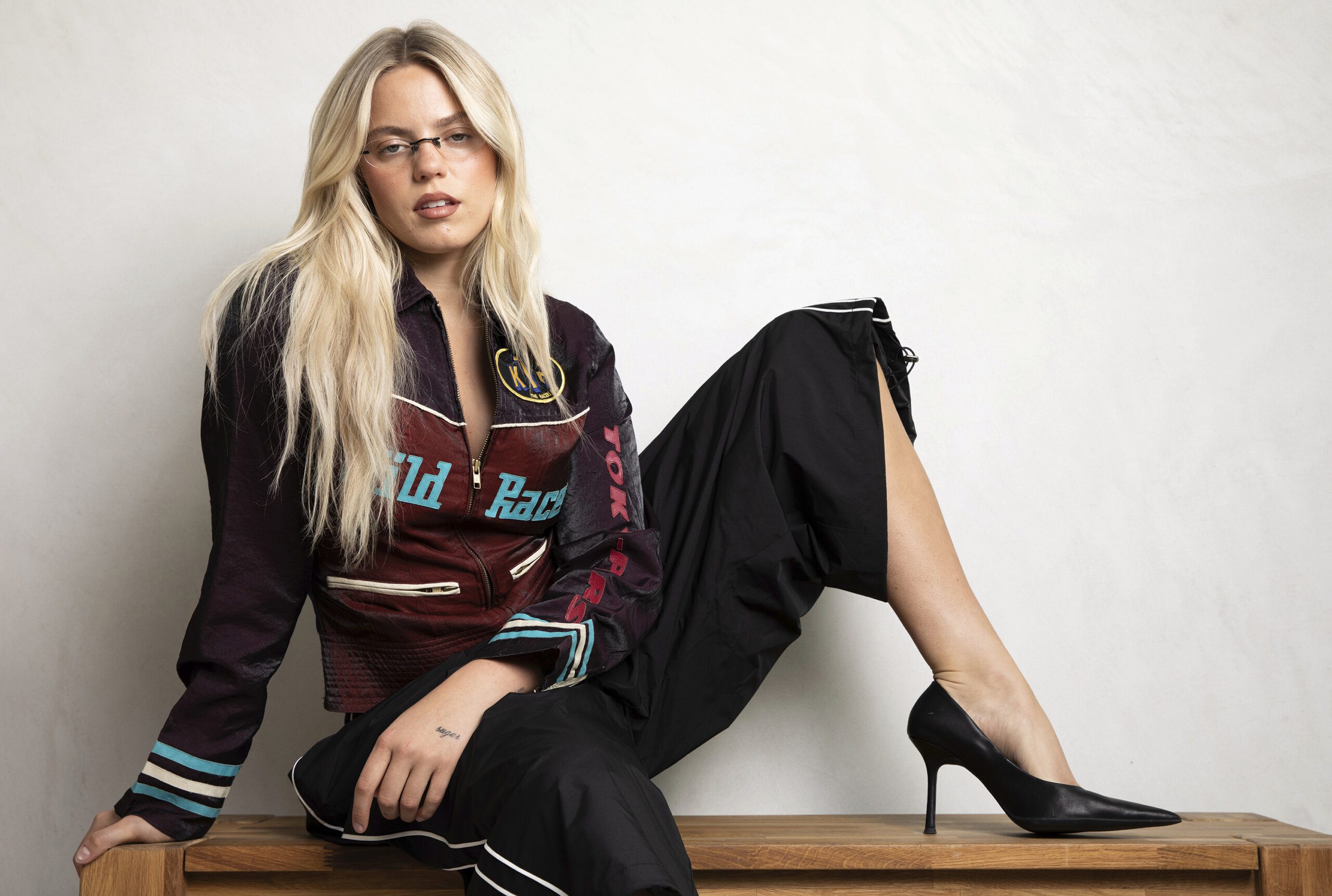
While pop sensation Reneé Rapp has incorporated cheeky humour and TMI confessionals into both her music and interviews for as long as she’s been in the spotlight, the 2024 Mean Girls press tour is where those endearing habits morphed into a distinct persona that defined Rapp as an unfiltered—some might even say “messy”—personality larger than her impressive vocals or mounting body of work. From admitting to being “ageist” against millennials to matter-of-factly stating that gay people are “cooler and better,” Rapp’s constant virality for her “unhinged” takes and shameless honesty eventually led to her coming out as a lesbian on Saturday Night Live in a bit about her infamous interview answers. Through her unmatched energy, Rapp has already solidified her place in queer pop culture. But on her sophomore album, BITE ME, Rapp strikes a chaotic balance between being a certified gay icon and an open-hearted songstress.
On her 2023 debut, Snow Angel, Rapp thrived in the vulnerability of her lyricism, all while keeping the themes strikingly universal. “Tummy Hurts,” for example, is achingly specific, but fans around the world have flocked to the song, lamenting their own evil exes. BITE ME doesn’t quite reach the same diary-bleeding emotionality as Rapp’s previous album, and she struggles to find a balance between the artist who wrote power ballad “Snow Angel” and the person who went on that infamous press tour.
The more boisterous songs on the album have a fantastical feel to them. Rapp leans hard into her flirtatious and unfiltered persona. While tracks like the catchy “At Least I’m Hot” might veer slightly too close to a Regina George B-side to read as anything but post-ironic, Rapp’s open personality is a true highlight of this record. She manages to make the wild swings between genre and attitude dynamic instead of distracting, leaving her most vulnerable tracks untouched by the satirical vapidity that colours the album’s more upbeat bangers.
BITE ME is structured to be digested in pairs, with connecting themes woven through songs that are tonally contrasting but lyrically complementary. It’s that dichotomy that allows for the exploration of Rapp’s dual artistic expression. On track three, “Why Is She Still Here?,” Rapp employs an R&B touch to confront her situationship’s frustrating connection to another woman with biting barbs and an angry undertone; on track four, “Sometimes,” she’s more emotional, pleading with her lover to choose her over another woman, backed by piano. The album’s closing one-two punch, “That’s So Funny” and “You’d Like That Wouldn’t You,” each take aim at a bitter ex, with the former emphasizing the love Rapp once held for her and the latter morphing into a rock-infused middle finger.
Rapp finds herself swinging between those two modes throughout the entire record, never quite finding a balance—but that’s the point. The same woman who put a rude bus driver on blast also wrote sincere songs like “Bruises” and “I Hate Boston,” and it’s clear that the girl who dreamed of singer-songwriter success from her Broadway beginnings also craves pop superstardom at any cost. Rapp’s two realities can both be true, cementing her as a diva fit for total queer culture domination but also an artist who isn’t afraid to be vulnerable.
The only song that really bridges the gap between the party-girl anthem and those unguarded confessionals is opener “Leave Me Alone.” The song is littered with inflammatory statements (including throwing shade at the now-cancelled The Sex Lives of College Girls, which she unceremoniously exited during Season 3) and fun digs before jumping into a chorus that finds Rapp confessing that she’s “so sick of it all.” It begs the question: What is Rapp so tired of? Is it the constant pressures of fame and pop stardom interrupting the freeing feeling of being a 20-something lesbian? Or is the effort of maintaining this open, unfiltered image taking its toll? What does it cost Reneé Rapp to be the Reneé Rapp we know her to be?
Of course, Rapp has reaped the viral benefits of her “lack of media training,” but that spotlight also opens the door for both critique and straight-up harassment. On her last tour, Rapp drew clear boundaries with fans after they continued to bring increasingly vulgar signs to each stop. Her unguarded nature allows fans to connect with her on a personal level (even through a 360,000-follower-strong “spam” Instagram account), but some have abused her open-book attitude. By maintaining that marked separation on BITE ME, Rapp allows audiences into her party before baring her heart in an authentic way.
In an era where the personality of the artist often becomes both the advertisement and the product, it’s admirable to see Rapp find an equilibrium between sacrificing her artistic merit to fit the mould she’s cultivated and completely forsaking the personality that has helped her attain her position in both the queer and wider popular cultures. While other artists struggle to escape the boxes they’ve built for themselves, Rapp embraces all the clichés, expectations and reactions. She plays into the camp of her caricaturized role and manages to make each belted dig and sassy aside exciting. And she defies any allegations of being redundant by committing just as much artistic energy and tracklist real estate to sincere and earnest confessionals about the person underneath the persona. It’s been a very strange year for queer culture and the Sapphic music scene in particular, but it’s clear from BITE ME’s two-handed success that lesbian pop is in great hands.

 Why you can trust Xtra