Is it fair to date non-binary trans femmes without knowing how I identify?

“I’m just going to go ahead and say, ‘Yes!’” Kai advises. “Go forth, with some caveats.”

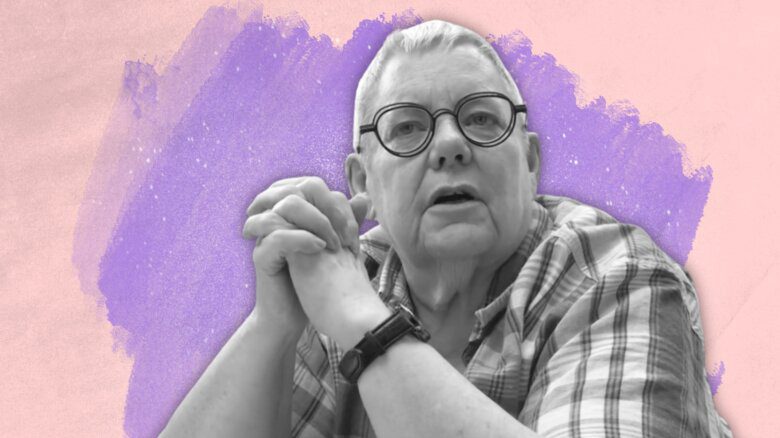
“I don’t know if it’s always possible to be firm in our identities before we start dating other people,” Kai Cheng Thom says. “If we notice that our attractions and our gender identities are falling outside of the box of prescribed heteronormativity, then I think it’s pretty fair to call oneself queer, to experiment with that label and then also to discard it if it’s not feeling right later on.”

It’s our latest in the video series Ask Kai: Quickies, offering advice on sex, dating and relationships for those of you in a hurry.


Kai Cheng Thom is a writer, performer, and social worker who divides her heart between Montreal and Toronto, unceded Indigenous territories. She is the author of the Lambda Award-nominated novel Fierce Femmes and Notorious Liars: A Dangerous Trans Girl's Confabulous Memoir (Metonymy Press), as well as the poetry collection a place called No Homeland (Arsenal Pulp Press). Her latest book, Falling Back in Love with Being Human, a collection of letters and poetry, is out now from Penguin Random House Canada.

Read More About:
Video, Video, Ask Kai: Quickies

Keep Reading

LGBTQ2S+ customers buy less from brands that roll back inclusion: Report

New research from the Human Rights Campaign Foundation found that LGBTQ2S+ consumers represent more than US $3.9 trillion globally in purchasing power
A black and white still from the gay silent film Different From The Others.

This 1919 gay rights movie was almost erased from history

“Different from the Others” is considered one of the first sympathetic portrayals of gay men on film. It was nearly destroyed
Two photos by gay photographer Duane Michals, who passed in June of 2026

Remembering Duane Michals, the legendary gay photographer

The late gay artist redefined what was possible in fine art photography

New study finds Canadian trans youth rarely detransition

A group of Canadian researchers found that 97 percent of youth who seek treatment for gender dysphoria still identify as trans years later
Advertisement