Here’s how the U.S. government is defining ‘biological sex’

ANALYSIS: A new document featuring the administration’s attempt to categorize ‘two sexes’ is needlessly convoluted and contradictory

U.S. President Donald Trump’s government continues to jump through hoops in its attempts to establish firm binary definitions of “male” and “female.” 

A new document put out this week by the Department of Health & Human Services—-now led by Robert F. Kennedy Jr.—tries to explain why, in the Trump administration’s words, there are “only two sexes.” But in seeking to define “biological sex” by a person’s “biological function to produce eggs or sperm,” the Trump administration raises a whole host of new questions and challenges that don’t hold up to established scientific evidence. 

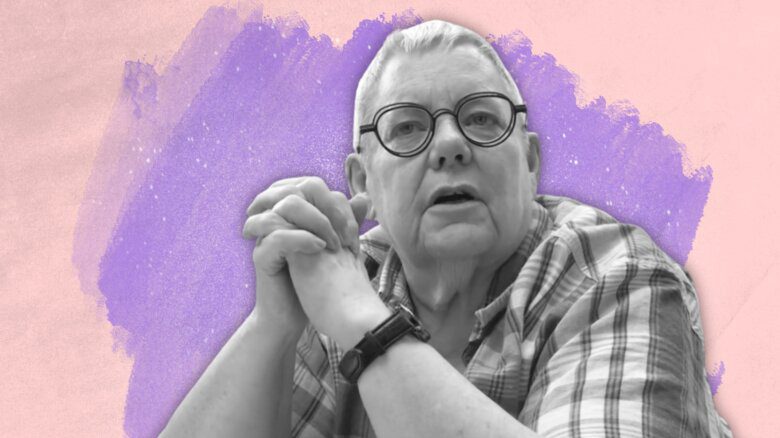
Senior editor Mel Woods breaks down how these definitions are trying to force a made-up idea of a distinct gender binary onto an actual reality that is far from that, and why trying to draw firm lines around “biological sex” can be harmful to both trans and cis people alike.


Senior editor Mel Woods is an English-speaking Vancouver-based writer, editor and audio producer and a former associate editor with HuffPost Canada. A proud prairie queer and ranch dressing expert, their work has also appeared in Vice, Slate, the Tyee, the CBC, the Globe and Mail and the Walrus.

Keep Reading

U.S. Supreme Court rules against Colorado conversion therapy ban

The landmark 8-1 decision could have sweeping repercussions on LGBTQ2S+ rights and health care regulation across America
Two photographs of trans organizer Alison Laing for Trans Day of Visibility

What trans visibility looked like in the 1950s

Photos of beloved organizer Alison Laing show how trans visibility has persisted for decades

There’s no excuse for ‘The Last of Us’ casting a cis actor to play trans

Putting the care into casting a young trans actor might be a challenge. It’s also an opportunity
A nonbinary person injects hormones with a syringe

What HRT Cafe’s shutdown means for DIY care

HRT Cafe was the largest access point for DIY transition care in the U.K. before it suddenly vanished
Advertisement