Last year was nothing short of a nightmare for the LGBTQ2S+ community, from direct attacks on trans rights, defunding healthcare and education, to the deportation of Andry Hernández Romero, the pending removal of an anonymous gay couple fleeing Iran and the start of an ICE crackdown that has resulted in the deaths of Renee Nicole Good and many more. Now it’s 2026, and midterm season is on the horizon. This midterm election, all 435 House seats are up for reelection. In the Senate, the traditional 33 seats are up, alongside two special elections to fill vacancies in Florida and Ohio.
Midterms also often serve as a temperature check on how citizens feel about a president. For queer and trans folks, the outrage is well grounded. Donald Trump’s agenda has been directly aimed at the LGBTQ2S+ community, with executive orders seeking to legally enforce binary gender, restrict trans women from playing on women’s sports teams and more. The Supreme Court, three members of which were nominated by Trump, supported his executive order enforcing the gender binary on passports and upheld Tennessee’s state ban on gender-affirming surgeries for trans youth.
In the Senate, Trump allies like Lindsey Graham will run for re-election. Graham is also notorious for anti-LGBTQ2S+ votes, rhetoric and policy while also battling allegations from male escorts that he hires their services, earning the nickname “Lady G.” Incumbents running with queer and transphobic stances include Nathaniel Moran (Texas, District 1), Michael Guest (Mississippi, District 3) and Eric Burlison (Missouri, District 6). Other queer and transphobic senators, like Mitch McConnell, will not seek re-election.
“Elections determine whether LGBTQIA+-related policies are treated as necessary or optional”
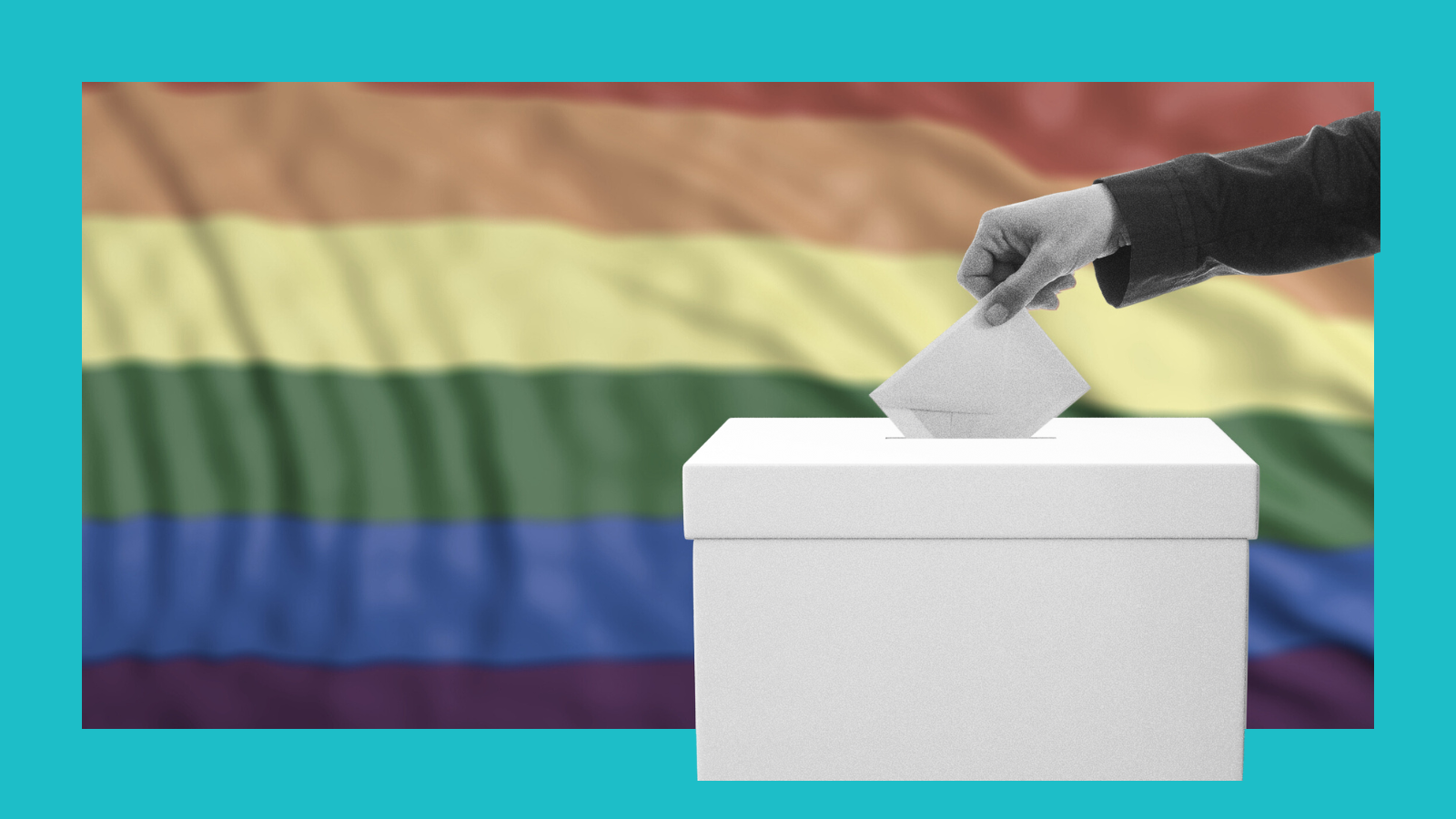
After being bashed by all three branches of government for decades, queer and trans Americans across the country are getting ready to take their protest to the polls and, hopefully, make any of the remaining queer and transphobic Congressional leaders sashay away. State-level elections will also play a crucial role in shaping LGBTQ2S+ rights come November. One might think that in Democrat-controlled or “blue” states many are safe from far-right federal laws because of the constitutional affirmation of states’ rights. States like Illinois, Colorado and New York have declared themselves “trans safe havens,” where access to gender-affirming care is safeguarded for trans people, including trans youth. However, this doesn’t entirely protect them from the wrath of officials in Republican-controlled “red” states, who have sued blue state doctors for providing abortion pills, or raids from Immigration Customs Enforcement (ICE).
“National attacks on transgender people have increased pressure on state systems, exposing gaps in care, hobbled enforcement of existing protections and political hesitation,” says Kei Williams, executive director at the New Pride Agenda (NPA), which advocates for queer and trans rights across New York state. Williams pointed out how federal policies and theatrics have drained New York state of resources, including $65 million in state funds to cover food assistance during the latest government shutdown. “Particularly when it comes to respecting the rights of trans youth, incarcerated people and those in rural or low-income communities.”
Showing up for downballot races also gives voters the power to determine the leaders, policies and budgets that will continue to improve conditions for queer and trans folks. For New Yorkers, state-level races for power will include House representatives, governor, attorney general and comptroller. With the help of supportive elected officials, the NPA has successfully fought for pro-LGBTQ2S+ policies like the Lorena Borjas Transgender and Non-Binary Wellness and Equity Fund. Williams hopes that those elected in 2026 will increase dollars to the fund and endorse other bills like the New York Health Act, which would provide universal healthcare to every New Yorker, and introduce other legislation that would bolster the Dignity for All Students Act to include migrant status. Such support would protect queer and trans residents through healthcare and anti-bullying policies. “Elections determine whether LGBTQIA+-related policies are treated as necessary or optional,” adds Elmer Flores, statewide policy and advocacy manager at NPA. “Our communities are taking note of the decisions leaders make.”
On a national level, one of the biggest challenges is ensuring that LGBTQ2S+ people have access to voting. “LGBTQ2S+ people call every state home, and that’s especially true among Gen Z residents in all 50 states,” says Isaac James, co-founder and executive director of OutVote, which focuses on electoral empowerment for Gen Z queer and trans people. In 2025, OutVote reported using social media and in-person events to fulfill their mission. Using nightlife, Pride and over 207 in-person events, the organization has reached 1.5 million youth voters.
In August, Trump threatened on social media to cancel mail-in ballots by executive order. Such a move will likely face several legal challenges, as 30 percent of U.S. citizens vote by mail, including many rural and disabled people. This would also impact queer and trans voters who fled their home state due to inhumane policies and plan to vote by mail. James and others, undaunted by the president’s threats, plan to remain focused on voter education and to keep the electoral process accessible to all. “Elections are won on the margins,” he says. “Gen Z LGBTQ2S+ voters are difference-makers. We’re focused on ensuring every Gen Z LGBTQ2S+ voter has the information they need to vote in their community.”
@xtramagazine Trans Americans are choosing to move to different, more inclusive, states in response to rising anti-LGBTQ2S+ legislation across the country. That’s according to a new study from the Movement Advancement Project (MAP) and NORC at the University of Chicago, which aims to illustrate how queer and trans people are altering their daily lives in the current political environment in the U.S. Made up of responses from over 1,000 LGBTQ2S+ adults in the U.S., the study found that 57 percent of LGBTQ2S+ respondents—including 84 percent of trans and non-binary people—have either considered moving to a different state, changed jobs or took steps to be less visible in response to anti-LGBTQ2S+ legislation. According to MAP, 24 percent of trans people said they have gone to another state to get medical care since Trump was elected (compared to 8 percent of all LGBTQ2S+ people surveyed), while 9 percent said they moved to a different state entirely due to the political climate. This shift aligns with several anti-trans policies that have taken shape since Trump’s second inauguration—from bathroom bans, to attacks on gender-affirming care and an increased targeting of trans people in many U.S. states—which has prompted some to consider leaving the U.S. entirely. #lgbtqnews #queernews #trans #politicalnews #lgbtq ♬ original sound – Xtra Magazine
Even if they retake Congress on Nov. 3, many queer activists and voters remain skeptical of Democrats, given their patchy record on LGBTQ2S+ rights—and trans rights in particular. California governor Gavin Newsom said it was “unfair” for trans youth to participate in sports with cis girls. Pete Buttigieg, a popular vice-presidential prospect for Kamala Harris’s 2024 campaign, referred to their inclusion as a “fairness issue.” In 2016, trans and immigrant rights activist Jennicet Gutiérrez confronted President Obama regarding ICE’s mistreatment of trans people, which has included forcing them into solitary confinement and allowing several to die. The president responded by calling her a heckler. In 2020, then Senator Kamala Harris co-sponsored the Allow States and Victims to Fight Online Sex Trafficking and Stop Enabling Sex Traffickers Act (FOSTA-SESTA), which Donald Trump signed into law. The act severely reduced safe avenues for sex workers to engage in business by shutting down web pages like Backpage. “Neither the Democratic nor Republican parties have shown sex workers respect, with the exception of a few individual outliers,” says Savannah Sly, co-director at New Moon Network, a Michigan-based intermediary fund supporting sex worker- and survivor-led organizations.
Despite hostilities from both parties, New Moon Network is still encouraging people to vote by working with local leaders in the sex-work community, much of which, Sly pointed out, is queer and trans. The organization is using its Spokes Hub leadership academy to educate sex workers on rising threats to their rights and how to mobilize. They’ve also launched a new pilot program, Erotic Professionals and Allies (EPA) United, to collaborate with adult entertainers and to educate their fans on the electoral process. “Regardless of what happens during the midterms, sex workers will be and have been, this entire time, on the front lines of various movements for justice in the U.S.,” says Sly. “Our hope is that the roles that sex workers have played in resistance, community safety and advocacy will be remembered when the time comes to acknowledge our humanity. And if that doesn’t happen, we’ll be ready to fight for our humanity, as we always do.”
Primaries begin March 3 in Arkansas, North Carolina and Texas—all states where anti-trans legislation has proliferated in recent years. Regardless of political leanings, LGBTQ2S+ election organizers encourage voters to find out which candidate supports what and clap back during primaries and Election Day on Nov. 3, 2026. “Together, these kinds of efforts ensure that our community is invigorated to participate,” says Williams “In the electoral process, in policy advocacy, in equity alignment in order to build the power necessary to protect, respect and advance LGBTQIA+ rights.”

 Why you can trust Xtra