When I started regularly interviewing trans people early in my career, I often asked what “trans joy” looked like to them. I’m a journalist who covers LGBTQ2S+ news and culture, and my work often involves translating the experiences of others into stories. The answers I got from authors, celebrities and everyday people ranged from the tangible—a movie they recently loved, a good cup of coffee—to the more abstract, like the freedom to live how they wanted, to exist without question or the glow that came from seeing someone who looked like them in the public eye.
More recently, my perspective on trans joy has shifted. Joy isn’t enough for trans people to survive, let alone thrive. In an interview for Them last year, writer and historian Jules Gill-Peterson argued against a saccharine fixation on euphoria. “We don’t need any more disgusting ‘trans joy,’” Gill-Peterson said. “Let’s just get rid of all that and spend our time delivering real things that matter to people, things like hormones and sex changes and surgeries.”
Gill-Peterson certainly has a point: joy can get trans people only so far when governments, like Danielle Smith’s in Alberta or Donald Trump’s south of the border, are banning the treatments we need to survive or (as is happening in Kansas) stripping people of basic ID.
But even this anti-joy stance seems simplistic. As the political climates of different provinces and cities continue to diverge from one another, it’s become apparent that thriving as a trans person is dependent on your physical location. In Canada alone, there were over 100,000 people who self-identified as trans or non-binary in the 2021 census. Some are having their rights rolled back, while tens of thousands are experiencing joy. For every high-profile story of a hate crime against the community, there are thousands of trans people living in safety. For every story of a trans person being denied service or support, thousands of trans people are affirmed by their barbers or doctors or teachers or families. Simply put: there are trans people across the country embodying the idea that being trans doesn’t have to be hard. I would know. I’m one of them.
I came out and transitioned in arguably the best place and time. It was the summer of 2021, and I was part of a sizable generation of young people who found ourselves and our trans identities in the isolation of the COVID-19 pandemic. That year, I finally understood the unrest I’d been grappling with: the desire for increasingly tight sports bras to compact my DD chest and the curious fantasy about what it would be like to have a beard.
I found being trans surprisingly easy. Not only do I live in Canada, which is comparatively an international leader in terms of LGBTQ2S+ rights—from marriage equality to healthcare access—but I also live in Vancouver, one of the most liberal cities, under what has largely been a progressive provincial government.
Even at the immediate personal level, I’ve encountered overwhelming acceptance. For the first five years of my transition, I wasn’t the only openly trans person at my former workplace, an LGBTQ2S+ magazine. My wife’s health insurance covers my weekly testosterone-based hormone replacement therapy (HRT). Other care I’ve needed has also been covered under her plan (she works for an insurance company). Switching the gender marker on my passport and provincial ID was smooth sailing—I only had to fill out one additional form. My therapist, who helped me navigate the early days of coming out to family and friends and who still supports my mental health with monthly appointments, is a trans woman. My massage therapist, whom I see every few months and who is frequented by several of my other trans friends, specializes in post-top-surgery care. Two of my best friends, who also happen to be trans, live across the street from me. When I started T, one of them even helped me get equipment from our local publicly funded needle exchange, which offers free injection supplies to drug users, trans people and anyone else who needs them.
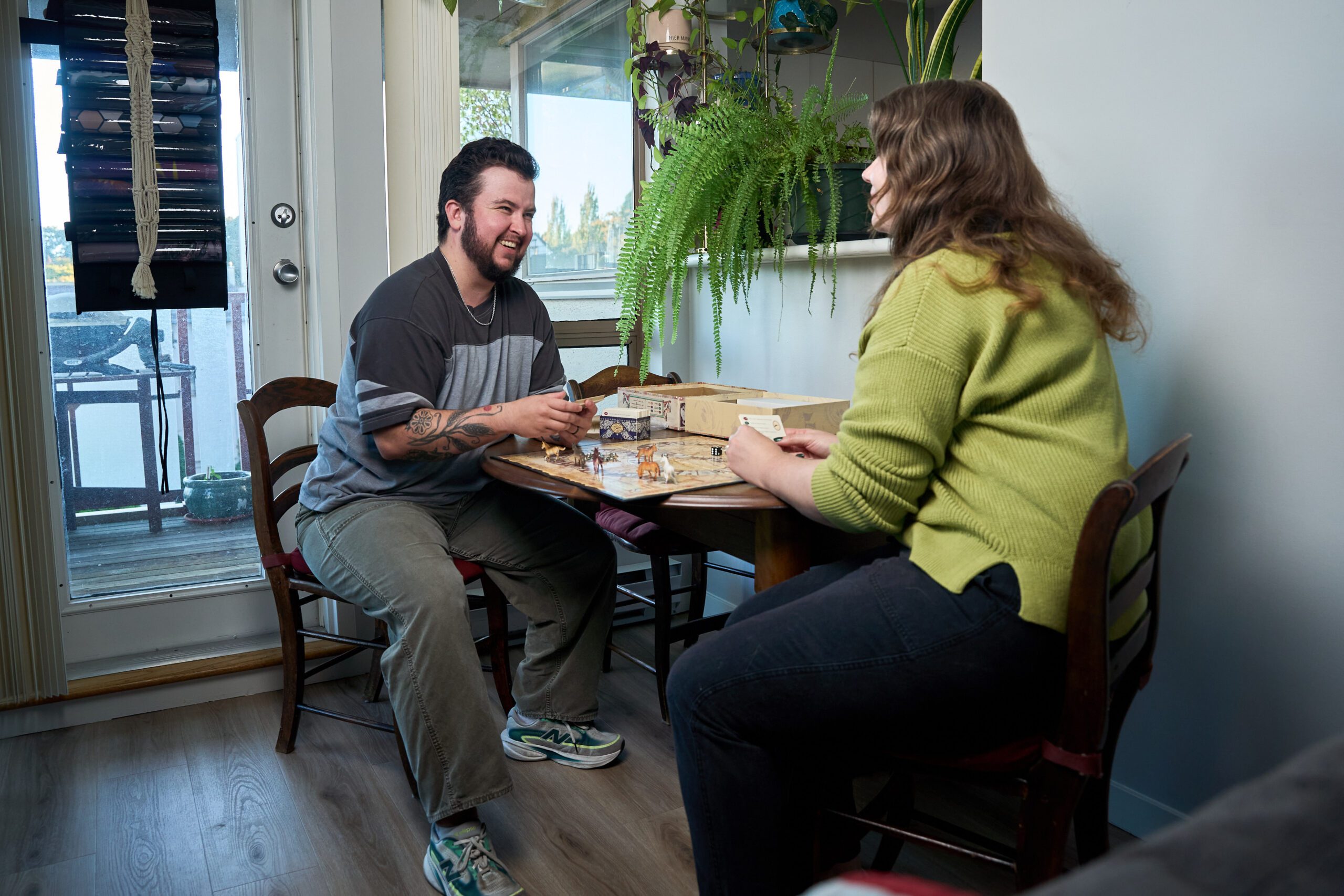
Woods and their wife play the board game Cowgirls Ride the Trail of Truth in their home. Credit: Kayla Isomura
But the most influential positive impact on my transition was from accessing medical care. When I decided to pursue hormones and surgery, I didn’t have a family doctor in Vancouver. That’s when I came across Trans Care BC. No other province has a service quite like it. Launched in 2015, the program’s website is an encyclopedia of information on the fine details of gender-affirming care, ranging from practical guides on how to do a subcutaneous injection to first-hand testimonials from patients. But the program’s main draw is its unique team of health navigators, who help trans people find care across the medical system.
After I filled out a short online form, navigators connected me to the Trans Specialty Care Program at Three Bridges Community Health Centre in Vancouver. The clinic assists with starting and stabilizing HRT prescriptions, surgical referrals, pre- and post-operative care, and even identity document changes for trans people over the age of 15. In my case, a brief phone call led to a virtual assessment with a nurse. Soon I met with a doctor in person at the clinic. I was approved to start testosterone and issued my first prescription.
What stuck out most about the process was its ease of affirmation. At the time, I wasn’t fully committed to being on T for the rest of my life. I wanted to see how it felt in my body. Like all medication, gender-affirming HRT is not an immediate switch flip. While some changes are irreversible if you go off HRT—once you’re bald, you’re probably bald for the long run, outside of an expensive trip to a Turkish hair transplant clinic—others occur slowly over months and years.
Less than eight months after I decided to pursue gender-affirming care, I’d checked all the boxes, and it had come at a cost of basically zero dollars to me.
Many regions around the world have historically required that a person “live” as their chosen gender socially for a set period of time before HRT is prescribed to them, but I encountered no need for prior social transition in my own process. After picking up my first vial of testosterone in September 2021 at my local Shoppers Drug Mart, I learned how to do my first subcutaneous injection with a nurse over Zoom. At the same time, I entered a queue, through the province’s Patient Attachment Initiative, to be matched with a local family doctor who could monitor my care going forward.
I was also able to book a masculinizing double mastectomy—top surgery—through the clinic. I picked a well-reviewed surgeon who had a relatively short wait-list, met with him in November 2021, and got a procedure date for January 2022. I woke up early the morning of and walked the twenty minutes from my apartment to the surgical clinic. I was nervous when I arrived, but the anxiety evaporated when I saw four other people almost alarmingly similar to me in appearance (a lot of short masculine people with tattoos, wearing jean jackets) in the waiting room. I wasn’t the only one having their life changed that day. Less than eight months after I decided to pursue gender-affirming care, I’d checked all the boxes, and it had come at a cost of basically zero dollars to me.
This type of access is life-saving. A 2021 peer-reviewed study by The Trevor Project, an LGBTQ2S+ suicide-prevention charity, published in the Journal of Adolescent Health, found that gender-affirming hormone therapy is significantly related to lower rates of depression, suicidal thoughts and suicide attempts among trans and non-binary people aged 13 to 24. A 2021 systematic review of 53 studies found that quality of life and happiness increased among trans adults following gender-affirming surgery, while a 2024 review of 29 studies on hormones, surgery and psychotherapy interventions for dysphoria found increased improvement to trans people’s mental health across the board. For me, finding gender-affirming care was not all that different from having a dermatologist look at a weird mole or getting referred to a physiotherapist—and that’s how it should be.
My experience could have been vastly different in other parts of the country. I grew up in the tiny community of Springbrook, Alberta, just outside of Red Deer. (I moved to British Columbia for graduate school in 2017 and had already lived in Vancouver for nearly four years before I started pursuing medical transition.) When I was in high school in the early 2010s, there was only one openly queer teacher and no trans people. And while many—a surprising many!—of my classmates have since come out and transitioned, the province wasn’t necessarily a national leader on trans rights, even pre-Danielle Smith. (To be clear, though, Smith’s government has completely rolled back gender-affirming treatments like hormones and puberty blockers for trans people under 18, while also regulating trans girls’ participation in sports and pronoun changes in schools. The province’s increased healthcare privatization will not help things either.)
I spoke to several trans adults while reporting this story to show how varied our experiences can be even in the same country. Louise Larrew is one of them. A graduate student in Vancouver studying trans geography, she moved to B.C. from south of the border. Nearly half of trans Americans have contemplated moving to access better care, according to a study published last year by the Williams Institute at the University of California, Los Angeles, School of Law. Larrew specifically chose Vancouver to work with her supervisor at her university. When she moved to the city from Laramie, Wyoming, she was able to get a hormone prescription at a much lower cost than what she had been paying in the United States. She was also able to start the process of considering surgery—something that had seemed out of the realm of possibility in Wyoming, where gender-affirming care is incredibly limited.
Then there’s Miles Daigle, who told me about the exceptional programs available in the Yukon. When I spoke to them over video call in the spring, they were days away from flying to Toronto from Whitehorse to get top surgery. Daigle, an intern architect and volunteer firefighter at the time, travelled with a friend who served as caregiver in the days following the operation. Thanks to the Yukon’s out-of-territory travel policy, patients and, if needed, their care companions, are covered for flights and given daily stipends for medically necessary procedures.
“They let me pick the surgery date,” Daigle says. “And it’s been pretty good working with medical travel to get my flights booked, and my medical escort’s flights to go down there. So, the flights are covered. The whole surgery is covered.”
A host of other procedures accessed by trans people across the spectrum are also paid for in the Yukon, including lower surgery, body contouring and facial feminization surgery (in Canada, the latter is covered only in the territory and Prince Edward Island). The policy also funds several non-surgical treatments under its medicare program, including voice training, hair removal and mannerism coaching.
This full coverage can be the difference between someone pursuing gender-affirming care or not. Facial feminization surgery can run up a bill of $30,000 to $50,000, and electrolysis—a form of medical hair removal often required before certain gender-affirming surgeries—can cost upward of $150 an hour. Even in regions where lower surgery, like phalloplasty or vaginoplasty, is covered by a provincial health plan, it may first require hours of electrolysis that is not paid for by provincial health insurance. One 2022 study found that the average vaginoplasty patient who undergoes electrolysis spends an additional $5,000 (U.S.) on hair removal alone.
According to a 2024 report from the Community-Based Research Centre, a non-profit institute focused on LGBTQ2S+ health, the Yukon has had the most comprehensive gender-affirming care system in Canada since unveiling a slate of new policies in 2021. The government worked with leading trans health experts to develop this approach after multiple medical professionals advocated on behalf of their patients.
“Just the fact that she went out on a limb for me, even though she was a new employee at this clinic, meant a lot to me.”
There were also the uneven experiences. Sam Cherry, an Ottawa-based post-secondary student, says she did encounter immediate barriers when it came to starting HRT in her twenties. After getting a referral from her psychiatrist to start gender-affirming hormones, Cherry says, one of her first interactions at an Ottawa clinic was with a nurse who tried to dissuade her from starting HRT at all.
The clinic “put me on a wait-list because they were in the process of hiring an endocrinologist to do trans healthcare,” Cherry says. “At one point, they decided to invite me back to tell me that they had too much demand, so they were pausing the wait-list … and when the nurse was telling me this, she said, ‘Even if we could give you this care, you wouldn’t want any of it because it wouldn’t do what you actually think it will.’”
Cherry says that when the specialized endocrinologist was eventually hired at the clinic, her experience immediately improved. “She was incredible,” she says. At their first appointment, the doctor asked about that initial interaction, and Cherry told her about the “shitty nurse.”
“She was really upset that that had happened,” Cherry says. “She talked to the clinic about it, and just the fact that she went out on a limb for me, even though she was a new employee at this clinic, meant a lot to me.”
Like with any interaction with the medical system, there are going to be outliers. There is a legitimate problem with institutional fatphobia and racism that is not exclusive to gender-affirming care. Larger patients often have to wait longer for the fewer surgeons who will operate on them—many insist on maximum body mass index thresholds—or pay out of pocket for extra liposuction. Wait times have reportedly gone up in the years since my surgery: health navigation requests to Trans Care BC have increased year over year, with the initial period of the program in the mid-2010s setting around 500 annual requests, while more than 4,300 were logged in 2024. Community members, like those in a Facebook group I frequent, dedicated to transmasculine people in the Lower Mainland, regularly commiserate about long wait-lists for surgeons. This is unfortunately an issue across the medical system and not just limited to gender-affirming care.
And even as access improves, the question of experience remains. Depending on where they live, patients without a family doctor would have to first find a clinician willing to prescribe HRT—and there’s no guarantee that clinician would have prior experience with gender-affirming care, particularly for patients outside of major cities. In some cases, that person may be the first trans patient they’ve ever worked with.
It’s easy to hear some of this and fall into the belief that to be trans is to constantly face challenges. But a common theme that emerged from talking to every person I interviewed was an intense desire to share the smoother parts of their experience with the world, to show that there are ways to be trans that aren’t filled with trauma and difficulty. And this sharing isn’t simply about the “disgusting” trans joy that Gill-Peterson references but about the real factors that made transitioning and being trans a positive experience.
Sofie Lasiuk is a thirty-six-year veteran of the Toronto Fire Services in her late 50s, and she came out publicly as a trans woman in 2017. Thanks to Ontario’s public healthcare coverage and a supportive family doctor, she was able to access all of the medical care she desired within a few years of seeking it out, alongside changing her legal name and gender marker. And while she and her wife initially braced for early retirement if her workplace coming out turned sour, she was surprised to receive near-universal support at work. “My superiors bent over backward to make sure that everything went right, and anything I needed, they wanted to get it right, each and every one of them,” she told me.
Lasiuk thinks it’s important to talk about positive experiences like hers, particularly in a supposedly hypermasculine environment like the fire service. “You go online, or you go on Bluesky, or you go on Threads … and everything’s negative,” Lasiuk says. “We have a lot of young people who are desperate for positive role models and for some sign that they can actually do what they need to do without ending their hopes and dreams.”
Seeing good experiences of transition has been important to me too. I didn’t have a light-bulb moment as a child. My first real understanding of transness as something within myself came from online spaces like Tumblr and YouTube. I would spend hours every week watching YouTubers like Jamie Raines document physical changes from taking testosterone, or scrolling through photo sets of top-surgery scars on Tumblr—first because I found them fascinating, then realizing the reason I found them fascinating was because of a desire I had for myself.
For me, these videos and images became a sort of “possibility model,” a term coined by Laverne Cox in the 2010s. They showed me that the answer to being uncomfortable with my body or my identity wasn’t simply continuing in misery—there was a way out.
The last puzzle piece was Elliot Page coming out as trans in December 2020. I’ll never forget waking up early for work while staying over at my then girlfriend’s apartment, cracking open my laptop, and seeing his post on Instagram. Page’s declaration was almost permission for me too. I bought my first chest binders not long after.
Yes, medical transition is an important part of many trans people’s lives, but every person I spoke to for this story cited their personal networks and exposure to other trans people as a key factor that supported not only their social and medical transitions but their continued existence as trans people too. Romeo Reyes, a 43-year-old tattoo artist who lives in Richmond, B.C., told me he’d dreamed of being a man from an early age. “Even learning to play the guitar and learning music, I would fantasize that if I were a guy, I would serenade all the ladies when I grew up.” But his final push to transition came from encountering several other trans people in his real life, including a close friend and an acquaintance in an acting class.
Daigle started their social and medical transition after moving to the Yukon from Ontario for work, so the territory’s affirming policies didn’t directly influence their decision to go north. But they say the ease of access and the broad trans community they found in Whitehorse factored heavily into their long-term plans to stay. They’ve encountered plenty of support in the small city, including when they visit job sites through their work as an architect or even just go to the gym. That includes older trans people who have served as possible models for Daigle to imagine what their life could be like 10, 20 or 30 years down the line.
“It’s so fascinating because I feel like the Yukon is the gayest place I’ve been,” they say. “I feel like I’ve met so many queer and trans people, and I’m like, ‘There’s only 30,000 [people in Whitehorse]. How are there so many trans people?’”
While trans visibility is a topic nearly as fraught as trans joy, there’s no denying that possibility models still matter in a world that supports trans people. Trans people, our allies and stories like this one can often whip out those statistics about how access to healthcare or specific services dramatically lowers suicide rates, but it’s a lot harder for a research study to fully capture just how groundbreaking seeing or interacting with happy, living, thriving trans people is in creating more happy, living, thriving trans people.
There is this Lady Gaga “Born This Way”-esque concept ascribed to queerness and transness—the argument that being gay or trans or whatever is unchangeably hard-coded into our DNA. It’s a helpful argument when advocating for trans kids’ rights to be themselves and against regressive notions like the debunked “social contagion theory” or conversion therapy. There are plenty of trans kids who know they are different before they even have the words, and history is full of examples of queer and trans people who lived in transness even when it didn’t have the dictionary definition it does today.
But the rhetoric of transness being hard-coded into us individually is overly simplistic, because it misses the powerful influence that ease of access to care and visible support networks can have on a person’s decision to outwardly transition in the first place. The representation that happens in popular media—think Page or Cox—certainly has value, but so does seeing other trans people living lives like our own, without the need for vast piles of money or special access to make that happen. That nearly tenfold leap in inquiries to Trans Care BC over the past decade—from 500 to 4,300—isn’t because trans people who weren’t there before suddenly popped into existence across the province. It’s because of the increased accessibility of services, awareness of resources and the visibility of possibility.
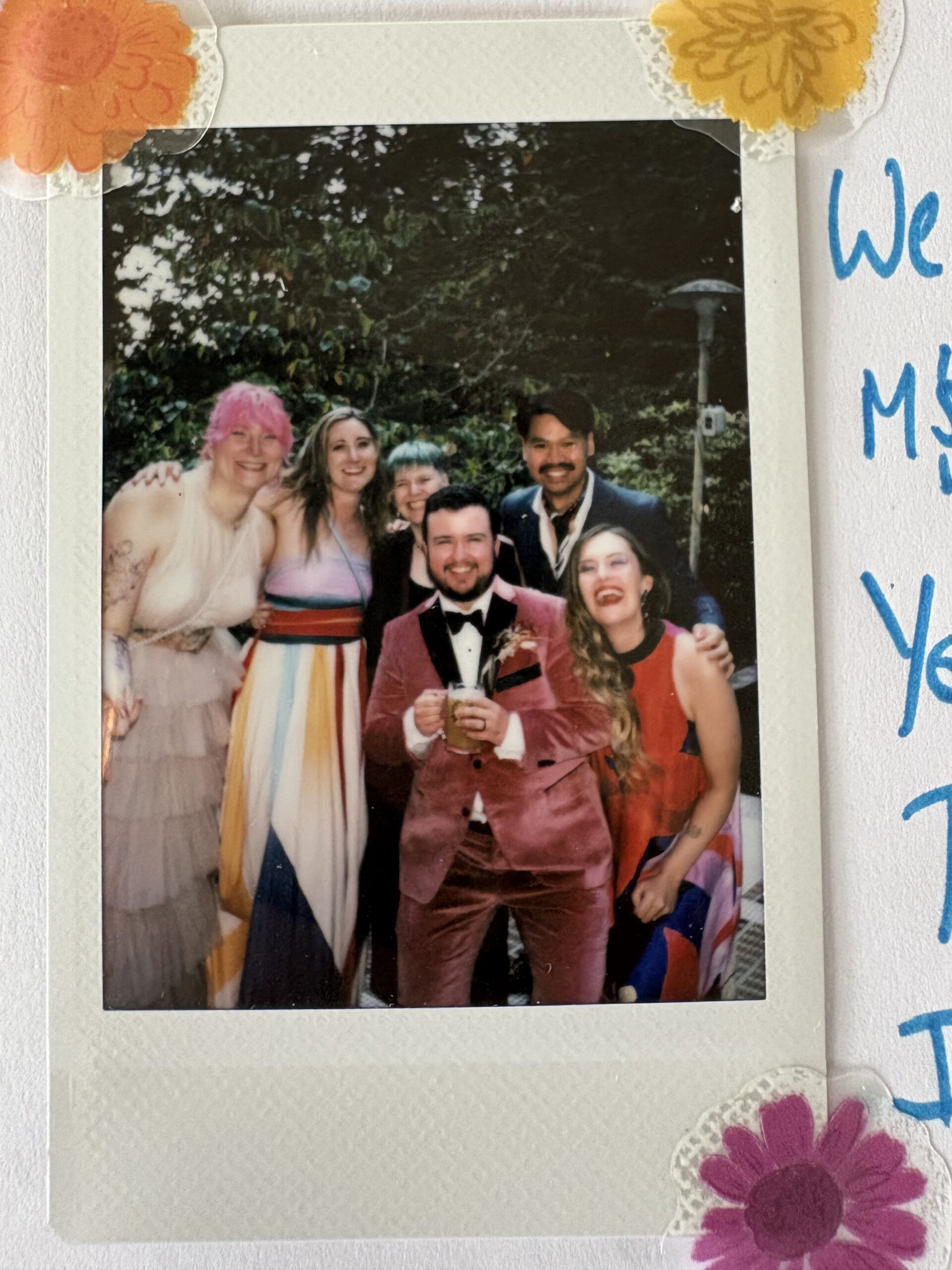
Woods celebrating their wedding with a group of friends in August. Credit: Courtesy of Mel Woods
Many trans people actually are made. Many of us wouldn’t be out as trans if we didn’t meet the right fellow trans person who showed us how transition could make our lives better, or if we didn’t learn about a service like Trans Care BC. At the most basic level, we are even able to call ourselves trans only because we know what transness is. And how do we know what a trans person is? Through the very books anti-trans bad actors are trying to ban and the voices they are trying to silence. Through the celebrities or neighbours who live the lives we see for ourselves. Transness is an action as much as it is an identity, and our ability to act on it is aided by an awareness of the world around us.
Lasiuk, the veteran firefighter, says that while she initially came out as trans privately in 2003 and publicly over a decade later, she knew she was a woman from an early age. Growing up in the 1970s and ’80s, she latched on to the few public examples of successful trans women she could find.
“There were probably three books [about trans people] in the entire library, and I knew exactly where they were,” she says. “I memorized the Dewey Decimal System so I wouldn’t have to look them up in case someone had seen me looking them up, and I read those over and over and over again—of people that had been successful.” She points to books by Jan Morris, a Welsh historian who transitioned in the ’70s.
“I remember how desperate I was to meet somebody that would be a positive influence in my life, and that wasn’t to be found. I don’t want other people to go through that if they don’t have to.”
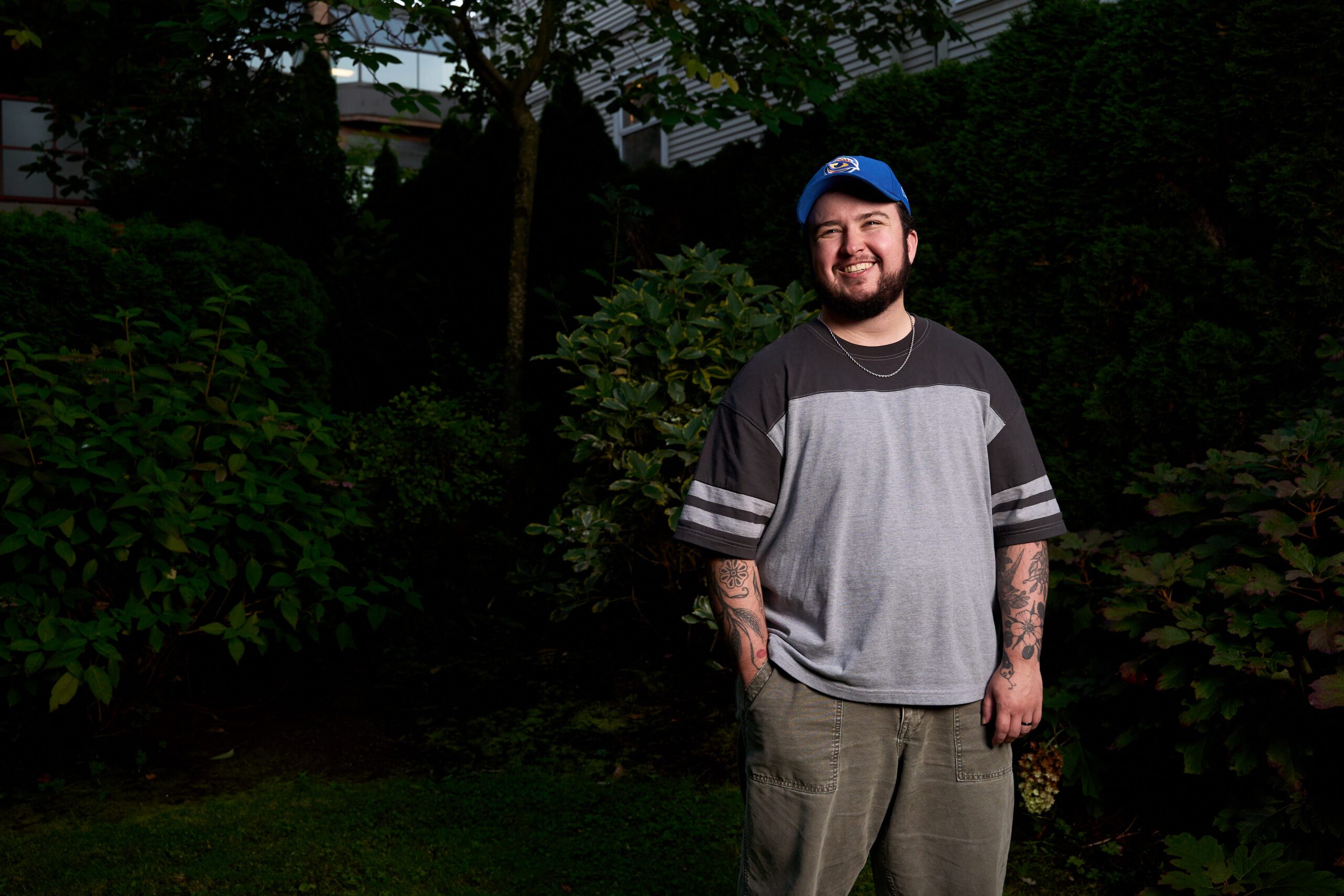
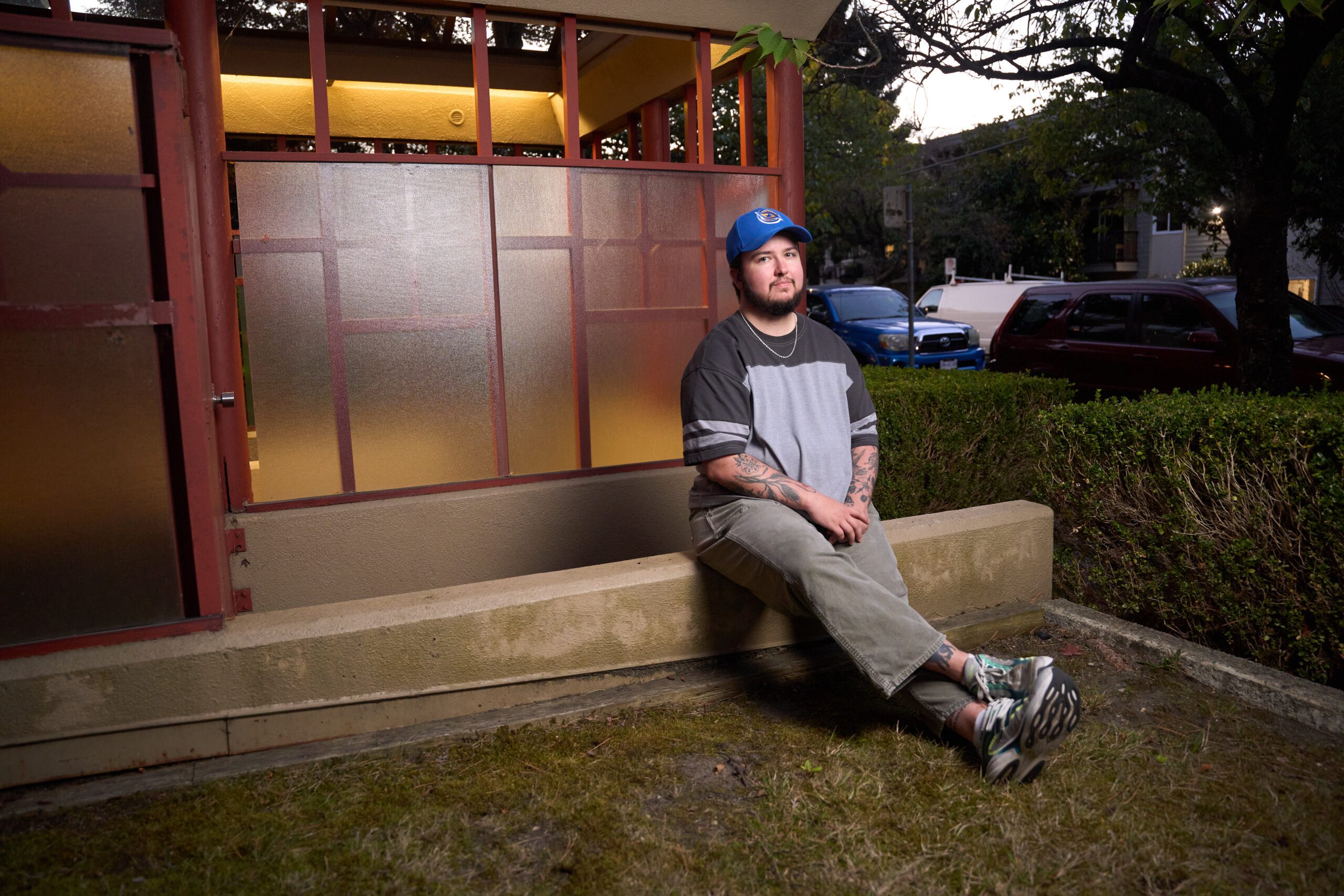
Woods stands outside of their apartment complex in South Granville, Vancouver. Credit: Kayla Isomura
There is a strange dissonance and privilege I grapple with in doing the work that I do as a journalist—being enmeshed in the idea that to be trans is to struggle while not feeling that struggle myself. I often think about a world where I didn’t have it this easy and didn’t have those kinds of influences around me. Would I have still done it? Would I have made the emotionally difficult decision to come out and seek care if I knew that I would have to fight tooth and nail for every inch of my life, or spend my savings getting the healthcare I needed? Would I have understood myself to be trans if I only saw a world where that would make everything harder?
I’m acutely aware of how fast things can change. In October, B.C. elected its first Conservative majority government in nearly a century, and many MLA candidates spoke out against the kinds of programs and support that have helped people like me. There’s no guarantee that the world I transitioned in will be the same for the people who come after me.
I am deeply conscious that my joy is possible only because of my material reality and because of tangible support systems around me. Trans joy is a luxury afforded to me by the pure circumstance of living where I live, with the jobs I’ve had, and with the network that surrounds me—and while those things can change, it’s worth fighting for as many people to have access to them as possible.
This story was produced in collaboration with The Walrus.

 Why you can trust Xtra