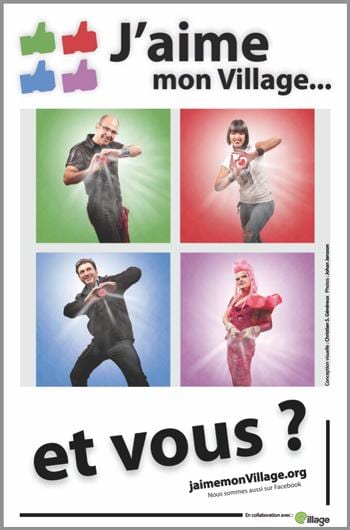
Motivated by what they see as declining conditions in Montreal’s gay village, a group of activists has created a new campaign in an effort to reinvigorate the neighbourhood.
The campaign, titled J’aime mon Village (I love my Village), strives to make residents of and visitors to the ‘hood aware of what some argue are underreported acts of intimidation and violence.
The campaign has rallied four main spokespeople, including prominent drag artist Mado Lamotte; AIDS activist Jean-Pierre Pérusse; Mr Leather Montreal 2011, Danny Godbout; and art curator Kat Coric. J’aime mon Village was spearheaded by Ghislain Rousseau, who owns the business Fétiche Armada and who says he was inspired to action by incidents he experienced.
“On two different occasions last fall, I had interactions with people outside of my store that could have easily turned violent,” Rousseau says. “Both of the people involved threatened me with violence. One used homophobic slurs. But when I called the police, there seemed little they could do.”
Rousseau says he was taken aback when he heard recent statements from Montreal police officers saying things in the Village were relatively calm and orderly. “This does not reflect what we, who live and work in the Village, are experiencing,” he says.
Rousseau and the J’aime mon Village team suggest part of the reason for the disconnect between police sentiments and word on the street is the age-old mistrust between queer people and the police. “We have a history that’s not always great,” Rousseau says. “But when I asked people to email me with any reports of violence they had experienced, I got more than 30 messages in two weeks. I started a petition last fall, asking for more security in the Village. We had more than 2,600 signatures in 10 days.”
Rousseau says he delivered the petition to the mayor’s office in October, but it has so far been met with no action.
Rousseau says the new campaign is a way of stepping up the pressure on the municipal government and the police to do more to make the Village a welcoming and safe place to be.
“The problem now really is drugs. If you walk by Berri Metro you will see them: gangs who are dealing all sorts of drugs. We’ve had a policy of looking the other way, but a new breed of drug dealers has arrived, and they’re selling highly addictive kinds of crack. You have people wandering around who are clearly intoxicated, looking for people to mug for money for their next fix.”
The campaign is primarily one of public awareness, through the news media and social media and through a poster and leaflet campaign. Volunteers will hit the streets periodically over the next few months, informing people about who they should talk to if they are assaulted, physically or verbally, or if they witness such an incident. “If people don’t feel comfortable going to the police, they can call Gai Écoute, the city’s gay help line.”
Montreal’s Village is traditionally an economically challenged one. Ten years ago, when Montreal found itself booming, the ‘hood improved dramatically, with an influx of new stores, businesses and condo development. But the past couple of years have seen a reversal of fortunes, with a downturn reflecting the hard times Quebec is facing as part of the international recession. With that has come more boarded-up buildings and a larger influx of drug dealers and users.
Rousseau is also concerned about police statements that the pedestrian walkway will not proceed this year. Every year, St Catherine St, which runs through the Village, is shut down to traffic from May through to October. This allows businesses to expand into the streets and creates an open-marketplace atmosphere. “The police suggest it will be too much of a hassle,” Rousseau says. “It’s a real boon to businesses when they close the street off to car traffic.”
Artist and activist Kat Coric says the J’aime mon Village campaign is about restoring faith and a sense of security in the neighbourhood. “I’m so proud to be a part of this campaign,” she says. “This is part of my calling as an artist and AIDS activist. Together I feel we can really make a difference, and I’m visualizing a great deal of change for our future.”
 Why you can trust Xtra