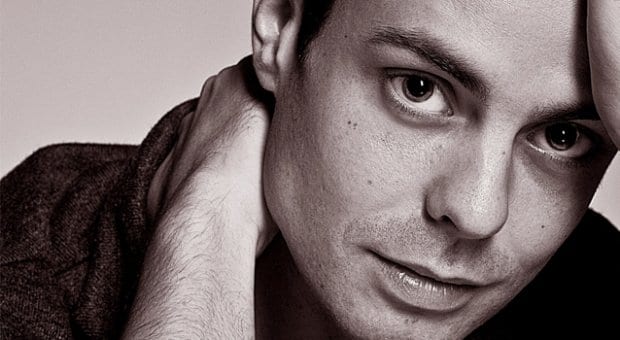
Adam Garnet Jones’s new film, Wild Medicine, is winning awards before production has even begun, likely a good omen for the project.
The Toronto filmmaker was recently presented with the Jim Burt Screenwriting Prize, a juried award that selects the best unproduced screenplay that tells a Canadian story.
Jones spent his early life in Edmonton, where most of his extended family, originally from the Michel First Nation (a mixture of Cree, Métis and Mohawk people), still lives. When Jones was eight, his father sold his business in order to continue schooling. “His pursuit of post-secondary education brought us from Edmonton to Castlegar [British Columbia] and then on to Victoria,” Jones says.
Wild Medicine is partially inspired by Jones’s experience spending a summer with his father in Waglisla, BC, when Jones was 14. The two worked with local families on land in the Ingram-Mooto watershed, Heiltsuk traditional land about 50 kilometres north of the Waglisla community.
“Although I spent a lot of time at the camp building trails and harvesting medicines and things, the time that I spent away from my dad, drinking, partying and making out with the local kids left a deeper impression on me,” he says.
The film is the story of a popular Anishinabe teenager who dreams of escaping a northern Ontario reserve to live with his boyfriend in the city, though after his sister’s suicide he has to stay and care for his heartbroken mother. Jones says, “When I sat down to write a film that was inspired by my memories of that summer, and my own experience of being trapped, closeted and suicidal, I kept thinking about all of the other stories that I’ve heard for my whole life about being torn by the desire to stay at home, and dreams of the world off the rez.”
Wild Medicine will be shot in northern Ontario and will feature a cast of almost entirely aboriginal youth from the area. Jones is also looking to the support of local donors and investors for the project and hopes they’ll be interested in the story. “There hasn’t been a feature drama about gay or two-spirited native men made in Canada before,” he says, “and I feel like the newness of that onscreen experience combined with the rawness of these characters will resonate for a lot of people.”
Jones was previously awarded the RBC Emerging Artist Award at the Mayor’s Arts Awards lunch for the Toronto Arts Foundation in 2011.

 Why you can trust Xtra