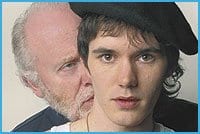
Buddies In Bad Times Theatre presents The Golden Thug, a fictionalized version of the last days of French poet, novelist and playwright Jean Genet, who died in Paris in April 1986. Written and directed by Edward Roy, the play follows Genet’s own lead by making literature out of his life.
Genet endlessly translated, recycled, recreated and fictionalized the events of his own life into an extraordinary body of literature that idealized and eroticized crime and criminals. While doing so, he became a celebrated part of the intellectual life of France, fêted and befriended by such eminences as Jean Cocteau, Jean-Paul Sartre and Simone de Beauvoir.
Playwright Roy attempts to capture the essence of Genet by delving into that world of myth, truths, half-truths and lies. He has created an imaginary last act for Genet’s life story. The Golden Thug pictures Genet on the brink of death, desperately trying to complete a manuscript while staying in a rundown Paris hotel. Originally against his will, but with increasing enthusiasm, the elderly poet is drawn into the lives of those who run the fleabag hostelry, becoming both captivated and represented by the troubled, young son of the owners.
The Golden Thug is a brave effort, but the use of poetic and lyrical imagery in its dialogue seems only to undermine its tale of family dysfunction and failed desire. Is this because the play is in a form that goes against the grain of English-language super-realist theatre that Toronto audiences have been conditioned to expect? If it were produced in a French-language version or if seen on the boards of a Montreal theatre would it be more successful in drawing an audience into its world? Here, the snatches of lyrical content coming out of the characters’ mouths, especially from Genet’s, only seem to elicit uncomfortable sniggers from a baffled audience.
There are some other miscalculations, centred mainly on the appearance of ghosts from Genet’s past (though these do give opportunities for some imaginative set, costume and lighting work from the ultra dependable trio of Charlotte Dean, Angela Thomas and Bonnie Beecher). An unfortunate representation of Cocteau is bad enough, but the appearance of a just-deceased de Beauvoir is the play’s low point. This is not the fault of actress Maria Vacratsis, who does sterling work throughout the evening in her main role as the hotel proprietor.
In the pivotal role of Genet, William Webster tries his considerable best to draw the evening together. However, he is saddled with overwrought dialogue and with impersonating a character that this play, however improbably, manages to make far less fascinating than those that surround him.
 Why you can trust Xtra